8K Remastered Films: Real Upgrades or Hype? A Deep Dive
The assertion that 8K remastered films represent a real upgrade in picture quality for catalog classics is nuanced, as true visual improvements hinge on the original source material's resolution, the quality of the remastering process, and the viewer's display technology.
The world of home entertainment is constantly evolving, pushing the boundaries of visual fidelity. A new frontier has emerged with the promise of 8K remastered films, suggesting an unprecedented level of detail for our beloved catalog classics. But is this a genuine leap forward or simply marketing hype? Let's delve into the intricate process and analyze the true impact on picture quality.
Understanding 8K Remastering: The Technical Foundation
Before we assess the visual impact, it's crucial to grasp what 8K remastering actually entails. It's not merely upscaling a lower resolution image; rather, it involves a meticulous process that begins with the original film negatives, often scanned at resolutions far exceeding 4K, sometimes even 6K or 8K. This initial scan captures a vast amount of latent detail present in the analog film, which then becomes the foundation for digital restoration and enhancement.
The goal is to extract every possible nuance from the source, from the texture of fabrics to the subtle expressions on actors' faces, and present it in a format capable of delivering an 8K resolution image. This process is complex and resource-intensive, requiring specialized equipment and skilled technicians. The quality of the original film stock plays a pivotal role here; a film shot on fine-grain 35mm stock will naturally yield better results than one captured on coarser-grain film or lower-quality negatives.
The Scanning Process: Unlocking Detail
- High-Resolution Scans: Original film negatives are scanned at resolutions typically ranging from 6K to 12K, capturing far more information than standard 4K scans.
- Digital Archiving: The scanned data creates a pristine digital archive, preserving the film for future generations and higher resolutions.
- Color Depth and HDR: Modern scanning also captures extended color gamuts and dynamic range, critical for High Dynamic Range (HDR) implementation.
Once scanned, the digital files undergo extensive restoration. This includes removing scratches, dust, and other artifacts that accumulate over decades. Color timing is meticulously adjusted to match the director's original intent, often referencing archival prints or direct input from cinematographers. Noise reduction and grain management are also critical steps, ensuring a clean yet authentic presentation. The ultimate output is an 8K digital master, ready for distribution.

In conclusion, 8K remastering is a comprehensive journey from physical film to digital perfection. It relies heavily on the quality of the original source material and the technical expertise applied during scanning, restoration, and color grading. Without a high-quality initial scan and careful digital treatment, the benefits of an 8K output would be significantly diminished, regardless of the display technology.
The Source Material: Not All Films Are Created Equal
The fundamental truth about 8K remastered films lies in their origin: the source material. A common misconception is that any film can be magically transformed into a stunning 8K presentation. In reality, the inherent resolution captured on the original film negative dictates the maximum potential for detail. Most classic films were shot on 35mm or 65mm film, which, when properly scanned, can indeed resolve detail equivalent to or even exceeding 8K digital resolution.
However, not all film stocks and shooting conditions were equal. Some films used finer grain stock, while others, particularly those from earlier eras or with lower budgets, might have utilized coarser grain film or less-than-optimal lenses. These factors directly impact the amount of actual detail that can be extracted during the scanning process. An 8K scan of a negative that inherently lacks fine detail will not magically create information that wasn't there to begin with.
Film Formats and Their Resolution Potential
- 35mm Film: Depending on stock and lenses, 35mm can resolve up to 4K-6K equivalent detail, with some high-quality productions potentially reaching near 8K.
- 65mm/70mm Film: Often considered the gold standard for large format cinema, these stocks can easily resolve detail well into the 8K range and beyond, making them ideal candidates for true 8K remasters.
- Digital Originals: Films shot digitally at 4K or 6K can be upscaled to 8K, but native 8K digital capture is still relatively rare for catalog titles.
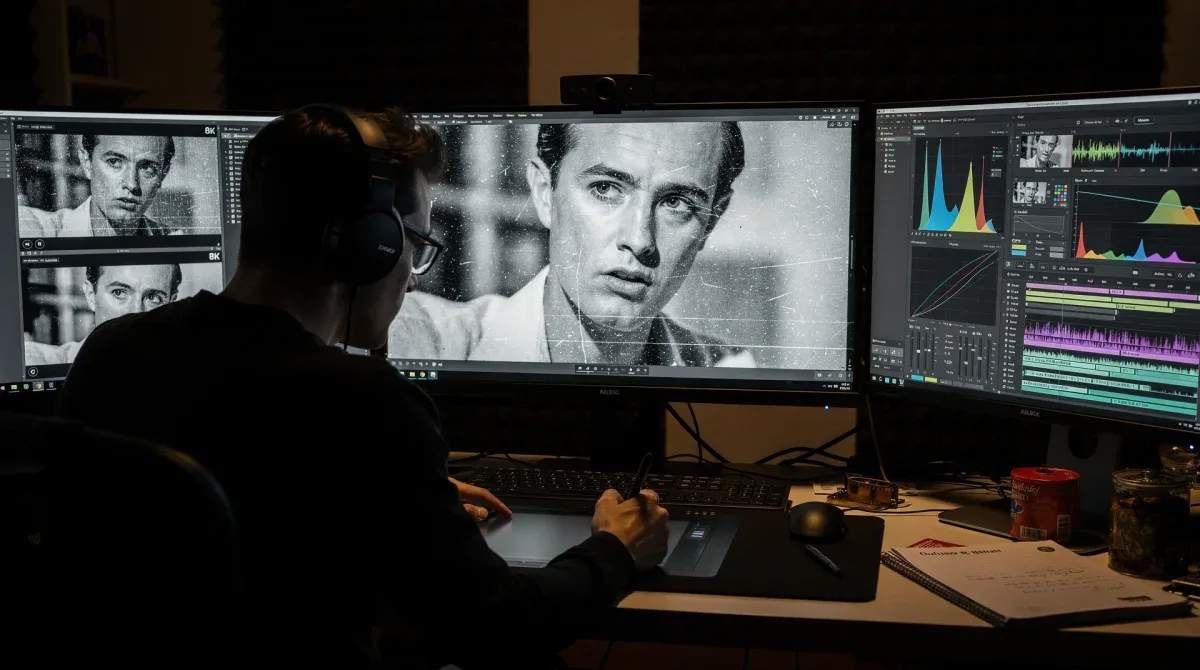
Furthermore, the condition of the original negative is paramount. Decades of storage, handling, and projection can lead to physical damage, fading, and chemical degradation. While digital restoration can mitigate many of these issues, it cannot perfectly reconstruct lost information. A badly damaged negative, even if scanned at 8K, will still present challenges that may limit the ultimate perceived improvement.
Therefore, when evaluating 8K remasters, it's essential to consider the film's production history and the quality of its original elements. A truly groundbreaking 8K presentation will likely stem from a film shot on high-quality large-format stock, preserved in excellent condition, and meticulously scanned and restored. For other films, while improvements will be evident, they might not reach the same level of transformative enhancement.
Analyzing Picture Quality: A Look at 10 Catalog Classics
To truly assess if 8K remastered films offer real upgrades, we need to move beyond theory and examine actual results. While a comprehensive, side-by-side comparison of 10 distinct 8K remasters isn't feasible in a single article without direct access to the files and specialized viewing environments, we can discuss the general trends observed in high-resolution remasters of various film types and how 8K aims to elevate them.
Consider films like "Lawrence of Arabia" (shot on 65mm), which has seen stunning 4K remasters. An 8K scan of its original negative would theoretically unlock even finer grain structure, more expansive depth of field, and minute details in the vast desert landscapes. The upgrade here would likely be substantial, given the superior original negative.
Case Studies and Expected Improvements
- "2001: A Space Odyssey" (65mm): Already a benchmark for 4K, an 8K remaster could bring even greater clarity to space sequences and intricate set designs, pushing visual boundaries.
- "The Good, the Bad and the Ugly" (Techniscope 35mm): While Techniscope negatives are smaller than standard 35mm, an 8K scan could still offer significant textural improvements to costumes and dusty landscapes compared to older masters.
- "Blade Runner" (35mm): The intricate details of its dystopian future city could see enhanced sharpness and definition, particularly in complex visual effects shots, benefiting from a high-resolution scan.
- "Casablanca" (35mm): A black and white classic, an 8K remaster would focus on preserving natural film grain, enhancing contrast, and revealing subtle nuances in facial expressions and period costumes, avoiding an overly digital look.
The key across these examples is that the most significant upgrades tend to come from films with robust original negatives. For films originally shot on standard 35mm, the improvements might be more incremental over a well-done 4K master, focusing on a more refined grain structure, slightly better edge definition, and superior color fidelity. However, even these subtle enhancements contribute to a more immersive and film-like experience.
The analysis of picture quality across these catalog classics reveals a common thread: the potential for a real upgrade is directly proportional to the quality of the original film elements and the care taken during the remastering process. While not every film will be equally transformed, the best candidates offer compelling arguments for the benefits of 8K.
The Role of Display Technology: 8K TVs and Viewing Experience
Even with a perfect 8K remastered film, the ultimate viewing experience hinges on the display technology. An 8K film played on a 4K or 1080p television will naturally be downscaled, losing the inherent benefits of the higher resolution. To fully appreciate an 8K remaster, an 8K television is essential, along with a compatible playback system.
Modern 8K TVs offer an incredible pixel density, allowing for a much smoother, more detailed image, especially noticeable on larger screens and when viewed from closer distances. These displays are also typically equipped with advanced upscaling engines, which can make 4K and even 1080p content look remarkably good, but they cannot create native 8K detail where none exists. The true magic of an 8K remaster comes when the display matches the source resolution.
Key Aspects of 8K Display Technology
- Pixel Density: Four times the pixels of a 4K screen, leading to an incredibly fine, almost invisible pixel structure.
- Upscaling Performance: While native 8K content is scarce, excellent upscaling processors in 8K TVs enhance lower-resolution content impressively.
- HDR and Color Volume: 8K TVs often feature cutting-edge HDR capabilities and wider color gamuts, bringing out the best in remastered films' color and contrast.

Beyond the resolution, other display characteristics like High Dynamic Range (HDR), color accuracy, and black levels significantly contribute to the perceived picture quality. An 8K remaster, when done correctly, will leverage these capabilities to deliver a more vibrant, lifelike, and immersive image. The combination of high-resolution source material and a capable 8K display creates a synergy that can genuinely elevate the cinematic experience at home.
In summary, while 8K remastered films provide the potential for superior image quality, that potential is only fully realized when paired with an equally capable 8K display. The investment in such a display is a critical component for anyone looking to experience these high-resolution remasters as intended, ensuring every pixel of detail is rendered accurately.
The Nuance of "Perceived" vs. "Actual" Upgrade
The discussion around 8K remastered films often includes a debate about perceived versus actual upgrades. While an 8K scan and restoration might technically extract more information from a film negative, the extent to which this translates into a noticeable, transformative improvement for the average viewer is subjective. Factors such as screen size, viewing distance, and individual visual acuity all play a role in how significant an upgrade is perceived.
For instance, on a smaller 8K TV (e.g., 55-65 inches) viewed from a typical couch distance, the difference between a top-tier 4K master and an 8K master might be subtle for many. However, on larger screens (75 inches and above) or when viewed closer, the increased pixel density of 8K becomes far more apparent, revealing finer details and a more immersive, less pixelated image. This is where the "actual" technical upgrade becomes a "perceived" visual upgrade.
Factors Influencing Perceived Upgrade
- Screen Size: Larger screens benefit more from higher resolutions, making 8K more impactful.
- Viewing Distance: Closer viewing distances allow the eye to discern the increased detail of 8K.
- Original Film Grain: An 8K remaster can render film grain with greater accuracy, enhancing the film-like quality rather than making it appear overly digital.
- Restoration Quality: A poor restoration, even at 8K, will negate much of the resolution advantage.
Furthermore, the quality of the original film transfer to digital (the initial scan and subsequent restoration) is often more impactful than the resolution alone. A meticulously restored 4K master with excellent color grading, contrast, and artifact removal can often look superior to a poorly handled 8K master. The "upgrade" is not just about the number of pixels but how those pixels are utilized and presented.
Ultimately, discerning a "real" upgrade requires a critical eye and an understanding of the entire signal chain, from the original film negative to the viewer's display. While the technical potential of 8K is undeniable, its perceived impact varies, emphasizing that a holistic approach to film preservation and presentation yields the most impressive results.
Future of Film Preservation and 8K Content
The advent of 8K remastering represents a significant step forward not just for consumer entertainment but also for film preservation. By scanning original film negatives at such high resolutions, archives are creating future-proof digital masters that capture the maximum possible information from these irreplaceable cultural artifacts. This ensures that as display technologies continue to evolve, new generations will be able to experience these films in ever greater fidelity.
The process also encourages studios and preservationists to revisit and meticulously restore films that may have previously received less attention or inferior transfers. The investment in 8K scanning and restoration signifies a commitment to cinematic heritage, allowing for a deeper appreciation of the artistry and technical achievements of filmmakers throughout history.
Implications for Film Archives and Distribution
- Long-Term Archiving: High-resolution 8K scans create robust digital masters, safeguarding films against physical degradation.
- Future-Proofing: These masters serve as a foundation for future display technologies, ensuring compatibility with resolutions beyond 8K.
- Enhanced Accessibility: Restored versions can be distributed globally, making classic cinema accessible to new audiences in the best possible quality.
As 8K display penetration increases and the cost of the technology becomes more accessible, the demand for native 8K content, including remastered films, will likely grow. This creates a positive feedback loop, encouraging more studios to invest in high-resolution scanning and restoration projects. While native 8K production remains niche for new films, the vast library of existing cinema provides a rich source for future 8K remasters.
In conclusion, the future of film preservation is inextricably linked to high-resolution digital mastering. 8K remasters not only offer the potential for breathtaking visual upgrades today but also ensure that the cinematic legacy of the past is preserved and presented in the highest possible quality for generations to come, adapting to technological advancements.
Final Verdict: Are 8K Remastered Films Real Upgrades?
After examining the technical processes, the importance of source material, the role of display technology, and the nuanced perception of visual improvements, we can offer a nuanced verdict on whether 8K remastered films are real upgrades. The answer is a resounding 'yes,' but with important caveats that define the extent of that upgrade.
For films shot on high-quality 65mm or well-preserved 35mm stock, where the original negative holds an abundance of detail, an 8K remaster can indeed unlock previously unseen nuances, offering a genuinely transformative viewing experience. The enhanced resolution, combined with meticulous restoration, leads to a picture that is sharper, more stable, and often more true to the original cinematic presentation.
Key Takeaways on 8K Upgrades
- Source is King: The quality of the original film negative is the primary determinant of a meaningful 8K upgrade.
- Display Matters: An 8K television is crucial to fully appreciate the benefits of 8K resolution.
- Restoration is Paramount: A high-quality restoration process, including color grading and artifact removal, is as important as the resolution itself.
- Not Universal: While beneficial, not every film will see the same dramatic improvement from an 8K remaster.
However, for films with less ideal source material or those that have already received excellent 4K masters, the leap to 8K might be more incremental, noticeable primarily to discerning viewers on large screens at close distances. It's a refinement rather than a revolution. The real upgrade, therefore, isn't just in the pixel count, but in the comprehensive effort to bring the film to its absolute best possible visual state, leveraging the capabilities of 8K technology.
In conclusion, 8K remastered films represent a significant advancement in home cinema, offering the potential for unparalleled picture quality. While the impact varies by film and viewing setup, the best 8K remasters undoubtedly deliver a real and meaningful upgrade, enriching our appreciation for classic cinema and ensuring its legacy endures in stunning clarity.
| Key Point | Brief Description |
|---|---|
| Source Material is Key | Original film negative quality (e.g., 65mm vs. 35mm) dictates the maximum achievable detail in 8K. |
| Display Technology Matters | An 8K TV is essential to fully perceive the benefits of an 8K remastered film. |
| Restoration Quality | Meticulous digital restoration (color, grain, artifact removal) is as crucial as the high-resolution scan. |
| Perceived vs. Actual | The noticeable upgrade varies by screen size, viewing distance, and individual visual acuity. |
Frequently Asked Questions About 8K Remastered Films
What does 8K remastering actually involve?▼8K remastering involves scanning original film negatives at extremely high resolutions (often 6K-12K), followed by extensive digital restoration. This includes removing dust and scratches, correcting colors, and managing film grain to create a pristine 8K digital master. It's a comprehensive process aiming to extract maximum detail from the source.
Do all classic films benefit equally from 8K remastering?▼No, the benefit largely depends on the original film's source material. Films shot on high-quality 65mm or fine-grain 35mm negatives show the most significant improvements. Films with poorer quality negatives or extensive damage may see fewer dramatic changes, as 8K can't create detail that wasn't originally present.
Is an 8K TV necessary to see the benefits of 8K remasters?▼Yes, to fully appreciate the native 8K resolution and detail, an 8K television is essential. While 8K content will be downscaled on 4K or 1080p screens, losing much of its advantage, an 8K display ensures every pixel of the higher resolution is rendered as intended, especially on larger screens.
How does 8K remastering compare to 4K remastering?▼8K remastering offers four times the pixel count of 4K, allowing for even finer detail and a smoother image. While a great 4K remaster is excellent, 8K can resolve latent information from high-quality film negatives that 4K might miss. The perceived difference is often more noticeable on very large screens or close viewing distances.
What are the long-term benefits of 8K film preservation?▼8K scanning creates incredibly detailed, future-proof digital masters of classic films. This preserves cinematic heritage at its highest possible fidelity, safeguarding against physical degradation and ensuring that as display technologies advance beyond 8K, these films can continue to be presented in ever-improving quality for future generations.
Conclusion
The journey through the world of 8K remastered films reveals a complex landscape where technological potential meets the realities of historical film production. While not every catalog classic will undergo a miraculous transformation, the best 8K remasters offer truly remarkable upgrades in picture quality. These enhancements are most evident in films originally shot on superior film stocks and meticulously restored, providing a level of detail and clarity previously unattainable in home entertainment. The convergence of high-resolution source material, advanced restoration techniques, and capable 8K display technology creates an immersive cinematic experience that redefines how we appreciate classic cinema. As 8K becomes more prevalent, these meticulously crafted remasters will undoubtedly elevate the standard for film preservation and home viewing, proving that for many films, the upgrade is indeed very real.
