Air Purifier CADR Guide: 500-Square-Foot Spaces
To effectively purify a 500-square-foot living space, calculating the appropriate Clean Air Delivery Rate (CADR) is crucial for ensuring the air purifier can adequately remove pollutants and maintain optimal indoor air quality.
Navigating the world of air purifiers can feel overwhelming, especially when trying to ensure you select a model truly capable of cleaning the air in your home. This comprehensive air purifier CADR ratings guide focuses on understanding and calculating the ideal Clean Air Delivery Rate (CADR) for typical 500-square-foot living spaces, ensuring you make an informed decision for healthier indoor air.
Understanding CADR: The Core of Air Purifier Performance
The Clean Air Delivery Rate, or CADR, is a metric developed by the Association of Home Appliance Manufacturers (AHAM) to help consumers compare the performance of different air purifiers. It quantifies how quickly an air purifier removes specific pollutants from a room, providing a standardized measure that goes beyond simple claims of filtration efficiency. Understanding CADR is fundamental to selecting an air purifier that genuinely meets your needs, particularly for specific room sizes like a 500-square-foot area.
CADR values are measured in cubic feet per minute (CFM) and represent the volume of filtered air delivered by the purifier. There are typically three separate CADR ratings provided: one for smoke, one for pollen, and one for dust. These three common indoor pollutants vary in particle size, offering a comprehensive look at the device's capability against a range of airborne contaminants. A higher CADR number indicates faster cleaning of the air within a given space.
Why CADR Matters for Your Home
Without CADR ratings, comparing air purifiers would be a guessing game, relying solely on marketing jargon. CADR provides an objective, third-party verified standard. It's not just about filtering air; it's about how quickly and effectively that filtration occurs. For instance, an air purifier might have an excellent HEPA filter, but if its fan isn't powerful enough to move a sufficient volume of air, its overall effectiveness in a larger room will be diminished. CADR bridges this gap, giving you a clear picture of real-world performance.
- Standardized Measurement: CADR offers a uniform way to compare air purifiers across different brands.
- Pollutant Specificity: Ratings for smoke, dust, and pollen allow you to prioritize based on your primary concerns.
- Room Size Matching: Crucial for ensuring the purifier is adequately sized for your intended space.

In conclusion, CADR is more than just a number; it's a critical indicator of an air purifier's ability to clean your indoor environment. By understanding what each CADR rating signifies, you empower yourself to choose a unit that will perform optimally in your specific living space, delivering tangible benefits to your indoor air quality.
Calculating Ideal CADR for 500-Square-Foot Spaces
Determining the ideal CADR for a 500-square-foot room involves a straightforward calculation based on recommended air changes per hour (ACH). Most experts suggest at least four to five air changes per hour for optimal air purification in a typical living space. This means the air in the room should be completely filtered four to five times every hour to effectively remove pollutants. For those with allergies, asthma, or pets, even higher ACH rates might be desirable.
The general rule of thumb for calculating the minimum CADR needed is to multiply the square footage of the room by 0.8. So, for a 500-square-foot room, the calculation would be 500 sq ft * 0.8 = 400 CADR. This provides a baseline for effective air purification, ensuring a sufficient number of air changes per hour. However, this is a starting point, and several factors can influence the final CADR requirement.
Factors Influencing Your CADR Needs
While the 0.8 multiplier provides a good estimate, real-world conditions can necessitate a higher CADR. Consider the ceiling height of your room; a standard calculation assumes an 8-foot ceiling. If your ceilings are higher, the actual volume of air is greater, and a higher CADR will be required to achieve the same number of air changes per hour. For example, a 10-foot ceiling in a 500 sq ft room means 5,000 cubic feet of air, requiring a more powerful unit.
Moreover, personal health concerns play a significant role. Individuals with severe allergies, asthma, or other respiratory sensitivities often benefit from a higher CADR, aiming for 5-6 air changes per hour or more. This increased filtration rate helps to more rapidly reduce airborne triggers. Lifestyle factors, such as pet ownership, smoking indoors, or living in an area with high outdoor pollution, also warrant a more robust air purification system.
- Ceiling Height: Taller ceilings increase room volume, requiring higher CADR.
- Health Concerns: Allergies, asthma, or respiratory issues may need more frequent air changes.
- Lifestyle Factors: Pets, smoking, or high outdoor pollution demand stronger filtration.
Ultimately, while 400 CADR is a solid starting point for a 500-square-foot room, it's essential to consider these variables. Opting for a unit with a CADR slightly above your calculated minimum can provide a buffer, ensuring better performance under various conditions and future-proofing your investment in cleaner air.
Interpreting CADR Ratings for Different Pollutants
When selecting an air purifier, it's not just about the overall CADR number; it's also about understanding the individual ratings for smoke, dust, and pollen. Each of these pollutants has different particle sizes, and an air purifier's effectiveness can vary depending on its design and filtration system. A unit might excel at removing larger pollen particles but be less efficient with ultra-fine smoke particles, for example.
Smoke particles are generally the smallest, ranging from 0.01 to 1 micron. This makes them particularly challenging to capture and often requires a highly efficient HEPA filter. Pollen particles are typically larger, falling into the 5 to 100-micron range, while dust particles are somewhere in between, usually 0.5 to 100 microns. Therefore, an air purifier with a high CADR for smoke indicates robust performance against a wide spectrum of airborne contaminants, including the finer ones.
What Each CADR Rating Means for You
The smoke CADR rating is often considered the most important because smoke particles are the smallest and most difficult to filter. A high smoke CADR suggests the purifier is highly effective at capturing very fine particulate matter, which is crucial for overall air quality improvement. If you live in an area prone to wildfires, have smokers in the home, or frequently cook, prioritizing a high smoke CADR is essential.
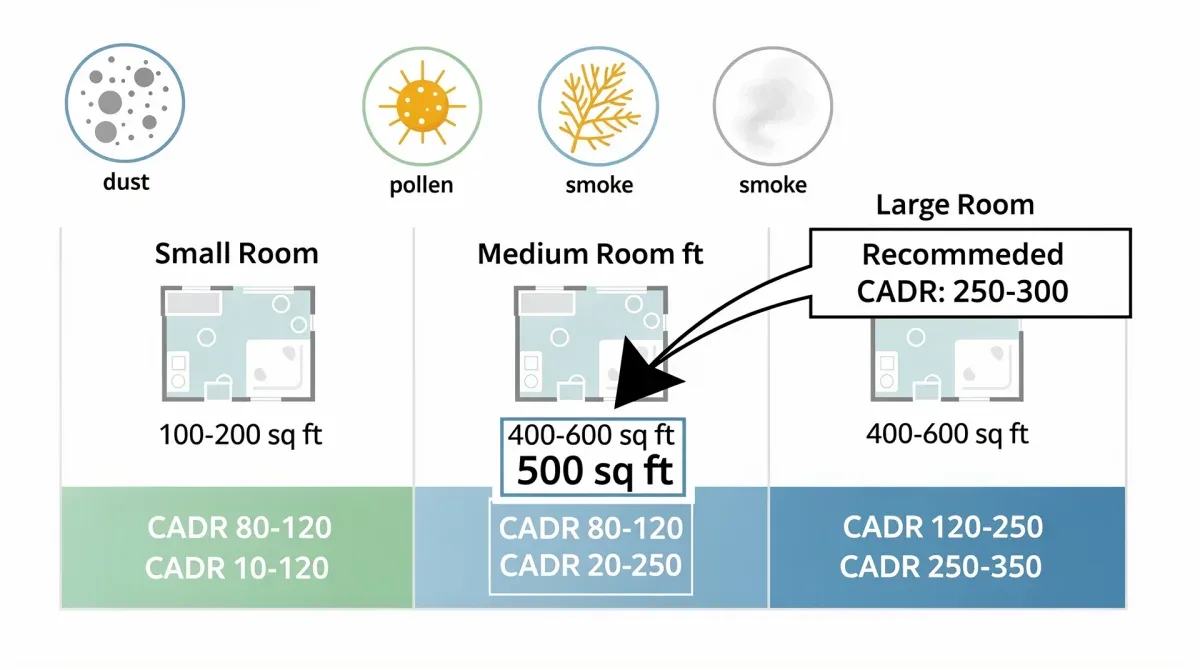
Dust CADR is important for general household cleanliness and for those sensitive to common indoor allergens. Dust often carries other allergens like dust mite particles and pet dander. A good dust CADR ensures these common irritants are effectively removed. Pollen CADR is particularly relevant during allergy seasons. If seasonal allergies are a primary concern, a high pollen CADR will help alleviate symptoms by rapidly clearing airborne pollen from your living space.
- Smoke CADR: Best indicator for overall fine particle removal; crucial for wildfire smoke or cooking odors.
- Dust CADR: Important for general household dust, pet dander, and dust mites.
- Pollen CADR: Essential for seasonal allergy sufferers to reduce airborne pollen.
In summary, while a high overall CADR is desirable, paying attention to the individual pollutant ratings allows you to tailor your air purifier choice to your specific environmental concerns and health needs. This targeted approach ensures maximum effectiveness in improving your indoor air quality.
Beyond CADR: Other Crucial Features for 500 Sq Ft
While CADR is a primary metric for air purifier performance, it's not the only factor to consider, especially when outfitting a 500-square-foot living space. Several other features contribute significantly to the overall effectiveness, convenience, and long-term value of an air purification system. Overlooking these aspects can lead to dissatisfaction, even if the CADR rating is appropriate.
Filter type is paramount. A true HEPA filter is non-negotiable for capturing 99.97% of airborne particles as small as 0.3 microns. Many purifiers also include an activated carbon filter, which is vital for removing odors, volatile organic compounds (VOCs), and gases – something CADR doesn't measure directly. Without an effective carbon filter, cooking smells, pet odors, and chemical fumes might linger, despite the air being otherwise particle-free.
Smart Features and Maintenance Considerations
Modern air purifiers often come equipped with smart features that enhance usability and efficiency. Wi-Fi connectivity allows for remote control via smartphone apps, enabling you to adjust settings, monitor air quality, and schedule operations from anywhere. Auto mode, which uses air quality sensors to automatically adjust fan speed, ensures optimal performance without constant manual intervention, saving energy and extending filter life.
- True HEPA Filter: Essential for particle removal (dust, pollen, pet dander, mold spores).
- Activated Carbon Filter: Crucial for odor, VOC, and gas removal.
- Air Quality Sensors: Enable auto mode and provide real-time air quality feedback.
- Smart Connectivity: Wi-Fi and app control for convenience and remote management.
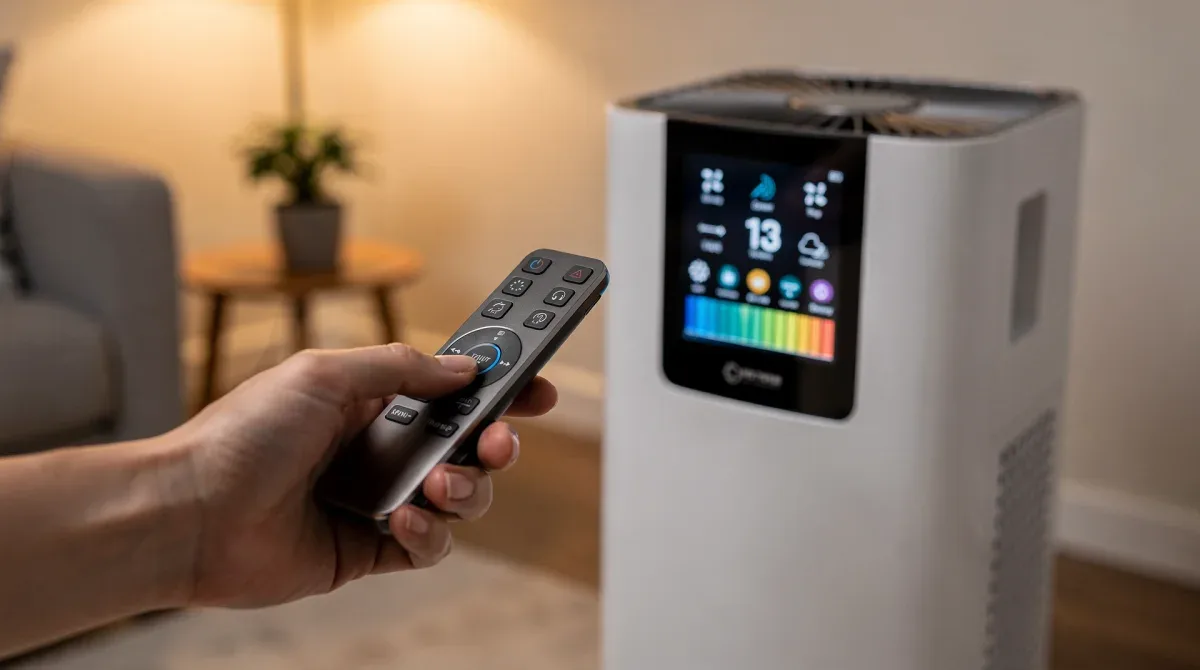
Noise level is another critical consideration, particularly for a living space where peace and quiet are valued. Check the decibel (dB) ratings, especially at higher fan speeds. Finally, factor in filter replacement costs and frequency. Some filters need replacing every 6-12 months, while others might last longer. Long-term maintenance costs can significantly impact the overall value of your air purifier investment. By looking beyond just CADR, you can select a unit that offers comprehensive air purification and seamless integration into your lifestyle.
Placement and Usage Tips for Optimal Performance
Even the most powerful air purifier with the perfect CADR for your 500-square-foot room won't perform optimally if it's not placed correctly or used inefficiently. Strategic placement maximizes air circulation and pollutant capture, ensuring the entire space benefits from the filtration. Understanding how to best operate your unit will also extend its lifespan and maintain its effectiveness.
Avoid placing the air purifier in corners or against walls, as this can restrict airflow and reduce its coverage area. Ideally, position the unit in a central location within the 500-square-foot room, or in the area where you spend the most time. Ensure there's at least a foot or two of clear space around all air intake and exhaust vents. This allows the purifier to draw in dirty air and expel clean air efficiently, creating a better air circulation pattern throughout the room.
Maximizing Efficiency and Extending Filter Life
For consistent air quality, it's generally best to run your air purifier continuously, especially in an actively used 500-square-foot living space. Many modern purifiers are designed for 24/7 operation and are energy-efficient. If continuous operation isn't feasible, consider running it for several hours a day, particularly when you're home or during peak pollution times, such as cooking or when outdoor air quality is poor.
- Central Location: Place the purifier in the middle of the room or high-traffic areas.
- Unobstructed Airflow: Ensure clear space around all intake and exhaust vents.
- Continuous Operation: Run the unit consistently for best results, especially with auto mode.
- Regular Filter Checks: Adhere to manufacturer guidelines for cleaning or replacing filters.
Regular maintenance is crucial. Keep an eye on the filter indicator light (if available) and replace or clean filters according to the manufacturer's recommendations. Clogged filters significantly reduce efficiency and can put a strain on the motor. Periodically vacuuming the exterior of the unit can also prevent dust buildup from impeding airflow. By following these placement and usage tips, you can ensure your air purifier delivers the best possible performance for a healthier home environment.
Common Misconceptions About Air Purifiers and CADR
Despite the growing popularity of air purifiers, several misconceptions persist, particularly regarding CADR ratings and overall performance. These misunderstandings can lead consumers to make less-than-optimal choices, potentially investing in units that don't truly meet their needs or failing to utilize their purifiers to their full potential. Addressing these myths is key to a more informed buying experience.
One common misconception is that a higher CADR automatically means a better air purifier, regardless of other factors. While a high CADR is certainly desirable, it doesn't tell the whole story. For instance, a unit might have an impressive CADR but be excessively noisy, making it impractical for a living space. Similarly, a high CADR doesn't guarantee effective odor removal if the unit lacks a robust activated carbon filter. It's a critical metric, but not the only one.
Separating Fact from Fiction in Air Purification
Another myth is that an air purifier can completely eliminate all airborne pollutants, creating a sterile environment. While high-quality purifiers significantly reduce airborne particles, they cannot remove 100% of contaminants. They are highly effective tools for improving indoor air quality but should be part of a broader strategy that includes regular cleaning, ventilation, and addressing sources of pollution.
- CADR is the Only Factor: False. Noise levels, filter types, and smart features are also crucial.
- Air Purifiers Remove All Pollutants: False. They significantly reduce, but do not entirely eliminate, all contaminants.
- One Purifier for the Whole House: False. Each room needs an appropriately sized unit for effective purification.
- Filters Last Forever: False. Filters must be replaced or cleaned regularly to maintain efficiency.
Finally, some believe that one large air purifier can effectively clean an entire house. This is generally untrue. Air purifiers are designed to clean the air within a specific room size. While a powerful unit might offer some benefit to adjacent open areas, it won't effectively purify a closed-off bedroom or another floor. For optimal air quality throughout your home, consider multiple units strategically placed in key living areas and bedrooms. Understanding these distinctions ensures realistic expectations and better results from your air purification investment.
Maintaining Your Air Purifier for Longevity and Efficiency
Proper maintenance is paramount to ensuring your air purifier continues to deliver clean air efficiently and reliably over its lifespan. Neglecting routine care can drastically reduce its effectiveness, increase energy consumption, and even shorten the unit's operational life. Just like any other appliance, an air purifier requires consistent attention to perform at its best, especially when it's working hard to maintain air quality in a 500-square-foot space.
The most critical aspect of maintenance is filter management. HEPA and activated carbon filters have a finite lifespan. As they capture pollutants, they become saturated, reducing airflow and filtration efficiency. Most manufacturers provide clear guidelines on when to replace these filters, typically every 6 to 12 months, depending on usage and air quality. Ignoring these recommendations means your purifier could be circulating dirty air or running inefficiently.
Tips for Extending Your Air Purifier's Life
Pre-filters, which capture larger particles like dust and pet hair, are often washable or easily vacuumed. Regularly cleaning the pre-filter can significantly extend the life of your more expensive HEPA and carbon filters. Check your unit's manual for specific instructions on how to clean or replace these components. A clean pre-filter ensures maximum airflow to the main filters, optimizing their performance.
- Regular Filter Replacement: Adhere strictly to manufacturer's recommendations for HEPA and carbon filters.
- Pre-filter Cleaning: Wash or vacuum pre-filters frequently to protect main filters and maintain airflow.
- Exterior Cleaning: Wipe down the unit's exterior and air vents to prevent dust buildup.
- Sensor Maintenance: If applicable, clean air quality sensors as per manual instructions to ensure accurate readings.
Beyond filters, periodically wipe down the exterior of the unit to prevent dust accumulation on the vents, which can impede airflow. For purifiers with air quality sensors, gently clean them with a cotton swab as directed by the manufacturer, ensuring they provide accurate readings for auto mode. By committing to these simple maintenance practices, you not only ensure consistent clean air but also protect your investment, allowing your air purifier to serve your 500-square-foot space effectively for years to come.
| Key Aspect | Brief Description |
|---|---|
| CADR Calculation for 500 Sq Ft | Multiply room square footage (500) by 0.8 to get a baseline CADR of 400 CFM for effective air changes. |
| Understanding CADR Types | CADR is rated for smoke, dust, and pollen; smoke CADR is key for fine particles. |
| Beyond CADR Features | Consider true HEPA, activated carbon filters, noise level, smart features, and filter replacement costs. |
| Optimal Placement & Maintenance | Place centrally, ensure clear airflow, run continuously, and regularly replace/clean filters for efficiency. |
Frequently Asked Questions About Air Purifiers
How often should an air purifier run in a 500 sq ft room?▼For optimal indoor air quality in a 500 sq ft room, it's generally recommended to run your air purifier continuously, 24/7. Many modern units are energy-efficient and designed for constant operation. If continuous use isn't possible, aim for at least 12-16 hours a day, especially during periods of high occupancy or pollution.
Can one air purifier cover an open-concept 500 sq ft space?▼Yes, one air purifier can effectively cover an open-concept 500 sq ft space, provided its CADR rating is appropriate for that size. The key is to ensure the unit has sufficient power to facilitate enough air changes per hour throughout the entire open area. Central placement is crucial for even distribution of purified air.
Is a higher CADR always better for a 500 sq ft room?▼While a higher CADR generally indicates faster air cleaning, it's not always "better" if it comes with trade-offs like excessive noise or higher cost without added benefit for your specific needs. Aim for a CADR that meets or slightly exceeds the calculated requirement (around 400 CFM for 500 sq ft) while balancing other factors like noise and features.
Do air purifiers help with pet odors in a 500 sq ft area?▼Yes, air purifiers can significantly help with pet odors in a 500 sq ft area, but only if they include an activated carbon filter. While HEPA filters remove pet dander, a robust activated carbon filter is essential for absorbing and neutralizing odors and volatile organic compounds (VOCs) associated with pets.
What's the difference between CADR and ACH?▼CADR (Clean Air Delivery Rate) measures the volume of clean air an air purifier delivers per minute. ACH (Air Changes Per Hour) indicates how many times the entire volume of air in a room is filtered in one hour. CADR is a purifier's output, while ACH is a measure of its effectiveness in a specific room size.
Conclusion
Selecting the right air purifier for a 500-square-foot living space hinges on a clear understanding of its Clean Air Delivery Rate (CADR) and how to apply this crucial metric to your specific needs. By calculating the ideal CADR, considering individual pollutant ratings, and evaluating supplementary features like filter types and smart functionalities, consumers can make informed decisions that significantly enhance indoor air quality. Moreover, consistent usage and diligent maintenance are indispensable for ensuring the purifier's long-term efficiency and maximizing the health benefits it provides. Investing in the right air purification system is a tangible step towards creating a healthier, more comfortable home environment.
