Boost Mood & Air Quality: 5 Biophilic Elements
Integrating five core biophilic elements into your home or office can significantly enhance daily mood and improve indoor air quality by 20%, fostering a healthier, more productive environment.
Have you ever noticed how much better you feel surrounded by nature? The concept of integrating 5 core biophilic elements to boost daily mood and indoor air quality by 20% leverages this innate connection, bringing the calming, revitalizing power of the natural world indoors. It's more than just adding a plant; it's a deliberate design philosophy aimed at enhancing our well-being and creating healthier living and working spaces.
Understanding biophilic design and its profound impact
Biophilic design is a revolutionary approach that seeks to connect building occupants more closely to nature. It's based on the idea that humans have an innate tendency to connect with nature, often referred to as 'biophilia.' This connection isn't just aesthetic; it has tangible benefits for our physical and mental health. By consciously incorporating natural elements, patterns, and processes into our built environments, we can mitigate the stresses of modern life and foster a sense of calm and vitality.
The impact of biophilic design extends beyond simple visual appeal. Studies have consistently shown that environments rich in natural elements can reduce stress, improve cognitive function, enhance creativity, and even accelerate healing. For instance, patients in hospitals with views of nature often recover faster and require less pain medication. In an office setting, employees exposed to biophilic design report higher job satisfaction and lower rates of absenteeism. This holistic benefit makes biophilia not just a trend, but a fundamental shift in how we approach designing spaces for human flourishing.
The scientific basis for biophilia
The science behind biophilia is robust, drawing from fields like environmental psychology, neuroscience, and evolutionary biology. Our brains are hardwired to respond positively to natural stimuli, a legacy of our evolutionary past spent in natural landscapes. When we see plants, hear water, or feel natural light, our parasympathetic nervous system activates, reducing heart rate, blood pressure, and cortisol levels – all markers of stress reduction.
- Stress Reduction: Exposure to nature lowers cortisol, promoting relaxation.
- Cognitive Improvement: Natural environments enhance focus and creativity.
- Emotional Well-being: Increased feelings of happiness and vitality.
- Physical Health: Faster recovery from illness and reduced pain perception.
Furthermore, the presence of natural elements can improve air quality by filtering pollutants and regulating humidity, creating a more comfortable and healthier indoor climate. This is particularly crucial in urban environments where access to green spaces is limited and indoor air pollution can be a significant concern. Embracing biophilic principles is a proactive step towards creating spaces that not only look good but also actively contribute to our overall health and happiness.
Direct connection to nature: bringing the outdoors in

The most straightforward way to integrate biophilic elements is by establishing a direct connection to nature within your indoor spaces. This involves incorporating living organisms, natural light, and views of the outdoors. It's about blurring the lines between inside and out, making your environment feel like an extension of the natural world rather than a stark contrast to it. This approach offers immediate and noticeable benefits, from improved mood to enhanced indoor air quality.
One of the easiest methods is through living plants. Houseplants are not just decorative; they are vital components of a biophilic environment. They purify the air by absorbing toxins and releasing oxygen, and their presence has a calming effect. Beyond plants, consider how natural light enters your space. Maximizing daylight reduces the need for artificial lighting, which can disrupt circadian rhythms, and offers a direct visual link to the changing patterns of the day and seasons. Views of nature, even if it's just a small tree outside a window, provide a sense of expansiveness and connection to the broader ecosystem.
Incorporating living plants strategically
Choosing the right plants for your indoor environment is key. Consider factors like light requirements, maintenance, and air-purifying capabilities. Certain plants, like snake plants, peace lilies, and spider plants, are particularly effective at removing common indoor air pollutants such as formaldehyde, benzene, and carbon monoxide. Grouping plants can also create a mini-ecosystem, increasing humidity and enhancing their collective air-purifying power.
- Air Purification: Plants absorb toxins and release oxygen, improving air quality.
- Humidity Regulation: They naturally increase indoor humidity, beneficial for skin and respiratory health.
- Visual Comfort: The color green is known to be calming and reduces eye strain.
- Sound Absorption: Plants can help dampen ambient noise, contributing to a quieter space.
Beyond potted plants, consider living walls or terrariums for unique visual interest and concentrated biophilic impact. These features can be particularly effective in smaller spaces or areas where floor space is limited. The goal is to create a vibrant, living presence that continually reminds us of our connection to the natural world. This direct interaction with living elements significantly contributes to boosting daily mood and ensuring a healthier indoor atmosphere.

Natural analogues: patterns, textures, and forms
When a direct connection to nature isn't always feasible, natural analogues offer an effective alternative. This involves incorporating materials, patterns, textures, and forms that mimic those found in the natural world. It's about evoking the essence of nature through design elements, creating a sense of familiarity and comfort that resonates with our innate biophilic tendencies. These analogues can be subtle yet powerful in their ability to influence our mood and perception of a space.
Think about the use of natural wood or stone in flooring, furniture, or decorative accents. These materials bring warmth, texture, and a sense of authenticity that synthetic materials often lack. Patterns found in nature, such as fractal designs seen in ferns or snowflakes, can be incorporated into textiles, wallpaper, or architectural details. These complex, repeating patterns are aesthetically pleasing and have been shown to reduce physiological stress. Even the shapes of furniture or room layouts can be inspired by natural forms, avoiding harsh angles in favor of softer, organic curves.
Embracing organic materials and textures
The choice of materials plays a crucial role in creating a biophilic environment. Opting for natural, unprocessed materials whenever possible helps to ground a space and connect it to the earth. Wood, bamboo, cork, wool, cotton, and linen are excellent choices that introduce varied textures and visual interest. These materials also tend to be less processed and can contribute to better indoor air quality by off-gassing fewer volatile organic compounds (VOCs) compared to synthetic alternatives.
- Wood: Offers warmth, varied grain patterns, and a connection to forests.
- Stone: Provides a sense of solidity, permanence, and natural texture.
- Wool and Cotton: Soft, breathable, and come in natural, earthy tones.
- Cork: Sustainable, sound-absorbing, and adds a unique texture.
Furthermore, consider how these materials are finished. Matte or low-sheen finishes often feel more natural and inviting than highly polished or glossy surfaces. The tactile experience of a space is just as important as the visual. By surrounding ourselves with natural textures, we engage more of our senses, deepening our connection to the environment and fostering a sense of well-being. This thoughtful integration of natural analogues subtly but effectively contributes to boosting mood and supporting indoor air quality.
Natural light and air: optimizing environmental conditions
Optimizing natural light and air circulation is paramount in biophilic design, directly influencing both mood and indoor air quality. Natural light, specifically daylight, is essential for regulating our circadian rhythms, which in turn affect sleep, energy levels, and overall mood. Poor lighting can lead to eye strain, headaches, and a general sense of fatigue. Similarly, fresh air is fundamental for health, preventing the buildup of pollutants and maintaining comfortable temperatures and humidity levels. Thoughtful integration of these elements ensures a vibrant and healthy indoor environment.
Maximizing natural light involves more than just having windows. It's about strategic placement, using light-colored surfaces to reflect light deeper into a room, and employing sheer curtains or blinds that allow diffused light while maintaining privacy. For air quality, natural ventilation is key. Opening windows and doors regularly, or incorporating passive ventilation systems, can dramatically reduce indoor air pollutants and introduce fresh outdoor air. Even small actions, like ensuring proper airflow around furniture, can make a difference. The goal is to create a dynamic and responsive environment that adapts to natural cycles.
Harnessing the power of daylighting
Daylighting refers to the practice of using natural light to illuminate indoor spaces. Beyond saving energy, it has profound psychological benefits. Exposure to broad-spectrum natural light helps regulate melatonin production, improving sleep patterns and boosting alertness during the day. It also enhances visual comfort and reduces the flicker associated with artificial lights, which can cause discomfort for some individuals. Designing for effective daylighting involves considering window size, orientation, and shading strategies.
- Circadian Rhythm Regulation: Natural light supports healthy sleep-wake cycles.
- Energy Savings: Reduces reliance on artificial lighting during the day.
- Visual Comfort: Provides a more balanced and pleasant light spectrum.
- Mood Enhancement: Linked to reduced symptoms of seasonal affective disorder (SAD).
Furthermore, dynamic natural light, which changes in intensity and color temperature throughout the day, offers a subtle connection to the outdoor environment. This variability is a key aspect of biophilic design, preventing monotony and stimulating our senses. When combined with strategically placed mirrors or reflective surfaces, daylight can be distributed effectively throughout a space, ensuring every corner benefits from its revitalizing effects. This careful attention to natural light significantly contributes to boosting daily mood and overall well-being.
Water features: sensory engagement and tranquility
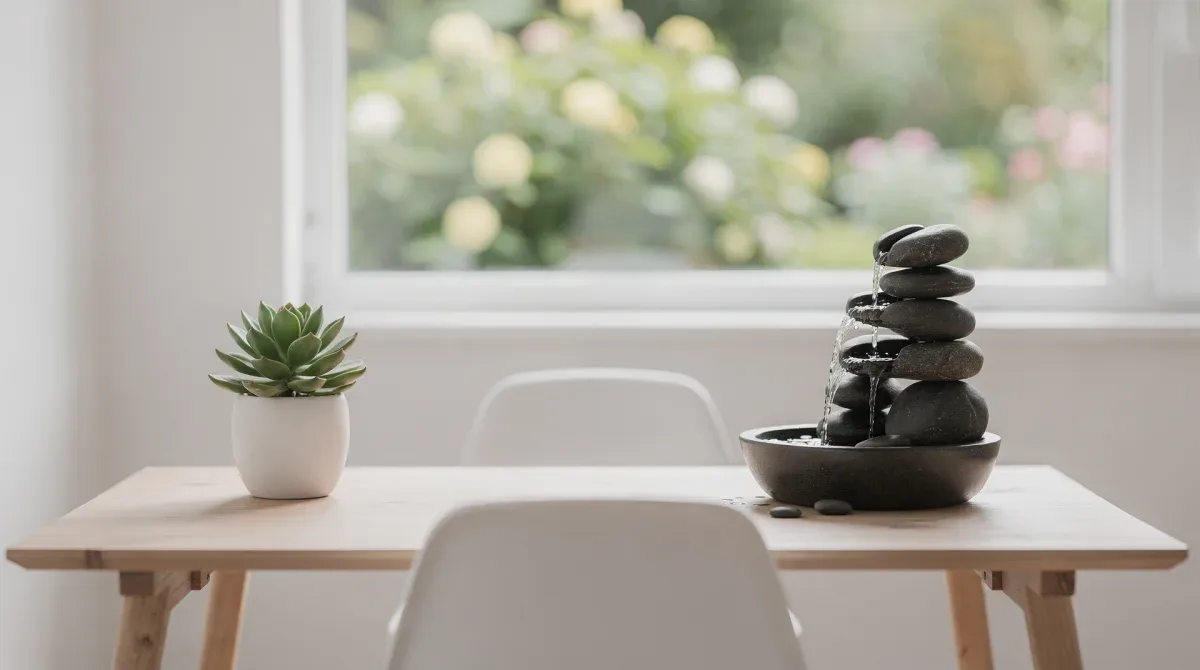
The presence of water, whether seen or heard, has a deeply calming and restorative effect on humans. Incorporating water features into indoor spaces is a powerful biophilic element that engages multiple senses and fosters a profound sense of tranquility. The sight of flowing water, the gentle sound of trickling, or even the subtle increase in humidity can transform an environment, reducing stress and promoting relaxation. This sensory engagement with water mimics natural aquatic environments, which have always been places of solace and sustenance for humanity.
Indoor water features can range from small tabletop fountains to more elaborate wall-mounted installations. Even a simple fish tank can provide a mesmerizing focal point and introduce a living aquatic ecosystem into your home or office. Beyond their aesthetic and auditory appeal, water features can also contribute to indoor air quality by increasing humidity, which can be beneficial in dry climates or during winter months when heating systems dry out the air. The gentle sound of water also serves as a natural white noise, masking distracting sounds and aiding concentration.
Designing with water for maximum impact
When selecting and placing water features, consider the scale of your space and the desired effect. A small, bubbling fountain might be perfect for a quiet corner or a meditation space, while a larger, more prominent feature could become a central design element in a living area or lobby. Maintenance is also an important consideration; choose features that are easy to clean and replenish to ensure they remain a source of joy rather than a chore.
- Auditory Comfort: The sound of water masks noise and promotes relaxation.
- Visual Serenity: Flowing water is mesmerizing and calming to observe.
- Humidity Boost: Naturally increases indoor humidity, beneficial for health.
- Focal Point: Creates a captivating natural element in any room.
The visual connection to water can also be achieved through artwork depicting aquatic scenes or by placing your space near a window with a view of a pond, lake, or even rain. The reflective qualities of water can also play with natural light, creating dynamic patterns and enhancing the overall ambiance. By thoughtfully integrating water features, you can create a more soothing, engaging, and biophilically rich environment that actively contributes to a boosted daily mood and improved air quality.
Prospect and refuge: creating safe and engaging spaces
The concepts of prospect and refuge are deeply ingrained in human psychology, stemming from our evolutionary need for safety and observation. Prospect refers to an unimpeded view over a distance, allowing us to survey our surroundings and identify potential opportunities or threats. Refuge, on the other hand, is a place of concealment and retreat, offering a sense of safety and protection. Biophilic design integrates these elements to create spaces that feel both secure and expansive, catering to our innate psychological needs.
In an indoor setting, prospect can be achieved through large windows offering panoramic views, open-plan layouts that allow for broad sightlines, or elevated positions that provide a commanding perspective. Refuge can be created with cozy nooks, alcoves, or seating arrangements that offer a sense of enclosure and privacy. This balance between openness and enclosure is crucial for fostering comfort and psychological well-being. A space that offers both opportunities to observe and places to retreat feels inherently more secure and inviting, contributing significantly to a positive mood.
Balancing openness with intimate zones
Achieving the right balance between prospect and refuge involves thoughtful spatial planning. In an open-concept living area, for instance, a large sofa facing a window might offer prospect, while a strategically placed armchair with a tall back in a corner could provide refuge. Similarly, in an office environment, workstations with clear views of the room or outdoors offer prospect, while break-out areas with comfortable seating and partial enclosures provide a sense of refuge for focused work or relaxation.
- Prospect: Open views, elevated positions, and broad sightlines.
- Refuge: Enclosed spaces, cozy corners, and protected seating.
- Psychological Comfort: Reduces anxiety by offering both security and awareness.
- Enhanced Focus: Refuge spaces can aid concentration and introspection.
The use of varying ceiling heights can also play into these concepts; higher ceilings in areas of prospect can enhance the feeling of spaciousness, while lower ceilings in refuge areas can create a more intimate and protective atmosphere. Textures and materials also contribute; lighter, more open textures might be used in prospect areas, while warmer, denser textures could define refuge zones. By consciously designing for both prospect and refuge, we create environments that cater to our fundamental human needs for safety and exploration, ultimately boosting our daily mood and overall sense of well-being.
Dynamic and diffuse light: mimicking natural patterns
Beyond simply bringing in natural light, biophilic design emphasizes the importance of dynamic and diffuse light, which closely mimics the subtle variations found in natural environments. Unlike static, uniform artificial lighting, natural light is constantly changing – its intensity, color temperature, and direction shift throughout the day and with the seasons. Replicating this dynamism indoors can have a profound positive impact on our mood, cognitive function, and even our visual comfort, reducing the monotony often associated with purely artificial illumination.
Dynamic light refers to these temporal changes, such as the gradual shift from warm morning light to bright midday light, and then to the softer hues of sunset. Diffuse light, on the other hand, is light that is scattered and softened, avoiding harsh shadows and glare. This is often achieved naturally on overcast days or through the canopy of trees. Integrating both aspects creates a more stimulating yet comfortable visual environment, preventing eye strain and fostering a sense of connection to the outdoor world's natural rhythms.
Implementing dynamic lighting strategies
Achieving dynamic and diffuse light indoors can involve a combination of architectural design and intelligent lighting solutions. Large windows with proper shading can allow for varying levels of natural light throughout the day. Light shelves can bounce daylight deep into a room, diffusing it evenly. For periods when natural light is insufficient, tunable LED lighting systems can mimic the changing color temperature and intensity of daylight, supporting circadian rhythms and enhancing mood.
- Circadian Alignment: Dynamic light supports healthy sleep-wake cycles.
- Reduced Glare: Diffuse light minimizes harsh shadows and visual discomfort.
- Visual Interest: Constantly changing light patterns prevent monotony.
- Mood Regulation: Mimics natural daylight, combating fatigue and low mood.
The play of light and shadow, often overlooked, is another crucial element. Allowing dappled light to filter through a window, perhaps through a sheer curtain or the leaves of an indoor plant, creates natural patterns that are engaging and calming. This subtle movement and variation are deeply resonant with our evolutionary experience of nature. By intentionally designing for dynamic and diffuse light, we create spaces that are not only visually appealing but also psychologically enriching, actively contributing to boosting daily mood and enhancing the overall quality of our indoor environments.
Thermal and airflow variability: sensory comfort
Just as dynamic light is crucial, so too is thermal and airflow variability. Our bodies are designed to experience subtle changes in temperature and air movement, which are constant in natural environments. Static, uniformly conditioned indoor spaces, while seemingly comfortable, can lead to sensory deprivation and a feeling of staleness. Introducing controlled variability in temperature and airflow can significantly enhance sensory comfort, improve alertness, and contribute to a more natural and invigorating indoor climate, directly supporting mood and perceived air quality.
Thermal variability doesn't mean extreme temperature swings, but rather gentle gradients or localized differences. For example, a slightly cooler area near a window or a warmer spot near a radiant heater can offer choices for occupants. Similarly, airflow variability involves subtle breezes or localized air movement rather than a constant, uniform draft. This mimics the gentle rustling of leaves or a light outdoor breeze, providing sensory stimulation without causing discomfort. These subtle changes prevent thermal monotony and engage our senses in a positive way.
Creating responsive thermal environments
Implementing thermal and airflow variability can be achieved through various design strategies. Operable windows allow occupants to control fresh air intake and temperature to a degree. Ceiling fans can create gentle air movement without significantly altering temperature. In more advanced systems, localized heating or cooling zones can provide individual control, empowering occupants to fine-tune their immediate environment to their preference. Even materials can play a role, with some surfaces feeling cooler or warmer to the touch.
- Sensory Engagement: Prevents thermal monotony and stimulates senses.
- Personal Control: Empowers occupants to optimize their comfort.
- Alertness Boost: Subtle changes can enhance focus and reduce drowsiness.
- Perceived Freshness: Air movement creates a feeling of a cleaner, fresher space.
Consider also the psychological aspect of thermal comfort. The ability to open a window, even briefly, to feel a fresh breeze can be incredibly refreshing and mood-boosting, regardless of the precise temperature. This sense of control and connection to the outside world is a powerful biophilic element. By moving beyond a one-size-fits-all approach to climate control and embracing thermal and airflow variability, we can create indoor environments that are not only more comfortable but also more dynamic, engaging, and supportive of our overall well-being and a positive daily mood.
| Biophilic Element | Impact on Mood & Air Quality |
|---|---|
| Direct Nature Connection | Plants purify air, reduce stress, and enhance vitality. |
| Natural Analogues | Organic materials and patterns evoke calm, reduce stress. |
| Natural Light & Air | Optimizes circadian rhythms, reduces pollutants, boosts mood. |
| Water Features | Sensory engagement, tranquility, and humidity regulation. |
Frequently asked questions about biophilic design
What exactly are biophilic elements?▼Biophilic elements are design components that connect humans to nature within built environments. They include direct natural features like plants and natural light, and indirect elements such as natural patterns, materials, and views of nature. The goal is to leverage our innate connection to the natural world for improved well-being.
How do biophilic elements improve indoor air quality?▼Living plants naturally filter airborne toxins, release oxygen, and regulate humidity. Maximizing natural ventilation by opening windows allows fresh air to circulate, reducing indoor pollutants. These combined efforts significantly reduce harmful substances and enhance the overall freshness of indoor air.
Can biophilic design really boost daily mood?▼Yes, numerous studies confirm that exposure to natural elements lowers stress hormones, improves cognitive function, and promotes feelings of happiness and vitality. Integrating biophilic elements helps regulate circadian rhythms, leading to better sleep and increased alertness, all contributing to a more positive daily mood.
What are some easy ways to start incorporating biophilic elements?▼Begin with houseplants, maximize natural light by opening blinds, and use natural materials like wood or stone in decor. Consider adding a small water feature for soothing sounds. Even simple steps can create a noticeable difference in your connection to nature indoors and improve your environment.
Is biophilic design only for large spaces or new constructions?▼Not at all. Biophilic design principles can be applied to any space, regardless of size or age. Even small apartments can benefit from potted plants, natural light optimization, and organic textures. It's about thoughtful integration, not necessarily a complete overhaul, making it accessible for everyone.
Conclusion
Integrating 5 core biophilic elements to boost daily mood and indoor air quality by 20% is more than a design trend; it's a fundamental shift towards creating healthier, more harmonious living and working environments. By consciously weaving direct nature connections, natural analogues, optimized light and air, soothing water features, and the psychological comfort of prospect and refuge into our spaces, we can unlock profound benefits for our physical and mental well-being. Embracing biophilic design allows us to tap into our innate connection with nature, fostering tranquility, enhancing focus, and ultimately leading to a more vibrant and fulfilling daily life.
