Claude vs ChatGPT for Technical Writers: 2026 Comparison
This article offers a detailed 2026 performance comparison between Claude Projects and ChatGPT Team Workspaces, examining their specific utility and efficacy for technical writers navigating complex documentation challenges.
Navigating the evolving landscape of AI tools can be daunting, especially when choosing the right platform for specialized tasks. For technical writers, the decision between Claude Projects vs ChatGPT Team Workspaces: Detailed 2026 Performance Comparison for Technical Writers is becoming increasingly crucial as these platforms advance. This article aims to cut through the noise, offering an in-depth look at how each AI solution performs in real-world technical writing scenarios, helping you make an informed choice for your projects in 2026.
Understanding Claude Projects for Technical Documentation
Claude Projects, developed by Anthropic, has steadily carved out a niche for itself by emphasizing safety, ethical AI, and robust long-context understanding. For technical writers, these characteristics translate into significant advantages, particularly when dealing with extensive documentation sets or complex technical specifications. The platform's architecture is designed to handle intricate prompts and maintain coherence over very long interactions, which is invaluable for drafting manuals, whitepapers, and API documentation.
One of Claude's primary strengths lies in its ability to process and generate content based on vast amounts of input. This means a technical writer can feed an entire specification document, several research papers, or even a codebase, and expect Claude to synthesize information, identify inconsistencies, and generate accurate, contextually relevant drafts. This capability significantly reduces the manual effort involved in cross-referencing and ensuring factual accuracy across large projects.
Long-context processing and accuracy
Claude's extended context window is a game-changer for technical writers. Imagine needing to reference hundreds of pages of existing documentation while drafting a new section. Traditional AI models might lose track or introduce hallucinations, but Claude's design minimizes these risks. It excels at maintaining a deep understanding of the provided context, leading to more accurate and reliable output.
- Reduced factual errors: By understanding more context, Claude makes fewer mistakes in technical details.
- Consistent terminology: It adheres to established glossaries and stylistic guides provided within the input.
- Complex document synthesis: Capable of summarizing, extracting, and rewriting information from lengthy technical texts.
Furthermore, Claude Projects often features integrations with common technical writing tools and version control systems, streamlining the workflow. This allows writers to directly import and export content, track changes, and collaborate more effectively within existing ecosystems. The focus on project-based organization also means that different documentation initiatives can be managed separately, maintaining clarity and preventing cross-contamination of styles or information.
In conclusion, Claude Projects offers a powerful, context-aware solution for technical writers who prioritize accuracy, consistency, and the ability to handle large volumes of detailed information. Its ethical AI framework also provides an added layer of confidence, ensuring that generated content aligns with responsible AI practices.
Exploring ChatGPT Team Workspaces for Collaborative Writing
ChatGPT Team Workspaces, powered by OpenAI's advanced GPT models, approaches AI-assisted technical writing with a strong emphasis on collaboration, iterative refinement, and broad applicability. Unlike Claude's more project-centric design, ChatGPT's workspaces are built for dynamic team environments where multiple writers, editors, and subject matter experts need to interact with AI simultaneously and share insights. This makes it particularly appealing for agile documentation teams or organizations with diverse technical content needs.
The core advantage of ChatGPT Team Workspaces lies in its conversational interface and versatility. Technical writers can use it for a wide range of tasks, from brainstorming initial outlines and generating quick drafts to refining language for clarity and conciseness. The ability to have continuous, evolving conversations with the AI means that writers can iteratively improve their content, asking follow-up questions or requesting alternative phrasing until the desired output is achieved.
Collaborative features and iteration speed
The collaborative aspects of ChatGPT Team Workspaces are designed to enhance team efficiency. Shared prompts, customizable instructions, and the ability to review and modify AI-generated content together can significantly accelerate the documentation process. Teams can establish a shared knowledge base within the workspace, ensuring that all members and the AI itself operate from a consistent understanding of project requirements and stylistic guidelines.
- Shared knowledge base: Centralized repository for project context, style guides, and common prompts.
- Real-time collaboration: Multiple team members can interact with the AI and share outputs.
- Rapid iteration: Quick generation and refinement cycles for faster content development.
ChatGPT's integration capabilities also extend to popular communication and project management tools, facilitating a seamless flow of information between AI-assisted writing and the broader team workflow. This ensures that AI-generated content can be easily incorporated into existing project pipelines, reviewed by stakeholders, and published efficiently. The flexibility of GPT models allows for diverse writing styles and tones, which can be particularly useful for technical writers who need to adapt their content for different audiences, from highly technical engineers to end-users.
In summary, ChatGPT Team Workspaces offers a highly flexible and collaborative AI solution, ideal for technical writing teams that prioritize speed, iterative development, and broad application across various documentation types. Its conversational nature fosters a dynamic environment for content creation and refinement.
Performance Metrics: Speed, Accuracy, and Consistency
When evaluating AI tools for technical writing, speed, accuracy, and consistency are paramount. In 2026, both Claude Projects and ChatGPT Team Workspaces have made significant strides in these areas, but their approaches and resulting performance can differ. Speed refers to how quickly the AI generates relevant and usable content. Accuracy measures the factual correctness and contextual relevance of the output. Consistency pertains to the AI's ability to maintain a uniform style, tone, and terminology across multiple outputs or lengthy documents.
Claude Projects, with its focus on deep context understanding, often demonstrates superior accuracy and consistency, especially when dealing with complex or highly specialized technical inputs. Its extended memory allows it to recall specific details and maintain a coherent narrative over hundreds of pages, reducing the need for extensive human editing to correct factual errors or stylistic deviations. However, this deep processing can sometimes translate to slightly longer generation times for very large requests compared to more agile models.
Benchmarking AI output quality
For technical writers, accuracy is non-negotiable. An AI that hallucinates or misinterprets technical specifications can lead to significant delays and potential errors in critical documentation. Claude's architecture is specifically tuned to minimize these risks, making it a strong contender for tasks requiring high fidelity to source material. ChatGPT, while highly capable, sometimes requires more careful prompt engineering and validation for highly sensitive technical content.
- Claude's high accuracy: Excels in factual correctness with extensive technical inputs.
- ChatGPT's speed: Often provides faster initial drafts, great for brainstorming.
- Consistency challenges: Maintaining consistent style can be harder with shorter context windows in some ChatGPT applications.
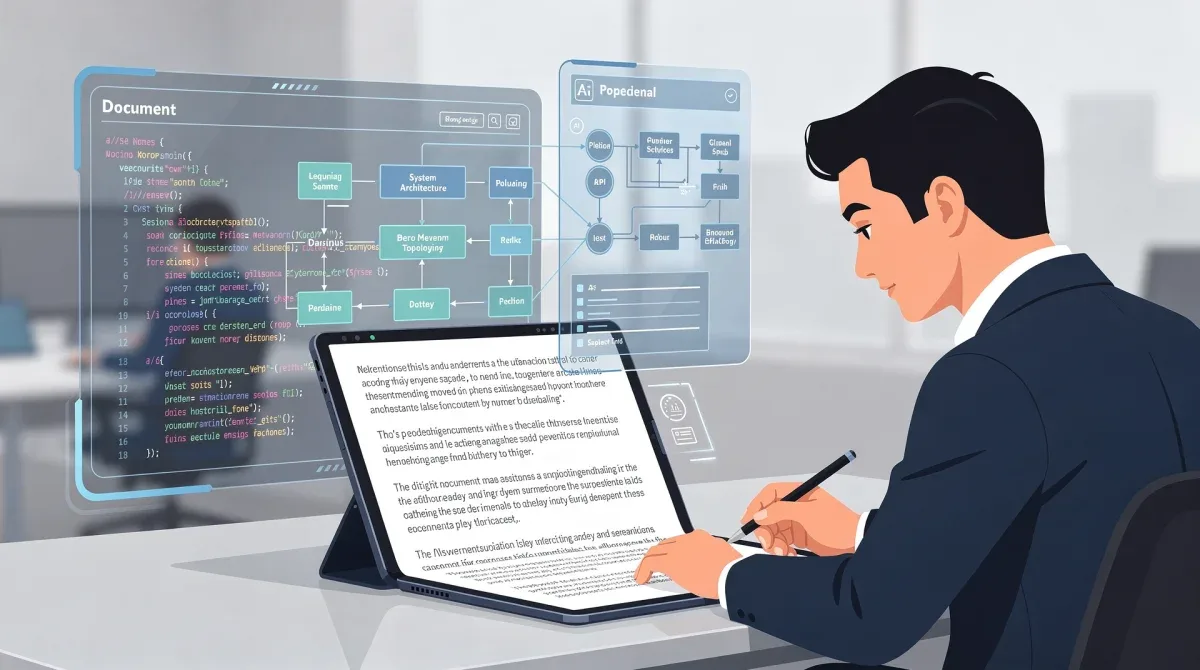
ChatGPT Team Workspaces, on the other hand, often excels in speed for rapid prototyping and generating multiple variations of content. Its quick response times are ideal for brainstorming sessions or when a technical writer needs to explore different ways to explain a concept quickly. While its accuracy is impressive, especially with well-defined prompts, technical writers might need to invest more time in fact-checking and refining the output, particularly for highly specialized topics where deep contextual understanding is critical.
In essence, the choice between the two often comes down to a trade-off: Claude offers higher accuracy and consistency for complex, long-form content, potentially at a slightly slower pace for very large inputs, while ChatGPT provides greater speed and flexibility for iterative, collaborative drafting, often requiring more human oversight for critical factual accuracy.
Integration Capabilities and Workflow Efficiency
The true value of an AI tool in a professional setting is not just its raw processing power, but how seamlessly it integrates into existing workflows and enhances overall efficiency. For technical writers, this means evaluating how well Claude Projects and ChatGPT Team Workspaces connect with common authoring environments, content management systems, and collaboration platforms. A well-integrated AI can automate mundane tasks, reduce context switching, and accelerate the entire documentation lifecycle.
Claude Projects has made significant strides in offering robust API access and direct integrations with enterprise-level content platforms. This allows organizations to embed Claude's capabilities directly into their proprietary systems, ensuring that AI-generated content adheres to specific security protocols and data governance policies. For technical writers working on highly sensitive or regulated documentation, this level of integration and control is often a critical factor. The project-centric nature also aids in organizing documentation within specific project folders or repositories, which can then be synced with version control systems like Git.
Seamless integration for enhanced productivity
ChatGPT Team Workspaces, being more broadly adopted, typically boasts a wider array of off-the-shelf integrations with popular productivity suites, communication tools, and development environments. This makes it incredibly easy for teams to start leveraging AI without extensive custom development. For instance, direct plugins with Slack, Microsoft Teams, or Jira can allow technical writers to quickly generate summaries, answer FAQs, or draft release notes directly within their communication channels, streamlining information flow.
- Claude's enterprise integrations: Strong API for custom embeds and secure data handling.
- ChatGPT's broad ecosystem: Extensive off-the-shelf integrations with popular tools.
- Workflow automation: Both reduce manual tasks, but through different integration philosophies.
The ability to automate repetitive tasks is a key driver for efficiency. Both platforms can assist with generating boilerplate text, formatting documents, or even suggesting improvements based on style guides. However, Claude's strength in handling lengthy, complex documents means it can automate more substantial portions of the initial drafting process for highly technical content. ChatGPT's versatility, on the other hand, allows for automation across a broader spectrum of smaller, more frequent tasks, from generating quick code comments to drafting marketing-adjacent technical summaries.
Ultimately, the best integration strategy depends on the existing tech stack and the specific needs of the technical writing team. Claude offers deeper, more controlled integrations for high-stakes, large-scale documentation projects, while ChatGPT provides broader, more accessible integrations for dynamic, collaborative environments that benefit from quick, pervasive AI assistance.
Cost-Benefit Analysis for Technical Writing Teams
When adopting any new technology, a thorough cost-benefit analysis is essential. For technical writing teams considering Claude Projects or ChatGPT Team Workspaces in 2026, this involves evaluating not only the direct subscription costs but also the indirect benefits and potential savings in time and resources. The return on investment (ROI) will largely depend on the team's specific requirements, project scale, and the complexity of the documentation being produced.
Claude Projects, with its advanced capabilities for handling extensive contexts and ensuring high accuracy, might come with a premium pricing model. However, for organizations dealing with highly regulated industries, mission-critical documentation, or very large, complex projects, the investment can be justified by significant reductions in error rates, compliance risks, and the time spent on manual fact-checking and extensive revisions. The long-term savings from improved document quality and reduced liability could outweigh the initial costs.
Evaluating ROI and operational savings
ChatGPT Team Workspaces typically offers more flexible pricing tiers, making it accessible to a broader range of teams, from small startups to large enterprises. Its benefits often manifest in increased team productivity through faster drafting, improved collaboration, and the ability to quickly generate diverse content. The cost savings come from accelerating content creation cycles, reducing the need for extensive human-hours on initial drafts, and freeing up writers to focus on higher-level strategic tasks like content strategy and stakeholder engagement.

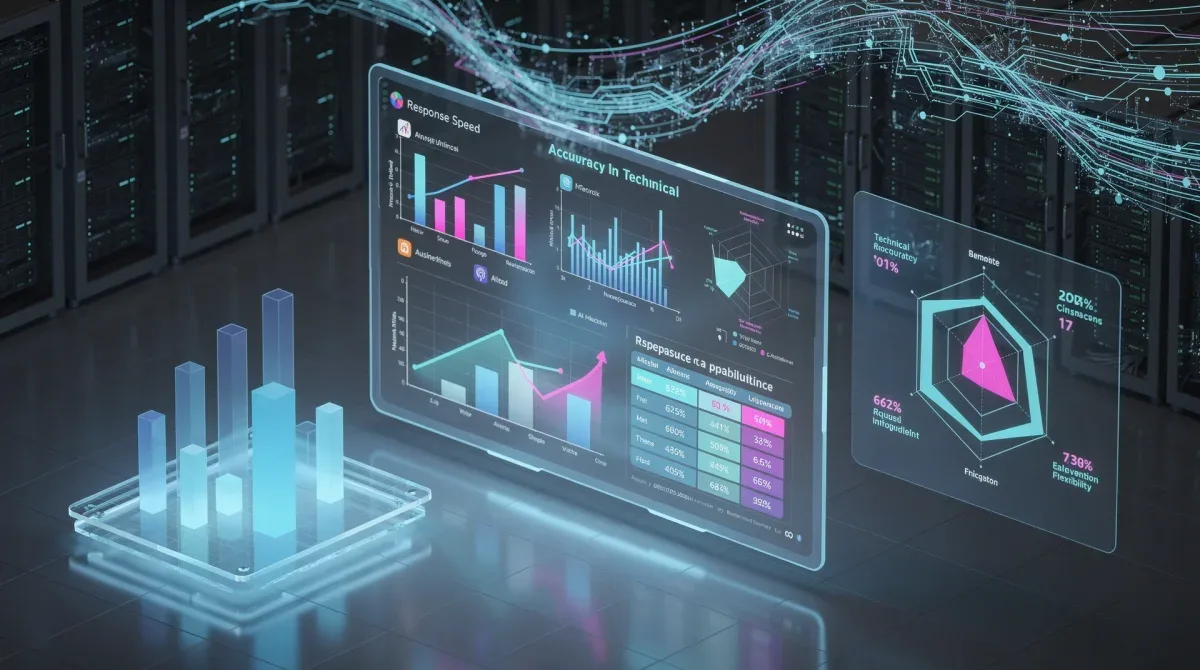
Beyond direct costs, consider the operational savings. An AI that reduces the time spent on researching, drafting, and reviewing can significantly boost a technical writer's output. For instance, if Claude can shave off 20% of the time spent on a complex manual due to its accuracy and context retention, that translates into substantial savings over a year. Similarly, if ChatGPT allows a team to produce 30% more short-form documentation or internal knowledge base articles due to its speed and collaborative features, the ROI is clear.
The choice between Claude and ChatGPT from a cost-benefit perspective hinges on whether your team prioritizes deep, high-accuracy processing for critical documents (favoring Claude) or rapid, collaborative content generation across a wider range of tasks (favoring ChatGPT). Both offer compelling value propositions, but their optimal use cases differ based on the specific needs and budget constraints of a technical writing department.
Security, Data Privacy, and Ethical Considerations
In the realm of technical writing, especially for sensitive industries, security, data privacy, and ethical AI use are not just buzzwords—they are critical requirements. Technical documentation often contains proprietary information, intellectual property, and even confidential system architectures. Therefore, understanding how Claude Projects and ChatGPT Team Workspaces handle these aspects is paramount for any organization in 2026.
Claude Projects, developed by Anthropic, places a strong emphasis on "Constitutional AI," which incorporates a set of principles to guide its behavior, aiming for helpful, harmless, and honest interactions. This ethical framework extends to its data handling practices, often featuring robust enterprise-grade security protocols, data anonymization techniques, and clear policies on how user data is utilized for model training. For technical writers dealing with highly sensitive or regulated information, Claude's commitment to ethical AI and data privacy can be a significant differentiator, providing greater assurance against data breaches or unintended information leakage.
Safeguarding sensitive technical information
ChatGPT Team Workspaces, while also implementing strong security measures, operates within OpenAI's broader ecosystem. Teams using ChatGPT typically benefit from enterprise-level security features, including data encryption, access controls, and compliance with various industry standards. However, the specific data retention and usage policies for model training might vary, making it crucial for organizations to review and understand these terms thoroughly. OpenAI continuously updates its privacy policies, aiming to balance user utility with data protection.
- Claude's ethical AI: Strong focus on safety, honesty, and data privacy principles.
- ChatGPT's enterprise security: Robust encryption and access controls, but policies need careful review.
- Data governance: Both platforms require organizations to understand their data usage policies.
The ethical implications also extend to the content generated. Technical writers need AI tools that produce unbiased, factual, and non-discriminatory content. Claude's Constitutional AI is explicitly designed to mitigate biases and harmful outputs, making it a potentially safer choice for generating public-facing documentation where neutrality and fairness are critical. ChatGPT also has guardrails in place to prevent harmful content, but the sheer breadth of its training data means that occasional biases might still surface, requiring human oversight.
Ultimately, both platforms are committed to security and data privacy, but their underlying philosophies and implementation details differ. Claude offers a more explicit ethical AI framework and often stronger guarantees around data handling for sensitive projects, while ChatGPT provides robust enterprise security with a broader, more flexible approach to data usage. Technical writing teams must conduct their due diligence to ensure the chosen platform aligns with their organization's specific security, privacy, and ethical guidelines.
Future Outlook and Evolving AI Capabilities for Writers
The landscape of AI for technical writing is far from static. Both Claude Projects and ChatGPT Team Workspaces are continuously evolving, with new features and improved models being released regularly. Looking ahead to 2026 and beyond, technical writers can anticipate even more sophisticated capabilities, deeper integrations, and potentially new paradigms for human-AI collaboration. Understanding these trends is crucial for making a future-proof decision about which platform to adopt or invest in.
Anthropic's roadmap for Claude often includes enhancements to its long-context window, further improving its ability to handle extremely large and complex documentation projects. We can expect even greater accuracy in synthesizing information from vast datasets, potentially leading to fully automated initial drafts of entire manuals or technical specifications. Furthermore, advancements in multimodal AI might allow Claude to interpret and generate content from diagrams, flowcharts, and even video demonstrations, which would be revolutionary for visual-heavy technical documentation.
Anticipating next-gen AI tools for documentation
OpenAI's development for ChatGPT is likely to focus on even more nuanced conversational abilities, hyper-personalization for team roles, and enhanced agents that can perform multi-step tasks autonomously. Imagine a ChatGPT agent that can not only draft a section but also automatically pull relevant data from a database, generate accompanying code examples, and then submit it for review, all based on a single high-level prompt. The integration with other AI services, such as specialized image generators or data visualization tools, is also expected to become more seamless, creating a comprehensive AI-powered writing ecosystem.
- Claude's long-context evolution: Expect even larger context windows and multimodal capabilities.
- ChatGPT's agentic AI: More autonomous, multi-step task execution and deeper personalization.
- Enhanced integrations: Both will likely offer more robust connections with diverse tools.
The competition between these leading AI models is a boon for technical writers. It drives innovation, pushing both companies to develop more powerful, user-friendly, and secure tools. We might see specialized versions of these platforms tailored for specific industries, such as aerospace, pharmaceuticals, or software development, each with pre-trained knowledge bases and compliance features. The future of technical writing will undoubtedly involve a symbiotic relationship with AI, where human expertise guides and refines AI-generated content, leading to unprecedented levels of productivity and documentation quality.
Staying informed about these advancements and continuously experimenting with new features will be key for technical writers to remain at the forefront of their profession. The evolving capabilities of Claude Projects and ChatGPT Team Workspaces promise a future where documentation is not just easier to create, but also more accurate, comprehensive, and engaging than ever before.
| Key Feature | Description for Technical Writers |
|---|---|
| Context Window | Claude excels with very long contexts for deep understanding; ChatGPT is versatile but may require more focused prompts for extensive documents. |
| Accuracy & Consistency | Claude often provides higher factual accuracy and style consistency for complex, lengthy projects. ChatGPT offers speed but needs more validation. |
| Collaboration | ChatGPT Team Workspaces are designed for dynamic team collaboration and iterative content development. Claude focuses more on individual project management. |
| Security & Ethics | Claude emphasizes Constitutional AI and explicit data privacy. ChatGPT offers enterprise-grade security with flexible data usage policies. |
Frequently asked questions about AI for technical writers
Which AI is better for highly specialized technical documents?▼For highly specialized technical documents requiring deep contextual understanding and factual accuracy, Claude Projects often holds an edge. Its extended context window and focus on minimizing hallucinations make it more reliable for complex, long-form content, reducing the need for extensive human editing in critical areas.
Can ChatGPT Team Workspaces handle large documentation projects?▼Yes, ChatGPT Team Workspaces can handle large documentation projects, especially when broken down into manageable sections. Its strength lies in rapid iteration and collaborative drafting, making it suitable for teams that prefer to build content iteratively. However, maintaining consistent style and accuracy over very long, single documents may require more human oversight.
How do these AI tools ensure data privacy and security?▼Both Claude Projects and ChatGPT Team Workspaces implement enterprise-grade security measures like data encryption and access controls. Claude emphasizes its Constitutional AI framework for ethical data handling, while ChatGPT relies on OpenAI's robust security infrastructure. Organizations should always review specific data retention and usage policies to ensure compliance.
What are the main cost considerations for technical writing teams?▼Cost considerations include direct subscription fees, but more importantly, the ROI derived from time savings and improved output quality. Claude's premium might be justified by reduced errors in critical docs, while ChatGPT's flexibility can lead to faster content generation across various tasks, optimizing human resources.
Will AI replace technical writers by 2026?▼No, AI is unlikely to replace technical writers by 2026. Instead, it will augment their capabilities, automating mundane tasks and accelerating content creation. Technical writers will evolve into AI strategists, editors, and quality assurance specialists, focusing on guiding AI, refining its output, and ensuring human-centric communication.
Conclusion
The choice between Claude Projects and ChatGPT Team Workspaces for technical writers in 2026 is not a matter of one being definitively superior, but rather which tool aligns best with specific project needs, team workflows, and organizational priorities. Claude excels in handling extensive, complex technical documentation with high accuracy and consistency, making it ideal for critical, long-form content. ChatGPT, with its collaborative features and rapid iteration capabilities, is better suited for dynamic team environments requiring quick content generation across diverse tasks. Both platforms offer significant advancements in AI-assisted writing, promising to revolutionize how technical documentation is created, refined, and managed. The future will likely see technical writers leveraging the unique strengths of each, perhaps even integrating both into a comprehensive toolkit, to achieve unprecedented levels of productivity and quality.
