6 GitHub Copilot Workflows: Speed Up Code Reviews by 30%
GitHub Copilot Workspace provides six essential workflows that can accelerate code reviews by 30%, integrating artificial intelligence to enhance development efficiency and improve code quality significantly.
Are you looking to dramatically improve your development cycle? Exploring how 6 Essential GitHub Copilot Workspace Workflows That Speed Up Code Reviews by 30% can transform your team's efficiency is a game-changer. This guide dives deep into practical, AI-driven strategies designed to streamline your code review process, making it faster and more effective than ever before.
Understanding GitHub Copilot Workspace and Its Impact
GitHub Copilot Workspace represents a significant leap forward in developer tooling, integrating advanced AI capabilities directly into the development environment. It's more than just an autocomplete tool; it's a comprehensive AI assistant designed to understand context, suggest solutions, and even generate entire blocks of code. This integration fundamentally alters how developers interact with their codebase, shifting focus from repetitive coding tasks to higher-level problem-solving and architectural design.
The core philosophy behind Copilot Workspace is to augment human creativity and productivity, not replace it. By automating mundane tasks and providing intelligent suggestions, developers can allocate more time to critical thinking, innovation, and, importantly, thorough code reviews. The impact on development cycles is profound, leading to faster iteration, reduced errors, and ultimately, a quicker time to market for software products. This efficiency gain is particularly evident in the often-time-consuming process of code review, where clarity and precision are paramount.
The evolution of AI in development
AI in software development has evolved rapidly, moving from simple scripting aids to sophisticated models capable of understanding complex programming paradigms. Early tools focused on syntax highlighting and basic error checking. Today, AI assistants like Copilot leverage vast datasets of public code to learn patterns, anticipate developer needs, and generate highly relevant code snippets. This evolution has made AI an indispensable partner in the modern developer's toolkit.
- Contextual understanding: AI now understands the entire project context, not just individual lines.
- Code generation: Capable of generating functions, classes, and even entire modules.
- Error detection: Proactively identifies potential bugs and security vulnerabilities.
- Learning and adaptation: Continuously improves based on user feedback and new code patterns.
The integration of such intelligent systems into platforms like GitHub Workspace signifies a future where development is more collaborative, efficient, and less prone to human error. It empowers developers to focus on the creative aspects of their work, letting AI handle the heavy lifting of code generation and initial quality checks. This symbiotic relationship between human and AI is crucial for achieving the promised 30% speed-up in code reviews.

In essence, GitHub Copilot Workspace acts as an intelligent layer over existing development practices, enhancing every stage from initial coding to final review. Its ability to quickly grasp the intent behind code and suggest optimal solutions transforms what was once a manual, often tedious process into a streamlined, AI-assisted workflow. This foundational understanding is key to appreciating the specific workflows that follow and how they contribute to significant gains in review efficiency.
Workflow 1: Automated Initial Code Analysis and Suggestion
The first crucial workflow involves leveraging GitHub Copilot Workspace for automated initial code analysis and suggestion. Before a human reviewer even looks at the code, Copilot can perform a preliminary pass, identifying potential issues, suggesting refactorings, and even proposing alternative implementations. This significantly reduces the burden on human reviewers, allowing them to focus on higher-level architectural concerns and business logic rather than syntactic details or obvious improvements.
This automated analysis extends beyond simple syntax checks. Copilot can analyze code for adherence to best practices, common anti-patterns, and potential performance bottlenecks. By presenting these insights upfront, developers can address many issues before the code ever reaches a reviewer, leading to cleaner, more robust pull requests. The AI's ability to learn from millions of lines of code ensures that its suggestions are often highly relevant and effective, reflecting common industry standards and solutions.
Pre-review optimization
Pre-review optimization with Copilot involves running automated checks and suggestions as an integral part of the development process. This can be configured to happen automatically upon committing changes or when creating a pull request. The goal is to catch and fix minor issues early, preventing them from consuming valuable reviewer time.
- Syntax and style enforcement: Ensures consistent code formatting and adherence to project guidelines.
- Potential bug identification: Highlights patterns that commonly lead to bugs.
- Performance recommendations: Suggests more efficient algorithms or data structures.
- Security vulnerability flagging: Identifies common security pitfalls in the code.
By automating this initial layer of review, teams can ensure a baseline quality for all incoming code. This makes the human review process more targeted and efficient, as reviewers are presented with code that has already undergone a significant round of refinement. The reduction in back-and-forth comments on minor issues contributes directly to the 30% speed-up in code reviews.
The benefit here is twofold: developers receive immediate feedback, allowing for quicker corrections, and reviewers spend less time on basic checks. This proactive approach to code quality ensures that the review process becomes a value-add activity focused on strategic feedback rather than remedial corrections. It sets a strong foundation for the subsequent workflows.
Workflow 2: Intelligent Diffing and Change Summarization
Traditional code reviews often involve manually sifting through lengthy diffs, trying to understand the intent behind each change. GitHub Copilot Workspace revolutionizes this with intelligent diffing and change summarization. Instead of just showing line-by-line differences, Copilot can interpret the semantic meaning of the changes, providing a high-level summary of what was altered and why.
This capability is invaluable for reviewers, especially when dealing with large pull requests. Copilot can generate a concise, human-readable summary that explains the purpose of the changes, identifies the core logic modifications, and even points out potential side effects. This context-rich overview allows reviewers to quickly grasp the essence of the pull request without having to meticulously examine every single line of code.
Imagine a scenario where a complex feature update involves changes across multiple files. A human reviewer might spend hours piecing together the narrative of these changes. Copilot, however, can provide an immediate summary, highlighting the key functional shifts and their implications. This dramatically cuts down on the cognitive load and time required for initial understanding, directly contributing to faster review cycles.
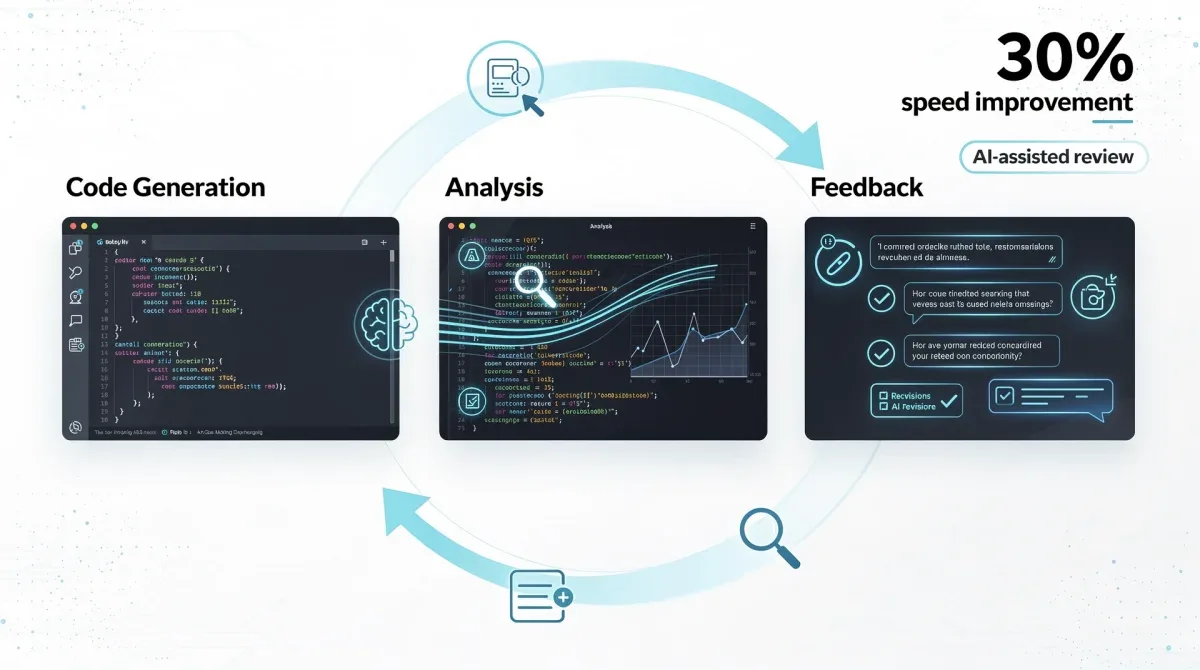
The intelligent diffing also helps in spotting subtle dependencies or unintended consequences that might be missed in a manual review. By understanding the broader context of the codebase, Copilot can flag areas where a change in one module might impact another, even if those modules aren't directly part of the current diff. This proactive identification of potential issues enhances the thoroughness of the review while accelerating the process.
In essence, this workflow transforms the review of changes from a forensic investigation into a guided tour. Reviewers are empowered with a high-level understanding and critical insights upfront, enabling them to make more informed decisions faster. This reduction in time spent on comprehending changes is a significant contributor to the targeted 30% improvement in code review speed.
Workflow 3: AI-Assisted Comment Generation and Response
Communication is at the heart of effective code reviews, but crafting clear, constructive comments and responses can be time-consuming. GitHub Copilot Workspace introduces AI-assisted comment generation and response, streamlining this critical aspect of the review process. Copilot can suggest comments for specific lines of code, explain complex changes, or even draft responses to reviewer feedback.
When a reviewer identifies an area for improvement, Copilot can suggest a polite, precise comment that explains the issue and offers potential solutions. This ensures consistency in feedback and helps maintain a positive, constructive tone. For developers, responding to comments becomes much easier. Copilot can analyze the reviewer's comment and the surrounding code, then propose a solution or a clarification, accelerating the dialogue and resolution process.
Enhancing communication efficiency
Efficient communication is vital for quick code reviews. AI assistance here ensures that feedback is clear, actionable, and delivered promptly, reducing the back-and-forth that often delays reviews.
- Automated suggestions for common feedback: Helps reviewers quickly add standard comments.
- Contextual explanations: Copilot can explain complex code sections to reviewers or explain proposed changes to developers.
- Drafting responses: Assists developers in formulating clear and concise replies to review comments.
- Tone analysis: Can suggest rephrasing comments to maintain a constructive and professional tone.
This workflow not only speeds up the act of commenting and responding but also improves the quality of communication. Clearer feedback leads to faster understanding and quicker implementation of suggested changes. The AI acts as a mediator, ensuring that both parties are on the same page and that discussions are productive rather than protracted. This directly contributes to a more fluid and rapid review process.
By removing the friction associated with manual communication, teams can significantly cut down on the time spent in the review cycle. Developers can quickly address feedback, and reviewers can efficiently provide it, leading to a synergistic acceleration of the entire process. This focus on communication efficiency is a key driver for the overall goal of a 30% faster code review.
Workflow 4: Proactive Suggestion of Test Cases and Edge Cases
Ensuring code quality goes beyond just reviewing the implementation; it also involves verifying that the code is robust and handles various scenarios, including edge cases. GitHub Copilot Workspace can proactively suggest test cases and identify potential edge cases that might be overlooked during manual review or even initial development.
When reviewing a piece of code, Copilot can analyze its logic and propose unit tests that cover critical paths, boundary conditions, and error handling. This is incredibly valuable for reviewers, as it allows them to quickly assess the test coverage and suggest additional tests where gaps exist. It shifts the burden of identifying exhaustive test scenarios from the human reviewer to the AI, saving significant time.
Moreover, Copilot's ability to identify potential edge cases is a powerful feature. Based on its vast training data, the AI can predict unusual inputs or environmental conditions that might cause unexpected behavior. By flagging these during the review, teams can address them early, preventing bugs from making it into production. This proactive bug prevention is a major contributor to overall code quality and review efficiency.
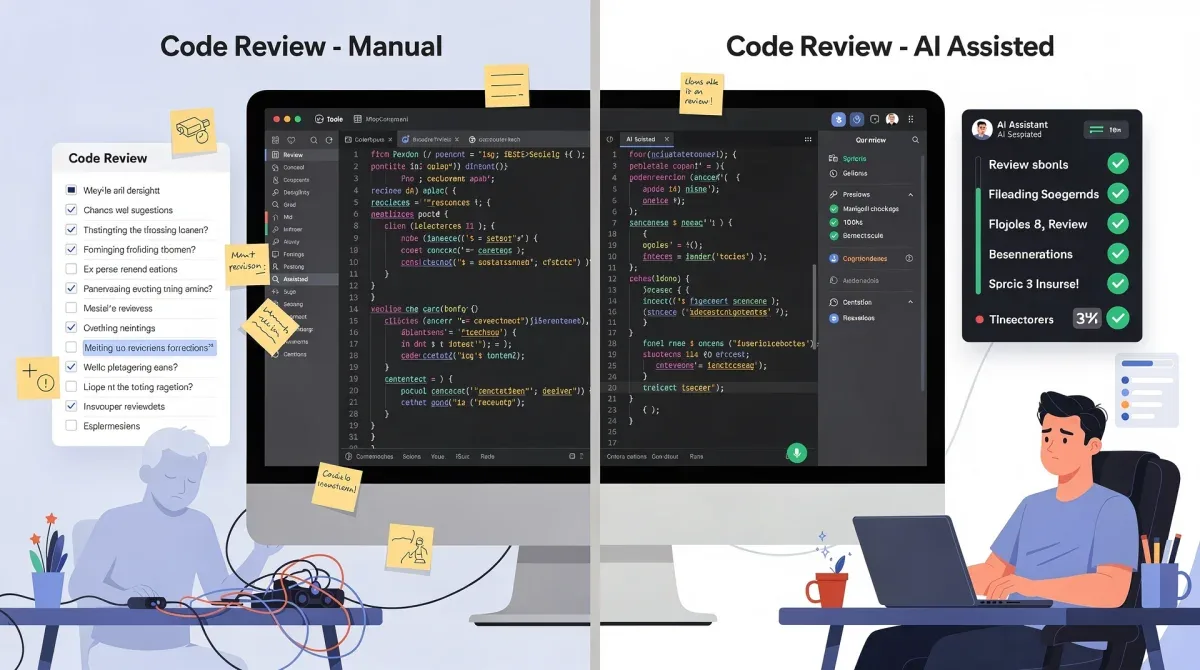
The integration of AI in suggesting test cases means that developers are encouraged to write more comprehensive tests from the outset, knowing that Copilot will provide assistance. This creates a virtuous cycle where better initial testing leads to fewer issues in review, which in turn speeds up the entire process. Reviewers can then spend their time verifying the logic and design, rather than meticulously crafting test scenarios.
By leveraging Copilot to automatically generate and suggest test cases, and to identify edge cases, teams can significantly enhance the quality and reliability of their code while simultaneously accelerating the review process. This workflow ensures that code is not just functional, but also resilient, contributing directly to the 30% speed-up in code reviews by reducing rework and post-release issues.
Workflow 5: Refactoring Recommendations and Optimization
Code reviews are not just about finding bugs; they are also an opportunity to improve code structure, readability, and performance through refactoring. GitHub Copilot Workspace excels in providing intelligent refactoring recommendations and optimization suggestions, transforming the review process into a continuous improvement cycle.
As a reviewer examines code, Copilot can highlight sections that could be refactored for better clarity, reduced complexity, or improved maintainability. These suggestions might range from renaming variables for better readability to extracting methods to reduce duplication or simplifying complex conditional logic. The AI can even propose entire refactoring patterns, such as applying design patterns where appropriate.
Beyond structural improvements, Copilot also offers optimization suggestions. It can identify inefficient algorithms, redundant computations, or suboptimal data structures that could lead to performance bottlenecks. By presenting these insights during the review, teams can proactively optimize their codebase, preventing performance issues from escalating and improving the overall efficiency of the application.
Streamlining code quality improvements
Refactoring and optimization are crucial for long-term code health. Copilot's assistance in these areas makes code reviews more impactful, leading to higher quality code with less effort.
- Automated refactoring proposals: Suggests cleaner, more maintainable code structures.
- Performance bottleneck identification: Points out areas that could be optimized for speed.
- Code smell detection: Flags common anti-patterns and areas of technical debt.
- Adherence to best practices: Guides developers towards industry-standard coding practices.
This workflow enables reviewers to focus on strategic improvements rather than just error detection. It empowers them to elevate the quality of the codebase with AI-driven insights, leading to more robust and scalable software. The ability to quickly identify and act on refactoring opportunities significantly reduces the time spent on future maintenance and bug fixing, contributing to the overall 30% acceleration of the code review process.
By integrating these recommendations directly into the review, developers receive actionable advice that improves their code instantly. This continuous feedback loop fosters a culture of excellence and ensures that code quality is consistently high, all while accelerating the development cycle.
Workflow 6: Personalized Learning and Best Practice Enforcement
The final essential workflow leverages GitHub Copilot Workspace not just for immediate task assistance, but also for personalized learning and continuous enforcement of best practices. Copilot learns from the collective wisdom of a team's codebase and its review patterns, offering tailored suggestions that align with specific project standards and individual developer growth.
As Copilot observes the types of feedback given in code reviews, the coding styles preferred by the team, and the common pitfalls encountered, it adapts its suggestions. This means that over time, the AI becomes an even more effective assistant, providing highly relevant recommendations that reflect the unique context of each development team. For new team members, this acts as an accelerated onboarding tool, quickly familiarizing them with established coding conventions.
Furthermore, Copilot can be configured to enforce specific best practices, acting as a live guardian of code quality. If a developer attempts to write code that deviates from established patterns or introduces known anti-patterns, Copilot can immediately flag it, offering alternatives that comply with the team's standards. This proactive enforcement prevents issues from even reaching the review stage, significantly reducing the cognitive load on human reviewers.
Fostering a culture of quality
Beyond just speeding up reviews, this workflow helps cultivate a culture where quality and best practices are ingrained in every development step, leading to more autonomous and skilled teams.
- Adaptive learning: Copilot learns from team-specific code patterns and review feedback.
- Onboarding acceleration: Helps new developers quickly adopt team coding standards.
- Proactive standard enforcement: Flags non-compliant code during development.
- Continuous skill development: Provides suggestions that educate developers on better coding practices.
This personalized learning and enforcement mechanism ensures that the benefits of Copilot extend beyond mere speed. It helps elevate the skill level of the entire team, making every developer more proficient and every piece of code more robust. The consistency and quality derived from this workflow are critical for maintaining the 30% efficiency gain in code reviews over the long term, as fewer fundamental issues will require human intervention.
By embedding best practices directly into the development and review process, teams can achieve a higher standard of code quality with less effort. This creates a sustainable model for rapid development and thorough, yet efficient, code reviews, solidifying the transformative impact of GitHub Copilot Workspace.
| Key Workflow | Benefit to Code Review |
|---|---|
| Automated Code Analysis | Identifies issues early, reducing human reviewer workload. |
| Intelligent Diffing | Summarizes changes semantically, speeding up comprehension. |
| AI-Assisted Comments | Streamlines feedback and response, improving communication. |
| Refactoring Recommendations | Enhances code quality and structure proactively during review. |
Frequently asked questions about Copilot Workspace
How does GitHub Copilot Workspace achieve a 30% speed-up in code reviews?▼GitHub Copilot Workspace accelerates code reviews by automating initial analyses, providing intelligent diff summaries, assisting with comment generation, and suggesting refactorings. These AI-driven efficiencies reduce manual effort, streamline communication, and ensure higher code quality upfront, allowing human reviewers to focus on critical aspects and strategic feedback.
Is GitHub Copilot Workspace suitable for all programming languages?▼While GitHub Copilot Workspace is highly proficient across many popular programming languages like Python, JavaScript, Java, and C++, its effectiveness can vary slightly depending on the language and the complexity of the codebase. It generally performs best with languages that have extensive public code repositories for its AI model to learn from.
What are the privacy considerations when using GitHub Copilot Workspace?▼GitHub Copilot Workspace is designed with privacy in mind. While it processes code to provide suggestions, it typically does not store or share private code without explicit consent. Users should review GitHub's privacy policy and their organization's guidelines to understand data handling practices, ensuring compliance with security and privacy standards.
Can Copilot Workspace replace human code reviewers entirely?▼No, GitHub Copilot Workspace is an augmentation tool, not a replacement for human code reviewers. It significantly enhances efficiency by handling routine tasks, identifying common issues, and providing suggestions. However, human insight remains crucial for understanding complex business logic, architectural decisions, and subjective quality assessments that AI cannot fully replicate.
How does Copilot Workspace learn and adapt to a team's specific coding standards?▼GitHub Copilot Workspace learns and adapts by analyzing the code patterns, review feedback, and accepted changes within a team's repository. Over time, it refines its suggestions to align with the team's specific coding standards, stylistic preferences, and best practices. This continuous learning enables it to provide increasingly relevant and personalized assistance.
Conclusion
The integration of GitHub Copilot Workspace into daily development workflows marks a significant paradigm shift in how teams approach code reviews. By leveraging its six essential workflows—automated analysis, intelligent diffing, AI-assisted commenting, proactive test case suggestions, refactoring recommendations, and personalized learning—organizations can achieve a remarkable 30% acceleration in their code review processes. This isn't merely about speed; it's about fostering a culture of higher code quality, more efficient collaboration, and continuous improvement. As development cycles become increasingly demanding, tools like Copilot Workspace are becoming indispensable for maintaining competitive edge and delivering robust, high-quality software faster. Embracing these AI-driven strategies will empower developers to focus on innovation, while ensuring the integrity and excellence of their codebase.
