Mechanical Keyboard Selection Guide: Switches & Polling
Understanding the core differences between Hall Effect magnetic switches and 8,000Hz polling rates is essential for selecting a mechanical keyboard that meets specific performance and user experience demands.
The quest for the perfect mechanical keyboard often leads enthusiasts and professionals alike down a rabbit hole of specifications and features. Among the most discussed advancements in recent years are Hall Effect Keyboards, featuring magnetic switches, and keyboards boasting an 8,000Hz polling rate. This guide aims to demystify these technologies, helping you understand their core functionalities, benefits, and potential drawbacks. Whether you're a competitive gamer seeking an edge or a typist looking for a superior tactile experience, making an informed decision requires a deep dive into what these innovations truly offer.
Understanding Hall Effect magnetic switches
Hall Effect magnetic switches represent a significant departure from traditional mechanical switch designs. Instead of relying on physical contact to register a keypress, these switches utilize magnetic fields. This innovative approach brings several compelling advantages, particularly in terms of durability and customization, which resonate deeply with the demands of modern keyboard users. The absence of physical contact points for actuation means less wear and tear over time, promising a longer lifespan for the switches.
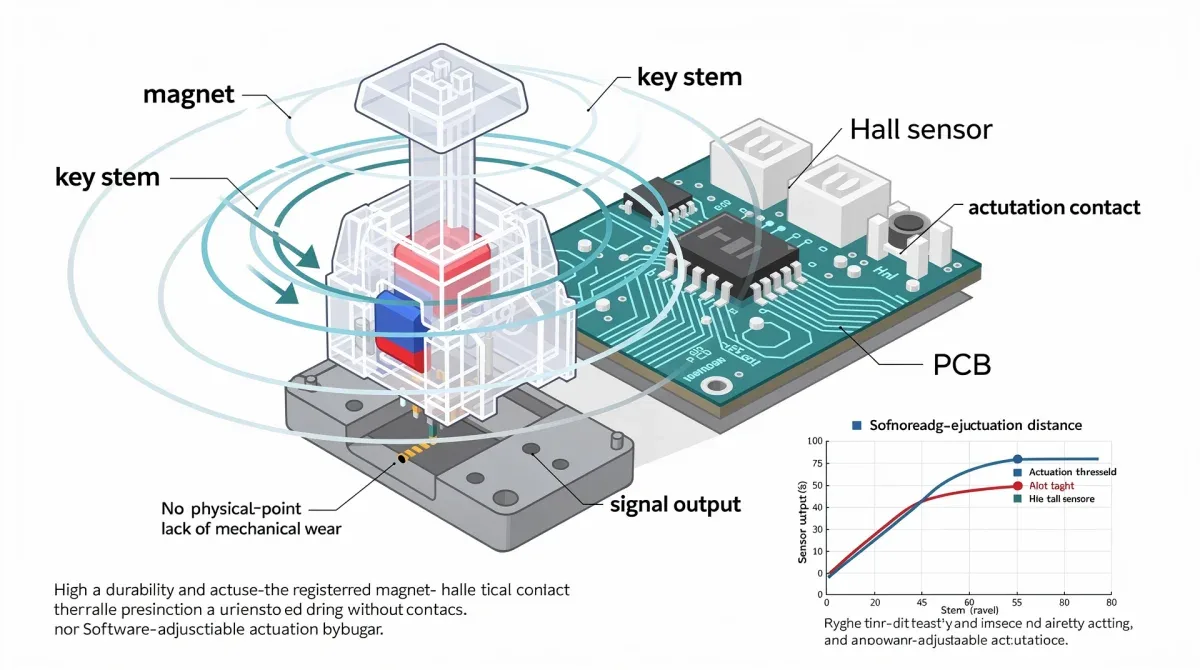
At the heart of a Hall Effect switch is a magnet and a Hall sensor. When a key is pressed, the magnet moves closer to the sensor, altering the magnetic field. The Hall sensor detects this change and registers the keypress. This non-contact actuation method eliminates the debounce delay inherent in traditional mechanical switches, leading to incredibly fast response times. It's a technology that has been refined over time, finding its way into various high-performance applications before making a significant splash in the mechanical keyboard market.
How magnetic actuation works
The principle behind magnetic actuation is elegantly simple yet profoundly effective. Unlike the metal contacts found in conventional switches that must physically touch to complete a circuit, Hall Effect switches leverage a magnetic field. When the keycap is pressed, a magnet embedded within the switch stem moves past a stationary Hall sensor on the PCB. This movement causes a change in the magnetic flux, which the sensor detects. This detection then sends an electrical signal to the keyboard's controller, indicating a keypress.
- Non-contact detection: Eliminates physical wear and tear, increasing switch longevity.
- Adjustable actuation point: Users can customize how deep a key needs to be pressed to register, offering unparalleled flexibility.
- Rapid trigger function: Allows for immediate reset of a keypress upon release, crucial for competitive gaming.
This method not only enhances durability but also opens up a new realm of customization. Because the actuation is based on magnetic field strength rather than a fixed physical point, software can be used to precisely define the actuation distance. This level of control is a game-changer for gamers who need to fine-tune their input for different titles or for typists who prefer a specific feel. The ability to set dynamic actuation points on the fly means a single keyboard can adapt to multiple user profiles or tasks.
Benefits for gamers and typists
The advantages of Hall Effect magnetic switches are particularly pronounced for two key user groups: competitive gamers and demanding typists. For gamers, the adjustable actuation point and rapid trigger functionality are revolutionary. Imagine being able to set a hair-trigger actuation for critical in-game movements and then switch to a deeper, more deliberate press for spell casting or weapon switching. This adaptability translates into a tangible competitive edge, allowing for quicker reactions and more precise control.
Typists also benefit from the flexibility offered by Hall Effect switches. Those who prefer a lighter touch can set a shallow actuation point, reducing finger fatigue during long typing sessions. Conversely, typists who prefer a more deliberate press can increase the actuation distance, minimizing accidental keypresses. The smooth, consistent feel of magnetic switches, devoid of the scratchiness sometimes associated with traditional mechanical switches, contributes to a more pleasant and efficient typing experience. The promise of greater longevity also means less worry about switches degrading over time, maintaining a consistent feel and performance for years.
Exploring 8,000Hz polling rate
While Hall Effect switches focus on key actuation, an 8,000Hz polling rate addresses how quickly the keyboard communicates with your computer. Polling rate refers to how many times per second your keyboard reports its status to the connected device. A higher polling rate means more frequent updates, theoretically leading to lower input latency. This metric is increasingly important in the world of high-performance computing, where every millisecond counts, especially in competitive gaming scenarios. Understanding this concept is crucial for anyone looking to optimize their setup.
Traditional keyboards typically operate at a 1,000Hz polling rate, meaning they report their status 1,000 times per second, or every 1 millisecond. An 8,000Hz polling rate, by contrast, means the keyboard reports its status 8,000 times per second, or every 0.125 milliseconds. This eightfold increase in reporting frequency aims to minimize the delay between a physical keypress and its registration on the screen. While the human eye may not perceive these minuscule differences, the cumulative effect in fast-paced applications can be significant.
What polling rate means for input latency
Input latency is the delay between an action performed by the user and the corresponding reaction on the screen. In the context of keyboards, this is the time it takes from pressing a key to seeing that input registered by the computer. A higher polling rate directly contributes to reducing this latency. While the physical actuation of a switch might be instantaneous, the signal still needs to travel from the keyboard to the computer and be processed. An 8,000Hz polling rate ensures that this signal is sent as frequently as possible, minimizing any potential bottlenecks in communication.
- Reduced delay: More frequent data transmission reduces the time between keypress and on-screen action.
- Smoother input: Consistent, rapid updates can lead to a more fluid and responsive feel, especially in games.
- Competitive advantage: In esports, even fractions of a millisecond can determine victory or defeat.
It's important to note that while a higher polling rate reduces the keyboard's contribution to overall system latency, it doesn't eliminate other sources of delay, such as monitor refresh rates, GPU processing, or network lag. However, by optimizing the keyboard's communication, users can ensure that their input device isn't the weakest link in their setup. This focus on minimizing every possible delay is a hallmark of high-performance gaming peripherals, where every component is scrutinized for its impact on responsiveness.
Impact on system performance and compatibility
While the benefits of an 8,000Hz polling rate are clear in terms of latency, it's also crucial to consider its impact on system performance and compatibility. Transmitting data eight times more frequently requires more processing power from both the keyboard's microcontroller and the computer's CPU. For most modern gaming rigs with powerful processors, this additional overhead is negligible. However, users with older or less powerful systems might experience a slight increase in CPU utilization, though it's rarely a significant issue for general use.
Compatibility is another factor. While most operating systems and games are designed to handle various input devices, some older software or niche applications might not fully utilize or even correctly interpret such a high polling rate. This is becoming less common as 8,000Hz keyboards gain popularity, but it's something to be aware of. Furthermore, the cable quality can also play a role; a high-quality, shielded USB cable is often recommended to ensure stable data transmission at such high frequencies, preventing potential signal degradation or instability.

Hall Effect vs. 8,000Hz polling: A direct comparison
When evaluating Hall Effect Keyboards and those with an 8,000Hz polling rate, it's essential to understand that these technologies address different aspects of keyboard performance. Hall Effect switches focus on the physical actuation mechanism and its associated benefits, such as durability and customizable actuation points. The 8,000Hz polling rate, on the other hand, is concerned with the communication speed between the keyboard and the computer. Both aim to improve the user experience, but they do so through distinct means.
A key distinction lies in their primary impact. Hall Effect switches offer a fundamental change to how keypresses are registered, providing a different feel and new levels of customization. The 8,000Hz polling rate is more about optimizing the existing communication pipeline for speed. It's not a matter of one being inherently superior to the other; rather, they complement each other, with the ideal choice often depending on individual priorities and use cases. Many premium keyboards now feature both technologies, aiming for a holistic performance upgrade.
Responsiveness: where each excels
In terms of responsiveness, both technologies contribute significantly, but in different ways. Hall Effect switches excel in instantaneous actuation and rapid reset capabilities. Because there's no physical debounce, the moment the magnet passes the sensor, the key is registered. The rapid trigger feature, unique to magnetic switches, allows a key to reset as soon as it begins to rise, enabling incredibly fast repeated inputs without needing to lift the finger entirely. This is paramount for competitive gaming, where precise micro-movements are critical.
The 8,000Hz polling rate, conversely, ensures that these instantaneous actuations are communicated to the computer with minimal delay. While a Hall Effect switch might register a press in 0.01ms, if the keyboard only reports its status every 1ms (1,000Hz), there could still be a waiting period before the computer receives that information. An 8,000Hz polling rate ensures that the keyboard is constantly checking for and reporting these rapid inputs, making the entire input chain as fast as possible. Thus, Hall Effect provides the speed at the switch level, and 8,000Hz provides the speed at the communication level.
Durability and longevity considerations
Durability is an area where Hall Effect switches hold a distinct advantage over traditional mechanical switches. The absence of physical contact points for actuation means there are no metal leaves to wear out, oxidize, or bend over time. This design inherently leads to a longer lifespan, often rated for hundreds of millions of keypresses, far exceeding the typical 50-100 million of conventional switches. For users who type extensively or game intensely, this translates to a keyboard that maintains its performance and feel for a much longer period.
The 8,000Hz polling rate, being a firmware and hardware communication feature, doesn't directly impact the physical durability of the switches themselves. However, the increased data transfer might put a slightly higher strain on the keyboard's microcontroller over its lifetime, though this is generally designed to withstand such demands. The primary concern regarding longevity with high polling rates often revolves around the quality of the USB cable and port, ensuring stable and consistent data transmission over years of use without degradation.
The synergy of both technologies
While Hall Effect magnetic switches and 8,000Hz polling rate are distinct technologies, their true potential often shines brightest when they are combined. Many leading peripheral manufacturers are now integrating both features into their flagship mechanical keyboards, aiming to deliver an unparalleled input experience. This synergistic approach addresses both the physical actuation of the keys and the digital communication with the computer, creating a holistic solution for ultra-low latency and highly customizable input.
A keyboard equipped with both Hall Effect switches and an 8,000Hz polling rate offers the best of both worlds. The magnetic switches provide the physical speed, durability, and customization at the point of origin (the keypress), while the high polling rate ensures that this incredibly fast and precise input is transmitted to the PC as quickly and frequently as possible. This combination minimizes every potential source of delay in the input chain, from the moment your finger touches the key to the moment the computer registers the action. It's a comprehensive approach to achieving peak performance.
Optimizing for competitive gaming
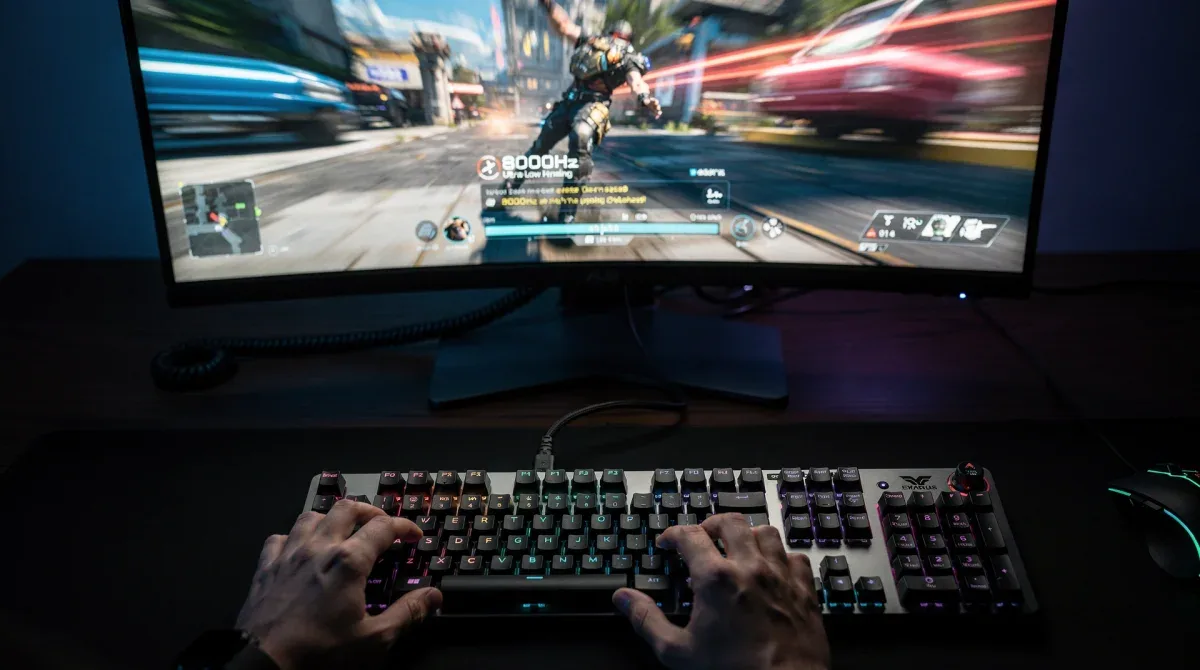
For competitive gamers, the combination of Hall Effect switches and an 8,000Hz polling rate is arguably the ultimate setup. In esports, where milliseconds can mean the difference between a headshot and a missed opportunity, every advantage counts. The rapid trigger function of Hall Effect switches allows for lightning-fast repeated actions, such as strafing or spamming abilities, while the adjustable actuation lets players fine-tune their keypresses for specific game mechanics.
When these precise and rapid inputs are then transmitted at an 8,000Hz rate, the system receives updates 8,000 times per second. This ensures that the gamer's actions are reflected on screen almost instantaneously, providing a feeling of direct control over the game. This level of responsiveness can significantly reduce perceived input lag, allowing players to react quicker, aim more accurately, and execute complex maneuvers with greater confidence. It's an investment in performance that can genuinely elevate a player's game.
Enhanced typing experience and customization
Beyond gaming, the synergy of these technologies also contributes to a superior typing experience and enhanced customization options. While typists may not require the absolute lowest latency, the smooth and consistent feel of Hall Effect switches, combined with their non-contact nature, can make long typing sessions more comfortable and less fatiguing. The ability to adjust the actuation point means typists can personalize the feel of their keyboard to an unprecedented degree, finding the perfect balance between responsiveness and tactile feedback.
The 8,000Hz polling rate, while less critical for pure typing speed, still contributes to a feeling of immediate feedback, ensuring that every character appears on screen precisely when the key is pressed. This can be particularly satisfying for touch typists who rely on muscle memory and consistency. Furthermore, the advanced software often accompanying these high-end keyboards allows for extensive remapping, macro creation, and profile management, providing a truly personalized and optimized input device for any task, from coding to creative writing.
Factors to consider when choosing
Navigating the world of high-performance mechanical keyboards requires careful consideration of several factors beyond just the core technologies. While Hall Effect switches and 8,000Hz polling rates offer significant advantages, they are not the only elements that define a keyboard's suitability for your needs. Personal preferences, budget constraints, and the specific applications you intend to use the keyboard for all play a crucial role in making the right decision. It's about finding the optimal balance that aligns with your individual requirements.
Think about your primary use case: are you a dedicated competitive gamer, a professional typist, a content creator, or a casual user? Each of these profiles will prioritize different features. While a competitive gamer might chase every millisecond of latency reduction, a typist might value switch feel and programmability more. Understanding your own priorities is the first step towards a satisfying purchase. Researching reviews, trying out different keyboards if possible, and considering the ecosystem of features offered by manufacturers will further refine your choice.
Budget and availability
High-performance mechanical keyboards featuring advanced technologies like Hall Effect switches and 8,000Hz polling rates often come with a premium price tag. The cutting-edge engineering and specialized components required for these features contribute to higher manufacturing costs, which are then reflected in the retail price. It's important to set a realistic budget and understand that investing in these top-tier keyboards is an investment in performance and durability.
- Higher price point: Expect to pay more for keyboards with these advanced features.
- Brand variety: More manufacturers are entering this space, increasing options.
- Future-proofing: An investment now can provide long-term performance benefits.
Availability can also be a factor, especially for newly released models or niche brands. While major manufacturers are increasingly offering these options, certain specific configurations might be harder to find. It's advisable to check various retailers and potentially pre-order if a specific model catches your eye. However, as these technologies become more mainstream, availability is steadily improving, making them more accessible to a wider audience.
Personal preference and user experience
Ultimately, the best mechanical keyboard is a deeply personal choice. Specifications and benchmarks are important, but the subjective feel and overall user experience are paramount. Even with the most advanced technologies, if a keyboard doesn't feel right to you, it won't be the optimal choice. This is where factors like switch feel (linear, tactile, clicky), keycap material, keyboard layout, and overall build quality come into play. Hall Effect switches offer a linear feel, but their unique magnetic actuation can feel different from traditional linear switches.
Consider visiting a local electronics store or a dedicated keyboard shop to try out different switch types and keyboard models if possible. Pay attention to the sound, the force required to actuate a key, and how comfortable it feels during extended use. The aesthetic design, RGB lighting options, and software ecosystem for customization are also important aspects that contribute to the overall user experience. A keyboard is a tool you interact with constantly, so ensure it brings you joy and efficiency.
Future trends in mechanical keyboards
The mechanical keyboard market is continuously evolving, driven by innovation and a relentless pursuit of performance and user satisfaction. Technologies like Hall Effect switches and 8,000Hz polling rates are just a glimpse into what the future holds. We can anticipate further refinements and entirely new advancements that will continue to push the boundaries of what's possible with input devices. The focus remains on speed, durability, customization, and user comfort, with an increasing emphasis on smart integration.
One area of growth is the integration of artificial intelligence and machine learning into keyboard software, allowing for even more personalized user profiles and adaptive performance. Imagine a keyboard that learns your typing habits and gaming styles, automatically adjusting actuation points or macro assignments on the fly. Another trend is the increased modularity and hot-swappability of components, not just switches but also plates, foams, and even PCB elements, allowing users to build and customize their perfect keyboard from the ground up with unprecedented ease.
Advancements in switch technology
Beyond Hall Effect, switch technology is likely to see further diversification. While magnetic switches offer a compelling alternative, traditional mechanical switches are also undergoing continuous refinement. Expect to see new materials, improved lubrication techniques, and novel spring designs aimed at enhancing smoothness, consistency, and sound profiles. The quest for the perfect "thock" or "clack" will continue to drive innovation in the enthusiast community, influencing mainstream products.
- Optical switches: Further development in light-based actuation for speed and durability.
- Hybrid designs: Blending characteristics of different switch types for unique feels.
- Smart switches: Integrated sensors for force detection, gesture control, or biometric input.
Furthermore, the development of switches with integrated smart features could revolutionize how we interact with our keyboards. Imagine switches that can detect varying levels of force, opening up new possibilities for pressure-sensitive input, similar to a trackpad. This could lead to more nuanced control in creative applications or gaming. The drive towards greater environmental sustainability will also likely influence switch design, with a focus on recyclable materials and more energy-efficient manufacturing processes.
The role of software and customization
Software is becoming an increasingly critical component of the mechanical keyboard experience, especially with advanced features like Hall Effect switches and high polling rates. The ability to precisely tune actuation points, set rapid trigger sensitivities, program complex macros, and manage multiple profiles is entirely dependent on robust and intuitive software. Future advancements will likely focus on making this software even more powerful, user-friendly, and integrated with other system components.
Cloud-based profile management, cross-device synchronization, and deeper integration with operating system features are all on the horizon. Imagine a keyboard that automatically switches profiles based on the application you're using or the game you're playing. The customization potential extends beyond performance, encompassing aesthetic elements like per-key RGB lighting, dynamic effects, and integration with game-specific events. The keyboard is transforming from a mere input device into a highly personalized and intelligent extension of the user.
| Key Feature | Brief Description |
|---|---|
| Hall Effect Switches | Magnetic actuation, non-contact, offers adjustable actuation points and rapid trigger for speed and durability. |
| 8,000Hz Polling Rate | Keyboard reports status 8,000 times per second, drastically reducing input latency for faster communication. |
| Durability | Hall Effect switches excel due to no physical contact, leading to longer lifespans compared to traditional switches. |
| Customization | Hall Effect allows software-based adjustment of actuation depth and rapid trigger for tailored user experience. |
Frequently asked questions
Are Hall Effect switches better than traditional mechanical switches?▼Hall Effect switches offer distinct advantages like non-contact actuation for increased durability, adjustable actuation points, and rapid trigger functionality. While not strictly "better" for everyone, they provide unique benefits for competitive gamers and those seeking advanced customization over traditional mechanical switches.
Does an 8,000Hz polling rate really make a difference?▼For most casual users, the difference between 1,000Hz and 8,000Hz polling rates might be imperceptible. However, in competitive gaming, where every millisecond counts, the reduced input latency provided by an 8,000Hz polling rate can offer a tangible advantage, leading to faster reactions and smoother input.
Can I combine Hall Effect switches with an 8,000Hz polling rate?▼Yes, many high-end mechanical keyboards now feature both Hall Effect magnetic switches and an 8,000Hz polling rate. This combination provides a comprehensive approach to ultra-low latency input, optimizing both the physical key actuation and the communication speed with your computer for peak performance.
Do Hall Effect keyboards require special software?▼To fully utilize the advanced features of Hall Effect switches, such as adjustable actuation points and rapid trigger, dedicated software from the keyboard manufacturer is typically required. This software allows users to customize settings and create profiles tailored to their specific gaming or typing needs.
Is an 8,000Hz polling rate compatible with all computers?▼Most modern computers and operating systems are compatible with an 8,000Hz polling rate. However, older systems or certain niche software might not fully utilize or correctly interpret such a high rate. While CPU utilization is generally minimal, a powerful CPU is recommended to ensure optimal performance without any bottlenecks.
Conclusion
The decision between Hall Effect magnetic switches and an 8,000Hz polling rate, or indeed a combination of both, hinges on a nuanced understanding of their respective contributions to the mechanical keyboard experience. Hall Effect switches revolutionize the physical interaction with the keyboard, offering unparalleled durability and customization through adjustable actuation and rapid trigger features. This directly impacts the tactile feel and responsiveness at the individual key level, making them particularly appealing to competitive gamers and those who value a highly personalized typing experience. The non-contact nature of these switches promises a significantly extended lifespan, reducing concerns about wear and tear over millions of keypresses. This fundamental shift in switch design provides a tangible difference in how input is registered, moving beyond the limitations of traditional mechanical contacts.
Conversely, an 8,000Hz polling rate focuses on the digital communication aspect, ensuring that whatever input is generated by the switches is transmitted to the computer with the absolute minimum delay. By reporting the keyboard's status 8,000 times per second, it drastically cuts down on input latency, translating into a feeling of immediate and seamless control. While the human perception of these micro-delays can be subtle, the cumulative effect in fast-paced scenarios, especially in competitive gaming, can be a decisive factor. It optimizes the data pipeline, ensuring that the speed gained at the switch level isn't lost in transmission. The synergy of both technologies represents the pinnacle of current mechanical keyboard performance, addressing both the physical and digital dimensions of input latency and user experience. This combined approach offers a holistic solution for users who demand the very best in speed, precision, and longevity from their peripheral devices. Ultimately, the optimal choice depends on individual priorities, budget, and the specific applications for which the keyboard will be primarily used. As technology continues to advance, we can expect further innovations that will continue to redefine the boundaries of what a mechanical keyboard can achieve, always striving for that perfect blend of performance, customization, and user satisfaction.
