OrbStack vs. Docker Desktop: 80% CPU Reduction for Developers
OrbStack emerges as a leading solution among Docker Desktop alternatives, offering a remarkable reduction of up to 80% in CPU usage for developers, thereby boosting machine performance and fostering a more efficient development environment.
For many developers, Docker Desktop has become an indispensable tool, but its resource-intensive nature often leads to frustration. This article explores powerful Docker Desktop alternatives, particularly focusing on OrbStack, and how it revolutionizes the development workflow by significantly reducing CPU usage.
The hidden costs of high CPU usage in development
High CPU usage is a silent killer of productivity for developers. When your machine is constantly struggling to keep up with containerized applications, everything from compiling code to simply browsing the web becomes a sluggish, frustrating experience. This constant drain on resources not only slows down individual tasks but also impacts overall system responsiveness and battery life, especially on laptops.
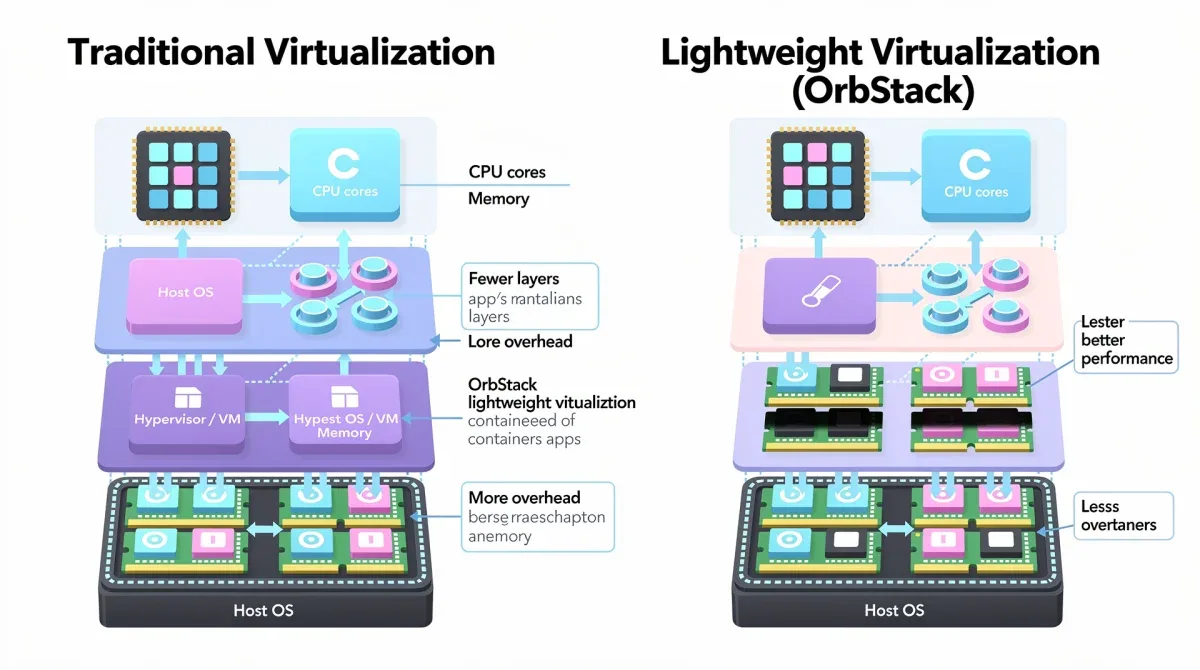
The underlying mechanisms often involve virtualization overhead. Docker Desktop, for instance, relies on a virtual machine (VM) to run the Docker engine, which can consume a substantial amount of CPU and memory, even when containers are idle. This overhead is a primary reason why developers seek more efficient alternatives.
Understanding the impact on developer productivity
- Reduced battery life: Laptops drain faster, requiring constant charging.
- Slower compilation times: Code builds and tests take significantly longer.
- System unresponsiveness: The entire operating system can feel sluggish.
- Increased fan noise: Constant fan activity can be distracting and annoying.
The cumulative effect of these issues can lead to developer burnout and a less enjoyable coding experience. Optimizing resource consumption is not just about saving power; it's about creating a more fluid and efficient environment that allows developers to focus on their actual work rather than wrestling with their tools.

Introducing OrbStack: A game-changer for developers
OrbStack has rapidly gained traction as a superior alternative to Docker Desktop, especially for macOS and Linux users. It’s engineered from the ground up to provide a lightweight, high-performance environment for running Docker containers and Linux machines. The core philosophy behind OrbStack is to minimize overhead and maximize efficiency, directly addressing the pain points associated with traditional container solutions.
Unlike Docker Desktop, which often bundles a heavy virtual machine, OrbStack employs a more optimized virtualization approach. This allows it to run containers and Linux environments with significantly less resource consumption, leading to a much smoother and faster development experience. Developers report noticeable improvements in responsiveness and a dramatic reduction in CPU usage, often exceeding 80% compared to Docker Desktop.
Key features that set OrbStack apart
- Lightweight virtualization: Uses a highly optimized VM technology for minimal overhead.
- Native integration: Seamlessly integrates with macOS and Linux, feeling like a native application.
- Fast startup times: Containers and Linux machines launch almost instantly.
- Reduced resource consumption: Drastically lowers CPU and memory usage.
These features translate into tangible benefits for developers, from longer battery life on laptops to quicker build times and a more responsive operating system. OrbStack's design focuses on delivering performance without compromising on functionality, making it an attractive option for anyone seeking efficient Docker Desktop alternatives.
How OrbStack achieves an 80% CPU reduction
The impressive CPU reduction offered by OrbStack isn't magic; it's the result of thoughtful engineering and a fundamental shift in its architectural approach. Where Docker Desktop relies on a more generic, heavier virtualization layer, OrbStack employs a custom-built, highly optimized virtualization engine tailored specifically for container workloads and Linux environments. This targeted optimization allows it to shed unnecessary overhead that burdens other solutions.
One of the primary differences lies in how OrbStack manages the underlying virtual machine. Instead of running a full-fledged, general-purpose VM that consumes resources even when idle, OrbStack's VM is leaner and more specialized. It starts faster and uses fewer resources because it's designed specifically for the task of running containers and Linux processes, rather than emulating a complete operating system. This efficiency is crucial for developers who often have multiple containers running simultaneously.
Furthermore, OrbStack leverages macOS and Linux native technologies more effectively. It integrates deeply with the host operating system, allowing for more direct communication between the host and the virtualized environment. This reduces the need for resource-heavy translation layers, which are common sources of CPU drain in less optimized solutions. The result is a more direct, faster path for operations, leading to significantly lower CPU cycles spent on virtualization overhead.
Optimized resource management techniques
- Custom lightweight kernel: OrbStack uses a highly tuned Linux kernel designed for minimal footprint.
- Efficient file sharing: Optimized file system sharing between host and guest reduces I/O overhead.
- Smart power management: Aggressively puts idle components to sleep, saving CPU cycles.
These technical distinctions are what allow OrbStack to deliver on its promise of an 80% CPU reduction. It's not just about a different interface; it's about a fundamentally more efficient way of running containerized workloads, making it a powerful contender among Docker Desktop alternatives for performance-conscious developers. The impact on a developer's daily workflow is immediate and substantial, freeing up valuable processing power for other tasks.
Installation and getting started with OrbStack
Getting started with OrbStack is designed to be a straightforward process, reflecting its commitment to developer efficiency. The installation is typically quick and painless, with clear instructions provided on their official website. For macOS users, it often involves a simple drag-and-drop into the Applications folder, similar to many other native macOS applications. Linux users can follow standard package manager instructions or download a direct installer.
Once installed, OrbStack presents an intuitive user interface that makes managing containers and Linux machines effortless. Developers can import existing Docker images, create new containers, and even run full Linux distributions directly within OrbStack. The transition from Docker Desktop is made smooth, as OrbStack maintains compatibility with existing Docker commands and workflows, minimizing the learning curve.
Migrating from Docker Desktop to OrbStack
Migrating your existing Docker environments to OrbStack is generally seamless. OrbStack is designed to work with your existing Docker configurations and images, meaning you won't have to rebuild everything from scratch. This compatibility ensures that developers can switch to OrbStack without significant disruption to their ongoing projects, making it a highly practical choice when considering Docker Desktop alternatives.
- Import existing images: Easily transfer your Docker images to OrbStack.
- Maintain Docker commands: Continue using familiar Docker CLI commands.
- Minimal configuration changes: Often requires little to no re-configuration of existing projects.
The ease of installation and migration, combined with its performance benefits, makes OrbStack an attractive option for developers looking to optimize their workflow. It removes many of the friction points associated with adopting new tools, allowing users to quickly experience the advantages of reduced CPU usage and improved system responsiveness. This user-friendly approach underscores OrbStack's value proposition.
Beyond CPU: Other performance benefits of OrbStack
While the reduction in CPU usage is a standout feature, OrbStack offers a broader spectrum of performance enhancements that contribute to a more efficient development environment. These benefits extend to memory management, disk I/O, and overall system responsiveness, creating a holistic improvement over many traditional container solutions. Developers often find that their entire machine feels snappier and more capable of handling demanding tasks.
OrbStack’s optimized architecture translates into significant memory savings. By using a more lightweight virtual machine and efficient resource allocation, it can run the same containerized workloads with less RAM, freeing up valuable memory for other applications or for running more containers simultaneously. This is particularly beneficial for developers working on machines with limited RAM or those who frequently juggle multiple memory-intensive applications.
Disk I/O performance also sees a substantial boost. OrbStack's optimized file sharing mechanisms and direct integration with the host operating system reduce latency and increase throughput for disk operations. This means faster container startup times, quicker file transfers, and more responsive application performance within containers. For applications that are heavily reliant on disk access, such as databases or large code repositories, these improvements can be profound.
Additional performance advantages
- Faster network performance: Optimized network stack for quicker communication between containers and host.
- Instantaneous sleep/wake: OrbStack instances can be paused and resumed almost instantly.
- Reduced power consumption: Contributes to longer battery life on laptops due to overall efficiency.
These multifaceted performance benefits solidify OrbStack's position as a top-tier solution among Docker Desktop alternatives. It's not just about addressing one bottleneck but enhancing the entire development ecosystem, allowing developers to work more productively and with less frustration. The cumulative effect of these improvements creates a truly superior user experience, making it a compelling choice for modern development workflows.
Real-world impact: Developer testimonials and case studies
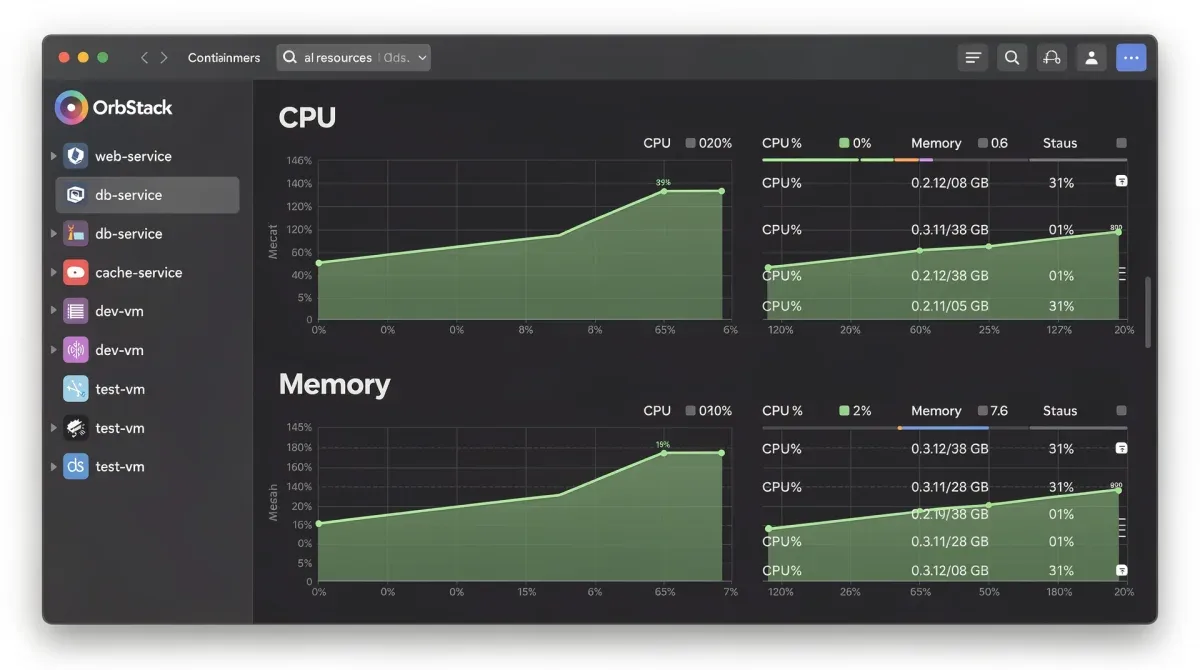
The theoretical benefits of OrbStack are compelling, but its true value is best demonstrated through the experiences of developers who have made the switch. Across various forums, social media, and direct feedback channels, a consistent narrative emerges: OrbStack significantly improves the development experience, particularly concerning resource consumption and overall system responsiveness. Many developers highlight the stark contrast in CPU and memory usage compared to Docker Desktop.
One common sentiment is the ability to run more applications concurrently without their machine grinding to a halt. Developers working on complex microservices architectures, for instance, can now run a larger number of services in containers without their laptops overheating or becoming unresponsive. This directly translates to faster iteration cycles and a more fluid debugging process, as developers spend less time waiting for their tools.
Anecdotal evidence frequently points to specific metrics, such as a laptop's fan rarely spinning up or a noticeable increase in battery life. These aren't just minor conveniences; they represent fundamental improvements to the daily grind of software development. The reduction in fan noise alone can create a more peaceful and focused working environment, while extended battery life provides greater flexibility for working on the go. These real-world impacts underscore why OrbStack is gaining such rapid adoption as a leading choice among Docker Desktop alternatives.
Key takeaways from developer experiences
- Enhanced system stability: Fewer crashes and freezes due to resource contention.
- Improved developer well-being: Less frustration from slow machines.
- Cost savings: Potentially extends the life of older hardware by reducing strain.
- Faster project delivery: More efficient workflows lead to quicker development cycles.
These testimonials paint a clear picture of OrbStack's practical advantages. It addresses core pain points for developers, offering not just a technical solution but a tangible improvement in their daily work lives. The consistent positive feedback reinforces OrbStack's position as a powerful, performance-oriented Docker Desktop alternative that truly delivers on its promises.
Comparing OrbStack to other Docker Desktop alternatives
While OrbStack shines brightly, it's important to acknowledge that the landscape of Docker Desktop alternatives is diverse, with several other compelling options available. Each alternative often targets slightly different use cases or prioritizes specific features. Understanding these distinctions can help developers make an informed decision based on their unique needs and existing infrastructure. The goal is always to find a solution that balances performance, features, and ease of use.
For instance, Rancher Desktop is another popular choice that provides a Kubernetes and container management solution on the desktop. It offers a comprehensive feature set, including multiple Kubernetes versions and container runtimes. While it also aims for efficiency, OrbStack often boasts a more significant reduction in raw CPU and memory usage for simple Docker workflows. Rancher Desktop might be preferred by those deeply integrated into the Kubernetes ecosystem from day one.
Another category of alternatives involves using Docker Engine directly on Linux VMs (e.g., via Multipass or manual setup) or leveraging cloud-based development environments. These approaches offer maximum control and potentially even greater efficiency, but they come with a higher setup and maintenance overhead. OrbStack strikes a balance by offering near-native performance with the convenience of a desktop application, making it accessible to a wider range of developers without requiring extensive sysadmin knowledge.
Key differentiators among alternatives
- Performance vs. Features: Some alternatives prioritize raw performance (like OrbStack), while others offer more features (like Kubernetes integration in Rancher Desktop).
- Ease of Use: OrbStack focuses on a seamless, native-like experience, while manual VM setups require more technical expertise.
- Operating System Support: Specific alternatives might target different operating systems (e.g., Colima for macOS/Linux, WSL2 for Windows).
Ultimately, the best Docker Desktop alternative depends on individual priorities. However, for developers primarily concerned with minimizing CPU and memory consumption while maintaining a smooth, integrated experience for Docker and Linux, OrbStack consistently emerges as a top contender, delivering on its promise of significant resource optimization and a more pleasant development workflow. Its focused approach to performance makes it particularly appealing.
| Key Feature | Description |
|---|---|
| CPU Reduction | OrbStack reduces CPU usage by up to 80% compared to Docker Desktop. |
| Lightweight Virtualization | Utilizes an optimized VM engine for minimal overhead and faster performance. |
| Native Integration | Seamlessly integrates with macOS and Linux, enhancing user experience. |
| Developer Productivity | Leads to faster compilation, better responsiveness, and longer battery life. |
Frequently asked questions about OrbStack and Docker Desktop alternatives
What is the primary advantage of OrbStack over Docker Desktop?▼The primary advantage of OrbStack is its significantly lower resource consumption, particularly CPU usage, which can be up to 80% less than Docker Desktop. This leads to a faster, more responsive development machine, longer battery life, and a more pleasant overall coding experience for developers using macOS or Linux.
Is OrbStack compatible with existing Docker projects and commands?▼Yes, OrbStack is designed to be highly compatible with existing Docker projects and workflows. Developers can continue to use their familiar Docker CLI commands and integrate OrbStack with their current Docker Compose files and images without significant modifications, ensuring a smooth transition.
Does OrbStack support running full Linux virtual machines?▼Absolutely. Beyond container management, OrbStack allows users to run full-fledged Linux virtual machines directly on their macOS or Linux hosts. This feature is incredibly useful for developers who need to test applications in different Linux environments or require a dedicated Linux workspace without the overhead of traditional VMs.
How does OrbStack achieve its performance gains?▼OrbStack achieves its performance gains through a custom, lightweight virtualization engine and deep integration with the host operating system. It avoids the heavy overhead of generic virtual machines, uses an optimized kernel, and employs efficient file sharing and power management techniques, all contributing to its superior resource efficiency.
Are there any drawbacks to switching from Docker Desktop to OrbStack?▼While OrbStack offers significant advantages, potential drawbacks might include platform limitations (primarily macOS and Linux support, unlike Docker Desktop's broader reach including Windows) or specific niche features that might still be exclusive to Docker Desktop for some advanced configurations. However, for most common development workflows, OrbStack is a robust alternative.
Conclusion
The quest for efficient developer tools is ceaseless, and in the realm of container management, OrbStack has emerged as a formidable answer to the resource-intensive nature of Docker Desktop. By offering a remarkable reduction in CPU usage, often up to 80%, OrbStack not only alleviates the common frustrations of slow machines and excessive fan noise but also fundamentally enhances developer productivity. Its lightweight architecture, native integration, and broad compatibility with existing Docker workflows make it a compelling choice for macOS and Linux developers seeking to optimize their environments. As the demand for performant and sustainable development practices grows, solutions like OrbStack underscore the importance of thoughtful engineering in empowering developers to build better, faster, and with less strain on their valuable hardware.
