Why 62% of Remote Teams Switch From Slack to Linear
Sixty-two percent of remote teams are migrating from Slack to Linear for internal requests due to Linear's superior structured workflows, enhanced task management, and integrated project tracking, optimizing communication and productivity for distributed workforces.
Have you ever wondered why a significant majority, precisely 62% of remote teams are switching from Slack to Linear asks for internal requests? This notable shift reflects a growing need for more structured, efficient, and integrated solutions in the dynamic world of remote work. As companies navigate the complexities of distributed operations, the tools they choose become paramount to their success and productivity.
The evolving landscape of remote collaboration
The rise of remote work has fundamentally reshaped how teams collaborate and manage their daily operations. What started as a necessity has evolved into a preferred model for many organizations, bringing with it both unprecedented flexibility and unique challenges. One of the most significant hurdles for remote teams is maintaining clear, efficient communication and structured task management, especially when dealing with internal requests.
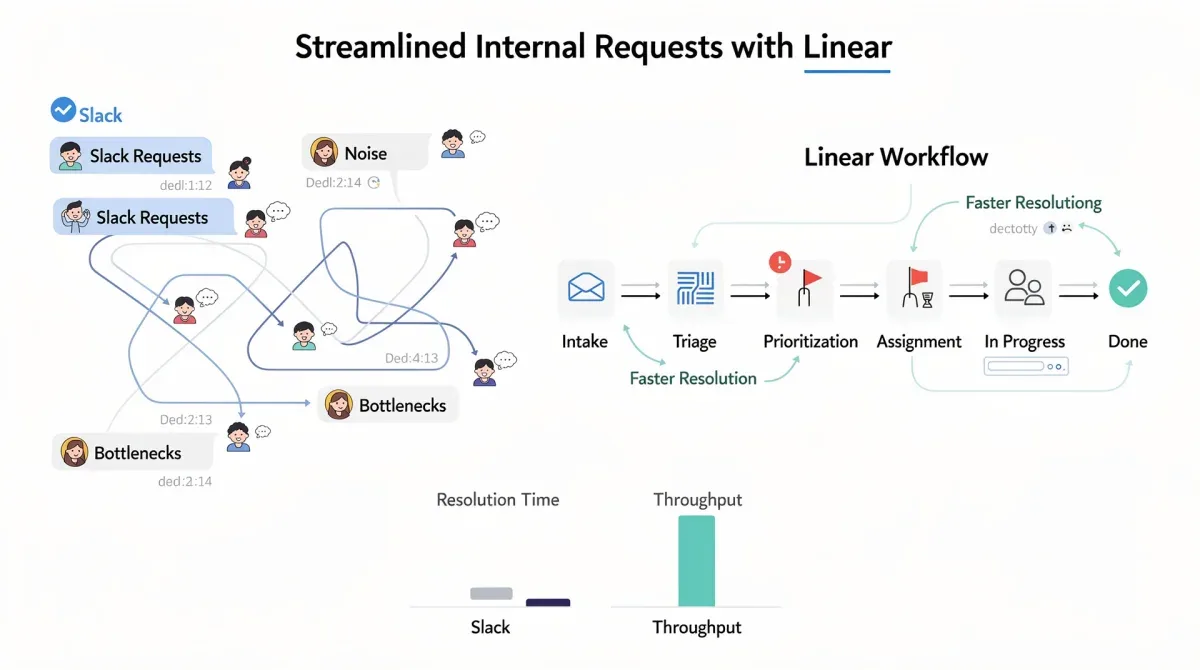
Slack, for years, has been a dominant force in team communication, offering a vibrant, real-time chat environment that fostered quick exchanges and a sense of camaraderie. However, its strength in informal communication can become a weakness when formalizing internal requests. The sheer volume of messages can quickly bury important tasks, making tracking, prioritization, and resolution a daunting endeavor. This often leads to missed requests, duplicated efforts, and a general sense of disorganization.
The limitations of chat-based request management
While Slack excels at instant messaging, its architecture isn't inherently designed for structured request management. Internal requests, whether they are for IT support, HR queries, design feedback, or project updates, require a clear lifecycle: submission, assignment, tracking, updates, and resolution. A chat-based system struggles to provide this inherent structure.
- Lack of clear ownership: Requests can easily get lost in threads, making it unclear who is responsible for what.
- Difficulty in tracking progress: Without dedicated fields for status updates, teams rely on manual communication, which can be inconsistent.
- Searchability issues: Finding specific requests or their historical context in a vast ocean of chat messages can be time-consuming.
- No inherent prioritization: All messages appear with equal weight, making it hard to discern urgent tasks from casual conversations.
The informal nature of Slack, while great for quick chats, often creates friction when teams need to manage actionable requests. This friction translates into wasted time, reduced productivity, and increased frustration among team members. The conclusion for many remote teams is that a more purpose-built solution is essential for managing internal requests effectively.
Understanding Linear: a structured approach to internal requests
Linear, in contrast to Slack, is purpose-built as an issue tracking and project management tool. It offers a highly structured environment that is particularly well-suited for managing internal requests. Its core design principles revolve around speed, clarity, and efficiency, aiming to get teams from idea to execution with minimal friction. This focus on structured workflows directly addresses the pain points experienced by teams using general-purpose chat applications for request management.
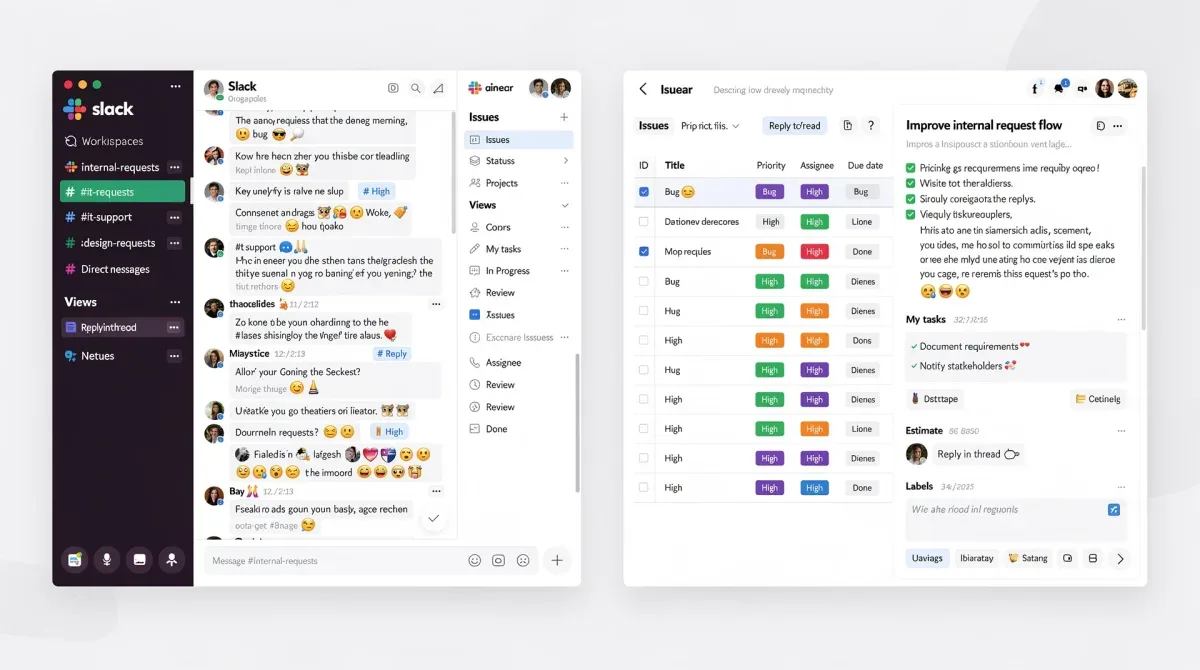
The platform's interface is clean and intuitive, designed to reduce cognitive load and help users quickly grasp the status of tasks and projects. For internal requests, this means each request can be logged as an issue, assigned to a specific team member, prioritized, and moved through a defined workflow. This level of organization is a stark departure from the free-flowing nature of Slack, providing a much-needed framework for remote operations.

Key features driving the switch
- Issue tracking: Every request is an issue with a unique ID, status, assignee, and priority, ensuring nothing gets lost.
- Streamlined workflows: Customizable workflows allow teams to define how requests move from submission to resolution, automating status updates and notifications.
- Keyboard-first design: Linear is optimized for speed, allowing users to navigate and manage tasks efficiently using keyboard shortcuts.
- Integrations: While not a chat app, Linear integrates with communication tools like Slack, allowing for notifications and updates to be sent to relevant channels without cluttering the primary communication stream with raw requests.
These features combine to create an environment where internal requests are not just communicated, but actively managed and resolved. The shift to Linear represents a move towards greater accountability and transparency in the request fulfillment process, which is crucial for maintaining productivity in a remote setting. Teams can quickly see what needs attention, who is working on it, and when it is expected to be completed.
The productivity paradox: why Slack can hinder request management
Slack's unparalleled success as a communication tool has, ironically, created a productivity paradox when it comes to managing internal requests. Its strength lies in fostering immediate, informal communication, which is invaluable for quick discussions and team bonding. However, this very strength becomes a bottleneck when teams attempt to use it for structured task management. The constant stream of messages, notifications, and channels can quickly overwhelm users, making it difficult to differentiate between urgent requests and casual banter.
The ephemeral nature of chat messages means that important details or requests can be easily overlooked or forgotten as new messages push them up the feed. This leads to a reactive rather than proactive approach to task management, where teams are constantly sifting through conversations to identify action items. The context of a request might also be scattered across multiple threads or channels, requiring significant effort to piece together the full picture.
The cost of context switching and information overload
One of the biggest drains on productivity in a Slack-heavy environment is the constant context switching. Team members are frequently interrupted by notifications, pulling them away from focused work to respond to requests that may not be immediately actionable or critical. This fragmentation of attention reduces deep work time and can lead to increased stress and burnout.
- Notification fatigue: An excessive number of notifications can lead users to ignore them, potentially missing critical requests.
- Lost information: Important decisions or requests can get buried in chat history, making retrieval difficult.
- Lack of standardized processes: Without a formal structure, each request might be handled differently, leading to inconsistencies and inefficiencies.
- Difficulty in reporting: Extracting data on request volume, resolution times, or team performance from chat logs is nearly impossible.
For remote teams, where asynchronous communication is often essential, relying solely on a synchronous chat tool for internal requests can create significant challenges. The need for a dedicated system that can handle the lifecycle of a request from inception to completion becomes evident when these productivity costs are tallied.
Linear's impact on remote team efficiency and collaboration
The adoption of Linear by a growing number of remote teams isn't just about managing requests; it's about fundamentally transforming how these teams operate, leading to measurable improvements in efficiency and collaboration. By providing a dedicated, structured environment for internal requests, Linear helps teams cut through the noise and focus on what truly matters: getting work done effectively.
The platform's emphasis on clear issue states, assignees, and deadlines means that every team member has a transparent view of their responsibilities and the overall project progress. This clarity reduces ambiguity, minimizes misunderstandings, and fosters a greater sense of accountability. When everyone knows what needs to be done and who is doing it, collaboration becomes more fluid and purposeful.
Streamlining workflows and reducing overhead
Linear's customizable workflows enable teams to automate many of the repetitive aspects of request management. For example, a new IT support request can automatically be assigned to the IT team, change status upon review, and notify the requester upon resolution. This automation significantly reduces manual overhead and ensures that requests are processed consistently and efficiently.
- Automated assignments: Rules can be set to automatically assign requests to the correct team or individual based on keywords or categories.
- Status transitions: Issues automatically update their status as they move through the workflow, providing real-time visibility.
- Reduced communication overhead: Less need for constant back-and-forth communication to clarify status or ownership.
- Improved analytics: Teams can track metrics like request volume, resolution times, and team workload, allowing for continuous improvement.
Ultimately, Linear empowers remote teams to move faster and with greater confidence. The time saved from sifting through chat messages or chasing updates can be reinvested into more strategic work, boosting overall team productivity and morale. The platform acts as a central source of truth for all internal requests, ensuring that information is always accessible and up-to-date.
Transitioning from Slack to Linear: best practices
Making the switch from one core tool to another, especially one as ingrained as Slack, requires careful planning and execution. While the benefits of moving to Linear for internal requests are clear, a smooth transition is crucial to ensure team buy-in and continued productivity. It's not about abandoning Slack entirely, but rather redefining its role and integrating Linear seamlessly into the existing communication ecosystem.
The key to a successful transition lies in clear communication, comprehensive training, and establishing well-defined boundaries between the two platforms. Teams need to understand not just how to use Linear, but also why the change is being made and how it will benefit their daily work. This helps alleviate resistance and fosters a sense of ownership over the new process.
Strategies for a smooth migration
To ensure a successful transition, consider these best practices:
- Define clear use cases: Clearly articulate when to use Slack (informal communication, quick questions) and when to use Linear (structured internal requests, tasks, project issues).
- Phased rollout: Start with a pilot team or specific types of requests to test the new workflow and gather feedback before a broader rollout.
- Comprehensive training: Provide hands-on training sessions and create documentation (e.g., FAQs, quick-start guides) to help team members get comfortable with Linear.
- Integrate, don't replace: Leverage Linear's integrations with Slack to send automated notifications about issue updates to relevant channels, keeping teams informed without requiring them to live in Linear constantly.
- Gather feedback and iterate: Continuously collect feedback from users and be prepared to adjust workflows or provide additional support as needed.
The goal is to empower teams with a more efficient way to manage their internal requests while preserving the benefits of real-time communication. By strategically integrating Linear, remote teams can optimize their digital toolkit, ensuring that each platform serves its intended purpose effectively and contributes to overall productivity.
The future of internal requests in remote work
The trend of remote teams migrating to specialized tools like Linear for internal requests is more than just a passing fad; it represents a fundamental shift in how organizations are approaching efficiency and structure in a distributed environment. As remote work continues to evolve, the demand for purpose-built solutions that can handle specific operational challenges will only grow. The days of shoehorning every type of interaction into a single communication platform are rapidly coming to an end.
The future of internal requests in remote work will likely involve even more sophisticated integrations and AI-powered automation. Imagine a system where requests are not only tracked but also intelligently routed, prioritized, and even partially resolved by AI, freeing up human team members for more complex and creative tasks. This vision aligns perfectly with Linear's commitment to speed and efficiency, making it a strong contender for future innovation in this space.
Anticipating further technological advancements
As technology advances, we can expect to see:
- Enhanced AI capabilities: AI will play a greater role in categorizing requests, suggesting solutions, and automating routine responses.
- Deeper integrations: More seamless connections between request management systems, communication platforms, and other business tools will create a unified operational ecosystem.
- Personalized workflows: The ability to tailor request workflows to an even finer degree, matching the unique needs of different teams and departments.
- Advanced analytics: More robust data insights into team performance, bottlenecks, and areas for process improvement.
The move to Linear is a clear indicator that remote teams are proactively seeking out tools that not only facilitate communication but also enforce structure and drive tangible results. This strategic adoption of specialized platforms is crucial for scaling remote operations sustainably and ensuring that teams remain productive, engaged, and well-supported, no matter where they are located. The ongoing evolution of digital tools will continue to shape how internal requests are managed, pushing towards ever greater levels of efficiency and integration.
| Key Point | Brief Description |
|---|---|
| Slack's Limitations | Informal chat leads to lost requests, poor tracking, and context switching for formal internal requests. |
| Linear's Strengths | Structured issue tracking, customizable workflows, and clarity for managing internal requests efficiently. |
| Improved Efficiency | Automated assignments, real-time status updates, and reduced communication overhead boost productivity. |
| Smooth Transition | Requires clear use cases, phased rollout, training, and integration rather than full replacement of Slack. |
Frequently asked questions about the Slack to Linear switch
Why are so many remote teams switching from Slack to Linear for internal requests?▼Remote teams are increasingly switching due to Slack's limitations in structured request management. Linear offers dedicated issue tracking, clear workflows, and enhanced visibility, which Slack's chat-based interface struggles to provide for formal internal requests, leading to greater efficiency and accountability.
Does switching to Linear mean abandoning Slack entirely?▼Not necessarily. The switch typically involves redefining roles. Slack remains excellent for informal communication and quick chats, while Linear is adopted for structured internal requests, task management, and project tracking. Many teams integrate Linear with Slack for notifications and updates, maintaining both tools' benefits.
What are the main benefits of using Linear for internal requests?▼Linear provides clear ownership, transparent tracking of progress, inherent prioritization, and improved searchability for requests. Its structured workflows reduce context switching, minimize information overload, and allow for better analytics on request resolution times, significantly boosting team productivity.
How can teams ensure a smooth transition to Linear?▼A smooth transition requires defining clear use cases for each tool, conducting a phased rollout, providing comprehensive training, and leveraging integrations between Linear and Slack. Continuous feedback collection and workflow adjustments are also crucial for successful adoption and team buy-in.
What future trends are expected in internal request management?▼The future points towards more sophisticated integrations, AI-powered automation for request routing and resolution, and highly personalized workflows. These advancements aim to further reduce manual overhead, enhance efficiency, and provide deeper insights into team performance, making request management even more seamless.
Conclusion
The significant migration of remote teams from Slack to Linear for managing internal requests underscores a critical evolution in how distributed workforces prioritize efficiency and structure. While Slack remains an indispensable tool for real-time communication and informal interactions, its limitations for structured task and request management have become increasingly apparent. Linear, with its purpose-built issue tracking, customizable workflows, and emphasis on speed, offers a robust solution that addresses these challenges head-on. This shift is not merely about adopting a new tool; it reflects a strategic decision by organizations to optimize their digital ecosystems, reduce friction, and empower their remote teams to operate with greater clarity, accountability, and productivity. As remote work continues to define the modern professional landscape, the strategic adoption of specialized tools like Linear will be crucial for sustained success and innovation.
