Visible Mending: Boosting Garment Lifespans by 300% in 2026
The resurgence of visible mending is dramatically transforming consumer habits, projected to boost garment lifespans by up to 300% in 2026, fostering a more sustainable and conscious approach to clothing consumption.
In an era increasingly defined by fast fashion and disposable consumerism, visible mending revival has emerged as a powerful counter-narrative, championed by a growing community of eco-conscious individuals and designers. This movement, which celebrates rather than conceals the repair of clothing, is not just a trend; it's a fundamental shift in how we perceive and interact with our wardrobes, leading to an astonishing increase in garment longevity.
The roots of visible mending: A historical perspective
Visible mending, while experiencing a contemporary surge in popularity, is deeply rooted in historical practices. For centuries, repairing clothes was not merely a choice but a necessity, a testament to resourcefulness and a fundamental aspect of daily life. Our ancestors understood the value of every thread, and garments were cherished, repaired, and repurposed until they could no longer serve their original function.
From necessity to art form: Evolution of repair
Historically, mending was often done discreetly, aiming to blend repairs seamlessly with the original fabric. However, certain cultures embraced visible repairs as an aesthetic choice. Japanese sashiko, for instance, transformed utilitarian mending into intricate, beautiful patterns, enhancing the garment's strength and beauty simultaneously. This tradition highlights a long-standing appreciation for the artistry of repair.
- Pre-industrial era: Mending was a common household skill, essential for garment preservation.
- Wartime austerity: Resource scarcity made repairing crucial, fostering innovative mending techniques.
- Craft revival movements: Post-war, movements like Arts and Crafts emphasized handmade quality, including mending.
- Modern sustainability: Today, visible mending aligns with eco-conscious values, rejecting disposability.
The journey of visible mending from a purely functional necessity to an expressive art form reflects changing societal values. Today, it stands as a symbol of resistance against the environmental and ethical issues prevalent in the fast fashion industry. The conscious decision to mend visibly is a statement, a narrative woven into the fabric of the garment itself, telling a story of care, resilience, and individuality.
Why visible mending is boosting garment lifespans by 300%
The claim that visible mending can boost garment lifespans by 300% might seem ambitious, but it's a projection rooted in several key factors. By transforming a flaw into a feature, visible mending fundamentally alters our relationship with clothing, encouraging longevity over disposability. This shift is not just about the act of repair; it's about a complete mindset transformation.
Redefining garment value and emotional attachment
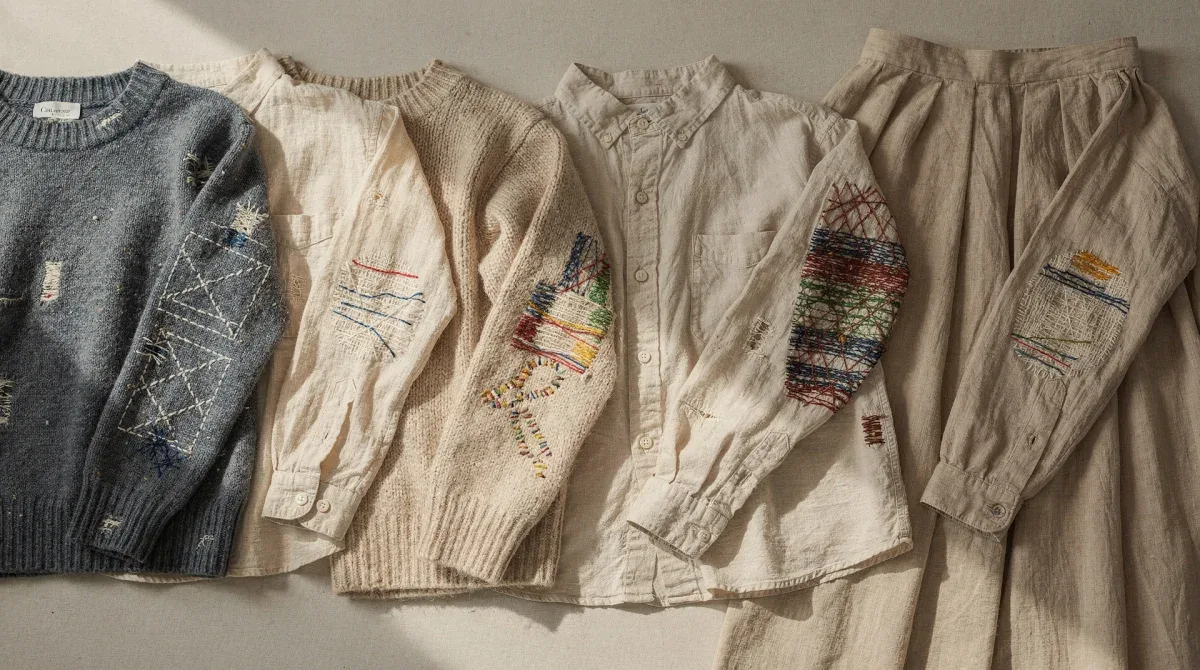
When a garment is visibly mended, it gains a unique character and a personal history. The repair becomes part of its identity, often increasing its sentimental value. This enhanced emotional attachment makes us less likely to discard items at the first sign of wear. Instead, each mend adds another chapter to its story, reinforcing its place in our wardrobe and making it irreplaceable.
Furthermore, the very act of mending requires time, effort, and skill, investing the wearer in the garment's future. This investment fosters a deeper appreciation for the craftsmanship and resources involved in clothing production, moving away from the perception of clothes as mere commodities. This profound connection is a major driver behind the extended life cycle of repaired items.
Practical durability and skill development
Beyond emotional value, visible mending techniques often reinforce the fabric, making the mended area stronger than the original material. Techniques like sashiko stitching or darning can add structural integrity, preventing further tears and extending the garment's functional life. This practical enhancement contributes directly to the increased lifespan.
- Reinforced weak points: Mending strengthens areas prone to wear, preventing premature deterioration.
- Creative problem-solving: Each repair presents a unique challenge, encouraging innovative solutions.
- Skill acquisition: Learning mending techniques empowers individuals to take control of their wardrobe's longevity.
- Community building: Sharing mending skills fosters a supportive network of like-minded individuals.
The combination of increased emotional value, practical reinforcement, and a conscious shift away from fast fashion contributes to the remarkable extension of garment lifespans. This 300% projection isn't just a number; it represents a significant cultural and environmental victory, demonstrating the power of mindful consumption.

The environmental impact: A sustainable fashion revolution
The environmental benefits of visible mending are profound and far-reaching, positioning it at the forefront of the sustainable fashion movement. By extending the life of clothing, this practice directly combats the enormous waste generated by the textile industry, which is one of the largest polluters globally. The shift from a linear 'take-make-dispose' model to a circular one is critical for planetary health.
Reducing textile waste and resource consumption
Every garment that is mended and kept in circulation is one less item contributing to overflowing landfills. Textile waste takes centuries to decompose, releasing harmful greenhouse gases and leachates into the environment. Visible mending significantly reduces this burden, promoting a more responsible approach to resource management.
Moreover, extending garment life reduces the demand for new production, which in turn saves vast amounts of water, energy, and raw materials. The fashion industry's footprint is immense, from cotton cultivation requiring vast irrigation to energy-intensive manufacturing processes and chemical dyeing. By diminishing the need for new clothes, visible mending offers a tangible solution to these environmental challenges.
Lowering carbon footprint and chemical pollution
The entire lifecycle of a garment, from raw material extraction to disposal, contributes to its carbon footprint. Manufacturing, transportation, and even washing and drying all consume energy and release emissions. By keeping clothes in use longer, visible mending helps to defer and reduce these environmental impacts, making a real difference in the fight against climate change.
- Reduced landfill mass: Fewer clothes end up in waste streams, mitigating pollution.
- Decreased water usage: Less demand for new textiles means less water for crops and processing.
- Lower energy consumption: Manufacturing new garments is highly energy-intensive; mending reduces this need.
- Minimized chemical discharge: Fewer dyes and finishing agents are used, reducing water contamination.
In essence, visible mending is more than just a repair technique; it's an ecological imperative. It empowers individuals to become active participants in creating a more sustainable future, one stitch at a time. The collective impact of these individual actions can drive systemic change within the fashion industry, fostering a truly circular economy.
The cultural shift: From shame to celebration
Perhaps one of the most remarkable aspects of the visible mending revival is the profound cultural shift it represents. For decades, mended clothes were often associated with poverty or neglect, a stigma that discouraged repair. Today, this perception is being dramatically overturned, with visible mending becoming a badge of honor, a symbol of conscious living and creative expression.
Embracing imperfection and personal narrative
The deliberate choice to make repairs visible challenges the prevailing aesthetic of perfection in consumer culture. Instead of hiding flaws, visible mending celebrates them, transforming imperfections into unique design elements. Each patch and stitch tells a story of an item's journey, its resilience, and the care invested in it, making it deeply personal and unique.
This embrace of imperfection aligns with a broader movement towards authenticity and individuality. In a world saturated with mass-produced goods, a visibly mended garment stands out as a bespoke item, crafted with intention and love. It's a quiet rebellion against uniformity, allowing wearers to express their values and creativity through their clothing choices.
The rise of mending communities and workshops
The growing popularity of visible mending has led to the emergence of vibrant online and offline communities. Workshops, mending circles, and social media groups provide platforms for sharing skills, inspiration, and encouragement. This communal aspect strengthens the movement, turning a solitary act into a shared experience and fostering a sense of belonging among enthusiasts.
- Skill-sharing platforms: Online tutorials and local workshops make mending accessible to all.
- Creative expression: Mending becomes an outlet for artistic design and personal flair.
- Ethical consumerism: Visible mending promotes conscious choices and challenges fast fashion.
- Community support: Mending groups foster connection and shared values among participants.
This cultural embrace of visible mending signifies a deeper societal shift—a move towards valuing craftsmanship, sustainability, and personal history over fleeting trends. It's a powerful statement that repairing is not just practical; it's fashionable, ethical, and deeply satisfying, inspiring a new generation to mend with pride.
Techniques and tools: Getting started with visible mending
Embarking on the journey of visible mending is surprisingly accessible, requiring only a few basic tools and a willingness to learn. There's a wide array of techniques, each offering unique aesthetic and functional benefits, allowing individuals to choose methods that best suit their garment and personal style. Starting small and practicing on less-loved items can build confidence quickly.
Essential tools for every mender
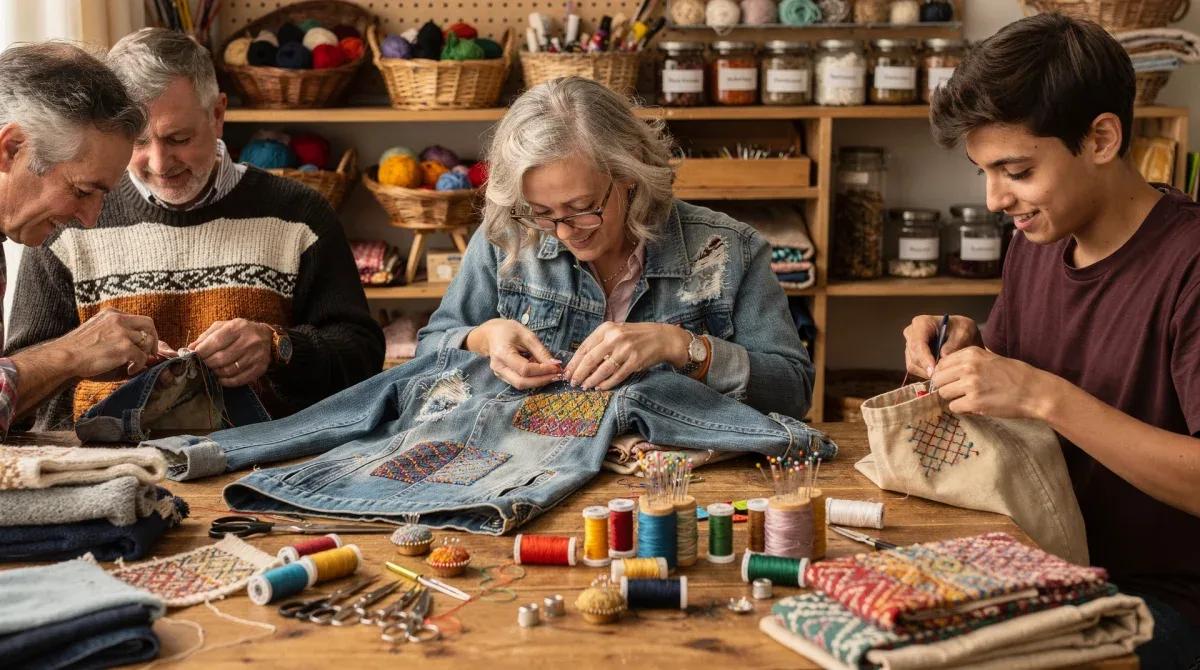
You don't need an extensive toolkit to begin. A basic sewing kit will suffice for most projects. Essential items include sharp scissors, various needles (embroidery, darning), a thimble, and an assortment of threads in different colors and weights. Fabric scraps from old clothes can also be invaluable for patching, offering a sustainable source of repair material.
For more intricate work, a darning mushroom or egg can be incredibly helpful for mending socks or sweaters, providing a firm surface to work against. Fabric pencils or chalk can be used to mark repair areas, ensuring precision. The beauty of visible mending is its adaptability; you can start with what you have and expand your tools as your skills grow.
Popular visible mending techniques to explore
Several techniques have gained prominence in the visible mending community, each with its own charm and application. Sashiko, a Japanese embroidery technique, uses running stitches to create geometric patterns, perfect for reinforcing denim or canvas. Darning, often used for knitwear, involves weaving new threads over a hole to recreate the fabric structure. Patching, whether applied internally or externally, can be decorative and functional.
- Sashiko: Ideal for denim and sturdy fabrics, known for its strong, decorative stitches.
- Darning: Best for knitwear like socks and sweaters, rebuilding fabric structure with interwoven threads.
- Appliqué patching: Adding decorative fabric patches, often with embroidery, for both repair and style.
- Boro: A Japanese technique of layering and stitching fabric scraps, creating a textured, unique look.
Learning these techniques opens up a world of creative possibilities. Online tutorials, books, and local workshops offer excellent resources for beginners and experienced menders alike. The joy of visible mending lies not only in saving clothes but also in the meditative process of creation and the satisfaction of giving an item a new lease of life.
The future of fashion: Visible mending as a mainstream practice
As we look towards the future, visible mending is poised to transcend its current status as a niche movement and become a mainstream practice. The growing awareness of environmental issues, coupled with a desire for authenticity and personal expression, is driving consumers and brands alike to embrace more sustainable and thoughtful approaches to clothing. The trajectory suggests that by 2026, visible mending will be an integral part of the fashion landscape.
Brands embracing repair and circularity
Increasingly, fashion brands are recognizing the value of repair services and circular models. Some are offering in-house mending programs, teaching customers how to care for their garments, or collaborating with independent menders. This shift indicates a growing commitment to product longevity and a departure from planned obsolescence. Brands that champion repair are building trust and loyalty with a new generation of conscious consumers.
The integration of visible mending into brand strategies also signifies a powerful marketing tool. Highlighting the durability and repairability of products can differentiate brands in a crowded market, appealing to consumers who prioritize sustainability and quality. This collaborative approach between consumers and brands is crucial for accelerating the mainstream adoption of mending practices.
Education and policy: Fostering a mending culture
For visible mending to truly become mainstream, education and supportive policies will play a vital role. Integrating basic sewing and mending skills into school curricula could equip future generations with essential life skills and a deeper appreciation for craftsmanship. Public awareness campaigns can further normalize and celebrate the act of repair, dismantling any lingering stigmas.
- Educational programs: Schools and community centers can teach mending skills.
- Government incentives: Policies supporting repair industries and sustainable consumption.
- Consumer awareness: Campaigns highlighting the benefits of mending for people and planet.
- Technological innovation: New tools and materials to make mending even more accessible.
The future of fashion is undeniably circular, and visible mending is a cornerstone of this transformation. By fostering a culture where repair is celebrated, accessible, and integrated into our daily lives, we can collectively build a more sustainable, resilient, and beautiful relationship with our clothes and the planet.
| Key Aspect | Impact and Description |
|---|---|
| Garment Lifespan Boost | Visible mending is projected to increase clothing lifespans by up to 300% by 2026, significantly reducing textile waste. |
| Environmental Benefits | Reduces landfill waste, conserves water and energy, and lowers the carbon footprint associated with new garment production. |
| Cultural Transformation | Shifts perception of mended clothes from shame to celebration, promoting individuality, creativity, and authenticity. |
| Economic Impact | Encourages conscious consumption, supports local repair businesses, and reduces consumer spending on new, disposable fashion items. |
Frequently asked questions about visible mending
What exactly is visible mending?▼Visible mending is a repair technique where mends are intentionally made to be seen, often using contrasting threads or decorative stitches. Instead of hiding flaws, it celebrates them, adding character and a unique story to the garment. It's a conscious choice to extend clothing life while expressing creativity.
How does visible mending extend garment lifespans so significantly?▼Visible mending extends lifespans by increasing emotional attachment to garments, as repairs add unique character and history. Functionally, techniques often reinforce weak areas, making them stronger. This combined effect encourages owners to keep and cherish clothes longer, reducing the cycle of disposal and replacement.
What are the environmental benefits of embracing visible mending?▼Embracing visible mending significantly reduces textile waste in landfills, conserves vast amounts of water and energy used in new garment production, and lowers the carbon footprint associated with the fashion industry. It promotes a circular economy by keeping clothes in use longer, lessening overall environmental impact.
Is visible mending difficult to learn for beginners?▼Not at all! Visible mending is accessible for beginners, requiring only basic sewing tools and a willingness to learn. Many simple techniques, like patching or basic darning, can be mastered quickly. Numerous online tutorials, books, and community workshops are available to guide new menders through the process.
How is visible mending influencing the fashion industry?▼Visible mending is pushing the fashion industry towards greater sustainability and circularity. It encourages brands to offer repair services, design for longevity, and promote conscious consumption. This trend signals a shift from fast fashion to a more thoughtful approach, valuing craftsmanship and environmental responsibility in clothing production and use.
Conclusion
The revival of visible mending is more than a fleeting trend; it represents a profound paradigm shift in our relationship with clothing. By celebrating repair and embracing the unique stories woven into our garments, we are not only extending their physical lifespans by an impressive margin but also fostering a deeper sense of connection and responsibility. This movement is a powerful catalyst for change, driving sustainability, creativity, and conscious consumption in the fashion world. As we move towards 2026, visible mending stands as a beacon of hope for a more sustainable and aesthetically rich future, proving that true value lies not in newness, but in longevity and character.
