Wearable Sleep Tracker Buyer’s Guide: PPG vs. Skin Sensors
This guide provides a comprehensive comparison of wearable sleep trackers, specifically evaluating the accuracy of optical PPG sensors versus 24-hour skin sensors, to help consumers make informed purchasing decisions for optimal sleep monitoring.
Navigating the complex world of sleep technology can be daunting, but understanding the core mechanisms behind these devices is crucial. This wearable sleep tracker buyer’s guide aims to demystify the choices, focusing on the critical differences between optical photoplethysmography (PPG) accuracy and 24-hour skin sensors to help you find the ideal companion for your sleep journey.
Understanding wearable sleep tracker technology
Wearable sleep trackers have transformed how we approach sleep health, offering insights into our nocturnal patterns that were once only accessible in clinical settings. These devices utilize various technologies to gather data, translating complex physiological signals into understandable metrics. From smartwatches to rings and dedicated sleep bands, the market is flooded with options, each promising a better understanding of your sleep quality.
The fundamental goal of any sleep tracker is to accurately identify sleep stages, track heart rate, measure blood oxygen levels, and detect movement. The precision of these measurements directly impacts the reliability of the insights provided. As such, diving into the underlying sensor technologies is essential for any prospective buyer.
The role of sensors in sleep tracking
At the heart of every wearable sleep tracker lies its sensor array. These tiny components are responsible for capturing the raw physiological data that algorithms then interpret. Different sensors excel at different types of measurements, leading to variations in accuracy and functionality across devices.
- Optical PPG Sensors: Primarily found in wrist-worn devices, these sensors use light to detect changes in blood volume, reflecting heart rate and blood oxygen.
- Accelerometers: Standard in almost all wearables, accelerometers measure movement, helping to identify sleep onset, awakenings, and restless periods.
- Skin Temperature Sensors: These dedicated sensors monitor subtle shifts in skin temperature, which can provide clues about sleep stages and overall physiological state.
- Bioimpedance Sensors: Less common in consumer devices, these can measure body composition and sometimes even provide data related to breathing patterns.
The combination and sophistication of these sensors determine a tracker's capabilities. A device might offer excellent heart rate tracking but fall short on detailed sleep stage detection if it lacks the right combination of sensors and algorithms. Understanding this interplay is key to evaluating a tracker's true potential for comprehensive sleep analysis.
In essence, the technology embedded in wearable sleep trackers is a continuous evolution, striving for greater accuracy and more actionable insights. The choice of sensor technology is a primary differentiator, influencing everything from battery life and comfort to the depth and reliability of the data collected. A thorough understanding of these technological foundations empowers consumers to make informed decisions that align with their personal sleep monitoring objectives.
Optical PPG accuracy: How it works and its limitations
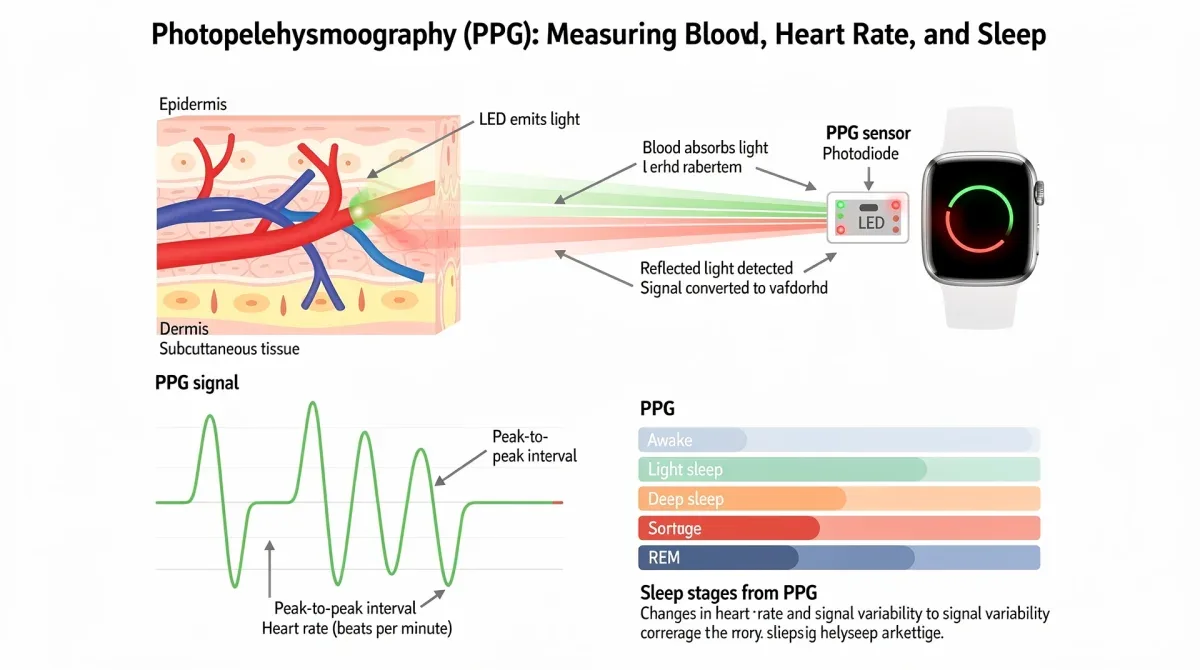
Optical Photoplethysmography, or PPG, is a widely used technology in modern wearable sleep trackers. It operates by emitting light (typically green LED light) into the skin and then measuring the amount of light reflected or transmitted back to a photodetector. This light absorption varies with blood volume changes in the capillaries beneath the skin, which in turn correlates with heartbeats. By detecting these pulsatile changes, PPG sensors can calculate heart rate.
The elegance of PPG lies in its non-invasive nature and its ability to gather continuous data. During sleep, heart rate variability (HRV) and changes in blood oxygen saturation (SpO2) are crucial indicators of sleep stages and potential sleep disorders like sleep apnea. PPG sensors are designed to capture these subtle fluctuations, providing a foundation for algorithmic interpretations of sleep architecture.
The science behind optical PPG and sleep stages
For sleep tracking, PPG data is processed by sophisticated algorithms to differentiate between wakefulness, REM sleep, and non-REM sleep stages (light and deep sleep). These algorithms analyze patterns in heart rate, HRV, and sometimes even micro-movements detected by integrated accelerometers. For instance, deep sleep is often characterized by a lower, more stable heart rate, while REM sleep may show increased heart rate variability similar to wakefulness, albeit with muscle atonia.
However, the accuracy of PPG can be influenced by several factors. Skin tone, perfusion (blood flow to the skin), movement artifacts, and even external light can affect the signal quality. A loose-fitting device, for example, can lead to inaccurate readings due to poor skin contact and extraneous light interference. This makes the fit and design of a PPG-based tracker critical for its performance.
Challenges and considerations for PPG-based trackers
While convenient, PPG sensors face specific limitations. The primary challenge lies in the fact that they measure blood flow, which is an indirect indicator of neurological sleep states. While highly correlated, it's not a direct measure of brain activity like an electroencephalogram (EEG) used in polysomnography (PSG), the gold standard for sleep studies.
- Motion Artifacts: Even subtle movements during sleep can introduce noise into the PPG signal, making it harder for algorithms to accurately interpret heart rate and sleep stages.
- Skin Contact: Consistent and adequate skin contact is paramount. If the device shifts or is worn too loosely, the optical signal can be compromised, leading to data gaps or inaccuracies.
- Physiological Variability: Individual physiological differences, such as variations in skin thickness or pigmentation, can affect how light interacts with the blood vessels, potentially impacting accuracy across users.
Despite these limitations, advancements in algorithms and sensor design are continuously improving PPG accuracy. Many modern devices employ multiple LEDs and advanced filtering techniques to mitigate these challenges. When considering a PPG-based tracker, it's important to look for devices with a strong reputation for algorithmic sophistication and user-reported consistency, as these factors often outweigh raw sensor specifications.
Ultimately, optical PPG technology offers a convenient and generally reliable method for continuous heart rate and sleep stage tracking in wearable devices. While not clinical-grade EEG, its continuous, non-invasive nature makes it an invaluable tool for everyday sleep monitoring, provided users are aware of its inherent characteristics and potential limitations.
Exploring 24-hour skin sensors for comprehensive sleep data
Beyond optical PPG, another significant technology in wearable sleep trackers involves 24-hour skin sensors, primarily focusing on temperature. These sensors continuously monitor minute changes in skin temperature, a physiological parameter that offers unique insights into our circadian rhythm, reproductive health (for women), and, crucially, sleep stages. Unlike PPG, which focuses on blood flow, skin temperature provides a more direct window into core body temperature regulation, which is intricately linked to sleep cycles.
The human body's core temperature naturally fluctuates throughout a 24-hour cycle, dropping as we prepare for sleep and rising as we approach wakefulness. Wearable devices equipped with highly sensitive skin temperature sensors can detect these subtle shifts, providing a rich dataset that complements other physiological measurements. This continuous monitoring allows for a more holistic view of an individual's physiological state, not just during sleep but throughout the entire day.
How skin temperature impacts sleep insights
Skin temperature data contributes significantly to a more comprehensive understanding of sleep architecture. For example, a sustained drop in skin temperature often precedes sleep onset, while an increase can signal impending wakefulness. Moreover, variations in skin temperature during different sleep stages can be utilized by advanced algorithms to refine sleep stage detection, especially when combined with heart rate and movement data.

The advantage of 24-hour skin temperature tracking extends beyond basic sleep stage identification. It can also help in detecting early signs of illness, monitoring stress levels, and even predicting menstrual cycles, making these trackers valuable for overall health and wellness management. The consistency of data collection throughout the day and night provides a baseline, making anomalies more noticeable.
Advantages and considerations of skin temperature sensors
Dedicated skin temperature sensors offer several compelling advantages. They are generally less susceptible to motion artifacts compared to PPG, as skin temperature changes more slowly and is less affected by immediate movements. This can lead to more consistent data, particularly for individuals who are restless sleepers.
- Circadian Rhythm Insights: Continuous temperature data helps map an individual's unique circadian rhythm, allowing for personalized recommendations on sleep timing.
- Stability and Consistency: Skin temperature measurements tend to be more stable than heart rate readings, providing a reliable long-term trend for physiological monitoring.
- Holistic Health Monitoring: Beyond sleep, temperature data can offer insights into illness, stress, and hormonal changes, broadening the utility of the wearable.
However, there are also considerations. The accuracy of skin temperature sensors can be affected by external environmental factors, such as room temperature or direct contact with warm or cool surfaces. Calibration and advanced algorithms are necessary to distinguish between environmental influences and actual physiological changes. Furthermore, while valuable, skin temperature alone is not sufficient for comprehensive sleep analysis; it needs to be integrated with other sensor data for a complete picture.
In conclusion, 24-hour skin sensors offer a powerful and often underappreciated dimension to wearable sleep tracking. Their ability to provide continuous, stable data on physiological state, particularly in relation to circadian rhythms, makes them an excellent complement to other sensor technologies. When combined effectively, skin temperature data can significantly enhance the accuracy and depth of insights provided by a wearable sleep tracker.
Comparing accuracy: PPG vs. 24-hour skin sensors
When evaluating the accuracy of wearable sleep trackers, the comparison between optical PPG and 24-hour skin sensors is not about one being definitively superior, but rather how they complement each other and what specific insights each provides. Both technologies offer valuable data, but their strengths and weaknesses in the context of sleep tracking differ significantly.
Optical PPG excels at real-time, beat-to-beat heart rate measurement and, with sophisticated algorithms, can infer blood oxygen levels. These metrics are critical for identifying physiological arousal, sleep stages based on heart rate variability, and potential breathing disturbances. Its strength lies in capturing dynamic, immediate physiological responses during sleep.
On the other hand, 24-hour skin sensors, primarily tracking temperature, provide a more stable and long-term view of physiological state. Skin temperature changes are slower and reflect shifts in core body temperature and circadian rhythm. This data is excellent for understanding sleep onset latency, overall sleep architecture stability, and identifying broader patterns related to health and wellness over time.
Synergies and solo performances
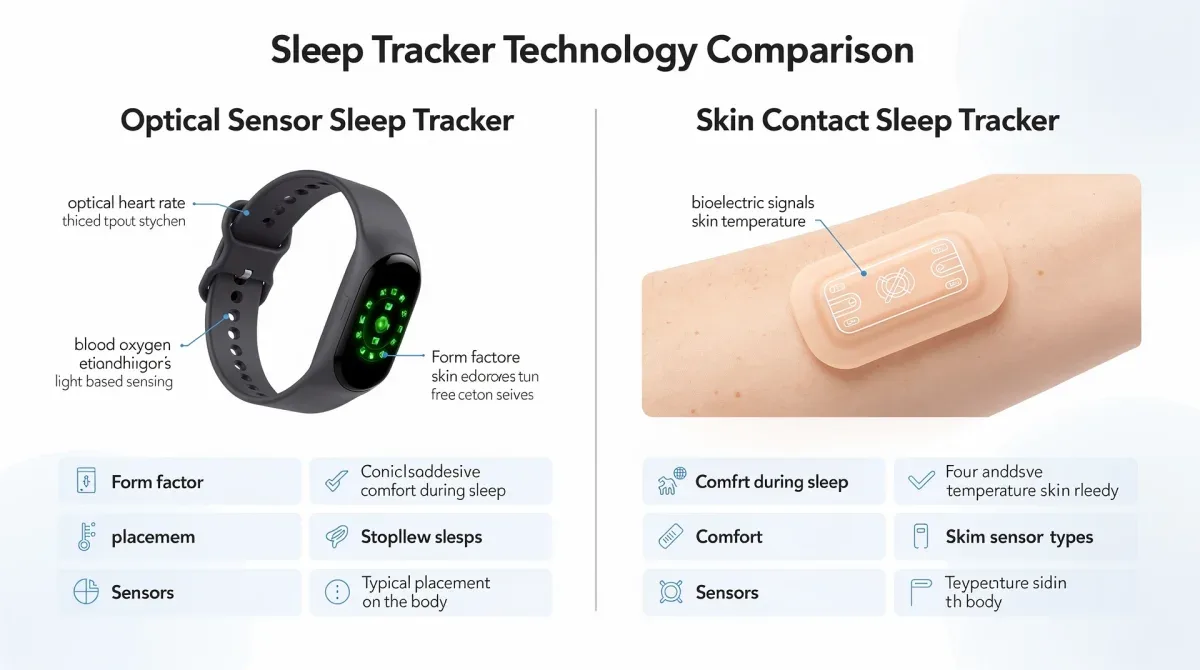
Many advanced wearable sleep trackers now integrate both PPG and skin temperature sensors to leverage the strengths of each. This multi-sensor approach allows algorithms to cross-reference data, leading to more robust and accurate sleep stage detection. For instance, a drop in heart rate (PPG) combined with a decrease in skin temperature can more confidently signal the onset of deep sleep than either metric alone.
When used in isolation, PPG might struggle with distinguishing between certain sleep stages if movement artifacts are high, or if the user's heart rate variability patterns are atypical. Similarly, skin temperature alone, while indicative of sleep propensity, cannot provide the real-time, granular detail of heart rate fluctuations necessary for precise sleep stage transitions or detection of short arousal events.
Choosing based on your sleep goals
Your choice between devices emphasizing one technology over the other, or integrating both, should align with your primary sleep monitoring goals:
- For detailed sleep stages and immediate physiological responses: Devices with highly refined PPG sensors are excellent. They provide granular data on heart rate, HRV, and often SpO2, offering insights into sleep quality and potential sleep breathing issues.
- For understanding circadian rhythms and long-term trends: Trackers with robust 24-hour skin temperature sensing capabilities are highly beneficial. They help in optimizing sleep timing and detecting subtle physiological shifts over days and weeks.
- For comprehensive insights and maximum accuracy: A device that effectively integrates both PPG and skin temperature sensors will offer the most complete and accurate picture of your sleep health. The combined data allows for a more nuanced interpretation of sleep stages and overall physiological state.
In summary, the comparison between PPG and 24-hour skin sensors highlights their complementary nature. PPG offers dynamic, real-time physiological data, while skin temperature provides stable, long-term contextual information. The most accurate and insightful wearable sleep trackers often leverage both, providing a holistic view of your nocturnal health.
Key features to look for in a wearable sleep tracker
Beyond the core sensor technology, several other features contribute to the overall effectiveness and user experience of a wearable sleep tracker. A truly valuable device offers more than just raw data; it provides actionable insights, is comfortable to wear, and integrates seamlessly into your daily life. When making your selection, consider these crucial aspects to ensure you choose a tracker that meets your specific needs and preferences.
The user interface, data presentation, and connectivity options are just as important as the underlying hardware. A device with cutting-edge sensors but a confusing app or poor battery life might ultimately fall short of expectations. Therefore, a holistic evaluation is necessary to find the best fit.
Comfort and design for continuous wear
Since sleep trackers are meant to be worn continuously, especially during sleep, comfort is paramount. A bulky, irritating, or aesthetically unpleasing device is unlikely to be worn consistently, rendering its advanced features useless. Look for:
- Lightweight and ergonomic design: Devices that are barely noticeable on your wrist or finger.
- Skin-friendly materials: Hypoallergenic bands or casings to prevent irritation during prolonged contact.
- Discreet profile: A design that doesn't interfere with sleep positions or daily activities.
The form factor also plays a role. While wrist-worn devices are common, sleep rings or under-mattress sensors offer alternatives for those who prefer not to wear anything on their wrist during sleep.
Battery life and charging convenience
A tracker that requires daily charging can be a significant inconvenience, particularly if you forget to charge it before bed. Optimal battery life allows for continuous tracking over several days, minimizing interruptions. Consider:
- Multi-day battery life: Ideally, a device that lasts at least 3-7 days on a single charge.
- Fast charging capabilities: The ability to quickly top up the battery in a short period.
- Intuitive charging mechanism: Magnetic chargers or wireless charging can enhance convenience.
Longer battery life ensures consistent data collection, which is crucial for identifying long-term sleep patterns and trends.
App interface and actionable insights
The companion app is where raw data transforms into meaningful information. A good app should be intuitive, visually appealing, and, most importantly, provide actionable advice. Look for:
- Clear data visualization: Easy-to-understand graphs and summaries of your sleep stages, heart rate, and other metrics.
- Personalized feedback: Insights tailored to your sleep patterns, rather than generic advice.
- Trend analysis: The ability to track your sleep over weeks and months to identify improvements or recurring issues.
- Integration with other health platforms: Compatibility with Apple Health, Google Fit, or other wellness apps for a centralized view of your health data.
Ultimately, the best wearable sleep tracker is one that not only collects accurate data but also empowers you to understand and improve your sleep health through clear, personalized, and actionable insights, all within a comfortable and user-friendly package.
The role of algorithms and data interpretation
While cutting-edge sensors are the foundation of any effective wearable sleep tracker, it's the sophisticated algorithms that truly bring the data to life. Raw sensor data, whether from optical PPG or 24-hour skin temperature sensors, is just a stream of numbers until it's processed and interpreted. These algorithms are the 'brains' of the operation, translating physiological signals into meaningful sleep stages, health metrics, and actionable insights.
The quality and accuracy of these algorithms vary significantly between manufacturers. Some companies invest heavily in research and development, validating their algorithms against clinical polysomnography (PSG) studies, which is the gold standard for sleep analysis. Others may rely on simpler models, leading to less precise interpretations of sleep architecture.
From raw data to sleep stages
Algorithms use a combination of machine learning and physiological models to identify sleep stages. For PPG data, this involves analyzing heart rate variability, changes in pulse amplitude, and potentially blood oxygen levels. For skin temperature, algorithms track the subtle, long-term shifts that correlate with circadian rhythms and sleep propensity.
- Pattern Recognition: Algorithms identify recurring patterns in heart rate, movement, and temperature that correspond to wakefulness, REM, light NREM, and deep NREM sleep.
- Sensor Fusion: Advanced trackers combine data from multiple sensors (e.g., PPG, accelerometer, temperature) to create a more robust and accurate picture, mitigating the limitations of any single sensor.
- Personalization: Some algorithms learn from individual user data over time, adapting their models to better suit unique physiological responses.
The ability of an algorithm to accurately differentiate between sleep stages is a critical factor in a tracker's utility. Misclassifying deep sleep as light sleep, or vice-versa, can lead to incorrect conclusions about sleep quality and ineffective interventions.
Actionable insights versus raw metrics
A superior wearable sleep tracker doesn't just present you with graphs of your sleep stages and heart rate. It goes a step further by offering actionable insights. This means interpreting your data in context and providing personalized recommendations for improving your sleep. For example, if your tracker consistently shows fragmented deep sleep, the app might suggest adjusting your evening routine, optimizing your bedroom environment, or consulting a specialist.
The best algorithms consider not only your nightly sleep data but also your daily activity levels, stress indicators, and even environmental factors (if available) to provide a holistic view. This comprehensive approach transforms a data collection device into a personal sleep coach.
In essence, the true value of a wearable sleep tracker lies as much in its intelligent algorithms as in its advanced sensors. When evaluating devices, look for manufacturers who are transparent about their validation processes and whose apps offer clear, personalized, and actionable guidance based on robust data interpretation.
Making an informed decision: Your personalized sleep tracker choice
Choosing the right wearable sleep tracker is a deeply personal decision, influenced by individual sleep goals, budget, comfort preferences, and the desire for specific types of data. Having explored the intricacies of optical PPG accuracy versus 24-hour skin sensors, and the importance of algorithms and user experience, you are now better equipped to navigate the market.
There's no single 'best' tracker for everyone. The ideal device is one that seamlessly integrates into your lifestyle, provides reliable and actionable data relevant to your needs, and ultimately helps you achieve a better understanding and improvement of your sleep health.
Aligning technology with personal needs
Consider what aspects of your sleep you most want to understand or improve:
- If heart rate variability and breathing disturbances are a priority: Focus on trackers with highly accurate optical PPG sensors, often validated against medical devices.
- If circadian rhythm optimization and long-term physiological trends are key: Prioritize devices with robust 24-hour skin temperature sensing capabilities.
- If comprehensive, multi-faceted insights are desired: Look for trackers that effectively combine both PPG and skin temperature data, leveraging sensor fusion for enhanced accuracy.
Don't overlook the importance of the companion app and the quality of data interpretation. A device with excellent sensors but a poor user interface or generic insights will not be as effective as one that translates complex data into clear, actionable advice.
Budget, reviews, and future-proofing
Your budget will naturally play a role, but remember that the most expensive device isn't always the best fit for your specific needs. Research user reviews and independent tests to gauge real-world performance and consistency.
Consider the manufacturer's reputation for software updates and ongoing support. A company that regularly refines its algorithms and adds new features can significantly extend the lifespan and utility of your device. Look for brands that are transparent about their research and validation processes.
Finally, think about future-proofing. As sleep science and wearable technology continue to evolve, opting for a device from a reputable brand known for innovation can ensure you benefit from future advancements.
Ultimately, the journey to better sleep is a continuous one. A well-chosen wearable sleep tracker can be an invaluable tool on this journey, providing the data and insights necessary to make informed adjustments to your habits and environment. By carefully considering sensor technology, algorithms, comfort, and user experience, you can confidently select a device that empowers you to unlock your best sleep.
| Key Feature | Description & Benefit |
|---|---|
| Optical PPG Sensors | Measures heart rate and blood oxygen for dynamic sleep stage detection and arousal events. |
| 24-Hour Skin Sensors | Tracks temperature for circadian rhythm insights and long-term physiological trends. |
| Advanced Algorithms | Interprets raw sensor data into accurate sleep stages and personalized, actionable insights. |
| Comfort & Battery Life | Ensures consistent wear and uninterrupted data collection for reliable long-term tracking. |
Frequently asked questions about wearable sleep trackers
How accurate are wearable sleep trackers compared to lab tests?▼Wearable sleep trackers provide valuable insights but are not as accurate as polysomnography (PSG), the clinical gold standard. PSG directly measures brain waves (EEG), while wearables infer sleep stages from heart rate, movement, and temperature. While good for trends and general patterns, they may not precisely match lab results for specific sleep stage durations.
Can a wearable sleep tracker diagnose sleep disorders?▼No, wearable sleep trackers are not diagnostic tools. They can identify patterns suggestive of potential sleep disorders, such as frequent awakenings or low blood oxygen, which should prompt consultation with a healthcare professional. A formal diagnosis requires clinical evaluation and often, a PSG study performed by a sleep specialist.
What's the difference between heart rate variability (HRV) and regular heart rate tracking?▼Heart rate (HR) is the number of beats per minute, while heart rate variability (HRV) measures the variation in time between each heartbeat. HRV is a more nuanced metric reflecting autonomic nervous system activity, providing insights into stress, recovery, and sleep quality. Higher HRV during sleep is generally associated with better sleep and recovery.
Should I prioritize comfort or advanced features in a sleep tracker?▼Comfort is crucial for consistent use. Even the most advanced features are useless if the device is uncomfortable and you don't wear it every night. Ideally, seek a balance: a tracker that offers robust features while being lightweight, ergonomic, and made from skin-friendly materials to ensure continuous and reliable data collection.
How often should I check my sleep data for meaningful insights?▼While it's tempting to check daily, focusing on weekly or monthly trends provides more meaningful insights. Daily fluctuations are normal, but consistent patterns over time reveal true improvements or underlying issues. Look for changes in your average sleep duration, sleep efficiency, and deep/REM sleep percentages over longer periods.
Conclusion
Choosing the right wearable sleep tracker involves a thoughtful consideration of various factors, with sensor technology at its core. Whether you prioritize the dynamic, real-time insights offered by optical PPG or the stable, long-term trends provided by 24-hour skin sensors, understanding their respective strengths and limitations is paramount. Ultimately, the best device is one that not only accurately captures your physiological data but also translates it into actionable intelligence, empowering you to make informed decisions for a healthier, more restorative sleep. By carefully considering sensor technology, algorithms, comfort, and user experience, you can confidently select a device that empowers you to unlock your best sleep.
