Spatial Headsets: Your Virtual 100-Foot Home Theater
Spatial headsets are transforming home entertainment by enabling VR cinema apps to create virtual 100-foot displays, offering an unparalleled immersive movie-watching experience right from your living room.
Imagine stepping into your living room and, with a simple gesture, transforming it into a grand movie palace with a screen that stretches for 100 feet. This isn't a futuristic fantasy, but a present-day reality thanks to spatial headsets home theater applications, which are revolutionizing how we consume entertainment. These innovative devices, coupled with advanced VR cinema apps, are redefining the concept of a personal big-screen experience, moving beyond traditional televisions and projectors.
The evolution of home entertainment: from TV to virtual cinema
For decades, the television has been the cornerstone of home entertainment, evolving from bulky CRT sets to sleek, high-definition flatscreens. Each technological leap promised a more immersive experience, yet the physical constraints of our living spaces always dictated the maximum screen size. This limitation is now being shattered by spatial headsets, which introduce a paradigm shift by detaching the screen from physical dimensions.
The journey from a small black-and-white television to today's massive OLED screens has been remarkable, but it has largely been a story of incremental improvements within the same fundamental framework. We've chased higher resolutions, better contrast, and larger physical panels, but the screen remained a fixed object in a fixed room. Spatial computing, however, opens up a new frontier where the screen is no longer a physical object but a digital construct, scalable to virtually any size the user desires, projecting it onto their real-world environment or an entirely virtual one.
Breaking free from screen size limitations
The most compelling aspect of spatial headsets in a home theater context is their ability to project a screen of virtually unlimited size. A 100-foot display, once the exclusive domain of commercial cinemas, is now accessible from the comfort of your couch. This is achieved through sophisticated optics and display technology within the headset, which trick your eyes into perceiving a massive screen floating before you, often with incredible clarity and depth.
- Unprecedented scale: Experience movies on screens far larger than any consumer television.
- Personalized viewing: Adjust screen size, distance, and even curvature to your preference.
- Immersive environments: Watch films in virtual theaters, outer space, or a serene beach setting.
- Enhanced privacy: Enjoy content without disturbing others in your household.
This liberation from physical screen size means that apartment dwellers can enjoy a cinematic experience previously reserved for those with dedicated home theater rooms. The technology also eliminates the need for complex projector setups, dark rooms, and expensive sound systems, as many spatial headsets come with integrated high-quality audio or support wireless headphones for an equally immersive soundscape.
How VR cinema apps create virtual 100-foot displays
The magic behind these colossal virtual screens lies in the sophisticated engineering of VR cinema apps. These applications leverage the headset's capabilities to render digital environments and project high-resolution video streams onto a virtual screen that appears massive and lifelike. It's a complex interplay of hardware and software working in harmony to fool your senses.

When you launch a VR cinema app, it typically presents you with a virtual environment – perhaps a plush movie theater, a cozy living room, or even a futuristic viewing lounge. Within this virtual space, a screen is rendered at a fixed virtual distance and size. The headset's display then projects this virtual environment and screen directly into your field of view. The perception of a 100-foot screen isn't about physically expanding the headset's tiny screens, but rather about the angular size it occupies in your vision, similar to how a distant mountain appears smaller than a nearby pebble, even if the mountain is objectively enormous.
The technology behind the illusion
At the core of this illusion are high-resolution displays within the spatial headset, coupled with advanced optical lenses. These lenses magnify the images from the small screens and present them to your eyes in a way that fills your peripheral vision. The software then precisely maps the video content onto a virtual surface, accounting for distortions to ensure the image appears flat and correct from your perspective. This process is computationally intensive, requiring powerful processors within the headset or a connected computer to render the immersive environments and high-fidelity video streams without lag.
- High-resolution panels: Micro-OLED or LCD screens with pixel densities often exceeding 3500 pixels per inch (PPI).
- Precision optics: Fresnel or pancake lenses that magnify and correct the image for wide field of view.
- Advanced rendering engines: Software that creates realistic virtual environments and projects video accurately.
- Head tracking: Allows you to look around the virtual cinema, maintaining the screen's position relative to you.
The combination of these elements creates a convincing illusion of a massive screen. Furthermore, many VR cinema apps incorporate spatial audio, which simulates sound coming from specific directions within the virtual environment, further enhancing the immersion. This means dialogue sounds like it's coming from the characters on screen, and ambient sounds fill the virtual theater, just as they would in a real cinema.
Key features of leading VR cinema applications
The market for VR cinema apps is rapidly expanding, with several strong contenders offering unique features and experiences. These apps are not just simple video players; they are meticulously designed virtual environments that aim to replicate and even surpass the traditional cinema experience. Understanding their key features helps in appreciating the depth of immersion they offer.
These applications go beyond merely displaying a video. They are carefully crafted digital spaces, often with interactive elements and social functionalities. Developers focus on optimizing video playback for VR, ensuring minimal latency and maximum visual fidelity. This includes support for various video formats, resolutions up to 8K, and even 3D content, which truly comes alive in a spatial environment.
Immersive environments and customization
One of the standout features is the variety of virtual environments available. Users can choose to watch movies in a classic grand theater, a modern minimalist screening room, or even fantastical settings like a spaceship's bridge overlooking a nebula. Many apps also allow for extensive customization, letting users change the lighting, add virtual decorations, or even adjust the time of day in their virtual space.
- Diverse virtual theaters: From opulent opera houses to cozy private screening rooms.
- Environmental effects: Dynamic lighting, weather simulations, and interactive elements.
- Seat customization: Choose your preferred viewing distance and angle within the virtual space.
- Personalized avatars: Represent yourself in social viewing sessions.
Beyond the visual aspect, many apps integrate advanced audio processing to mimic the acoustics of a large cinema hall, using techniques like reverberation and directional sound to create a truly enveloping soundstage. This attention to detail in both visual and auditory presentation is what elevates the VR cinema experience beyond simply watching a movie on a big screen; it's about being transported to a dedicated viewing space.
The immersive experience: beyond just a big screen
While the sheer size of the virtual 100-foot screen is undeniably impressive, the true power of spatial headsets home theater lies in the holistic immersive experience they provide. It's not merely about visual scale; it's about feeling present in the cinematic environment, free from real-world distractions.
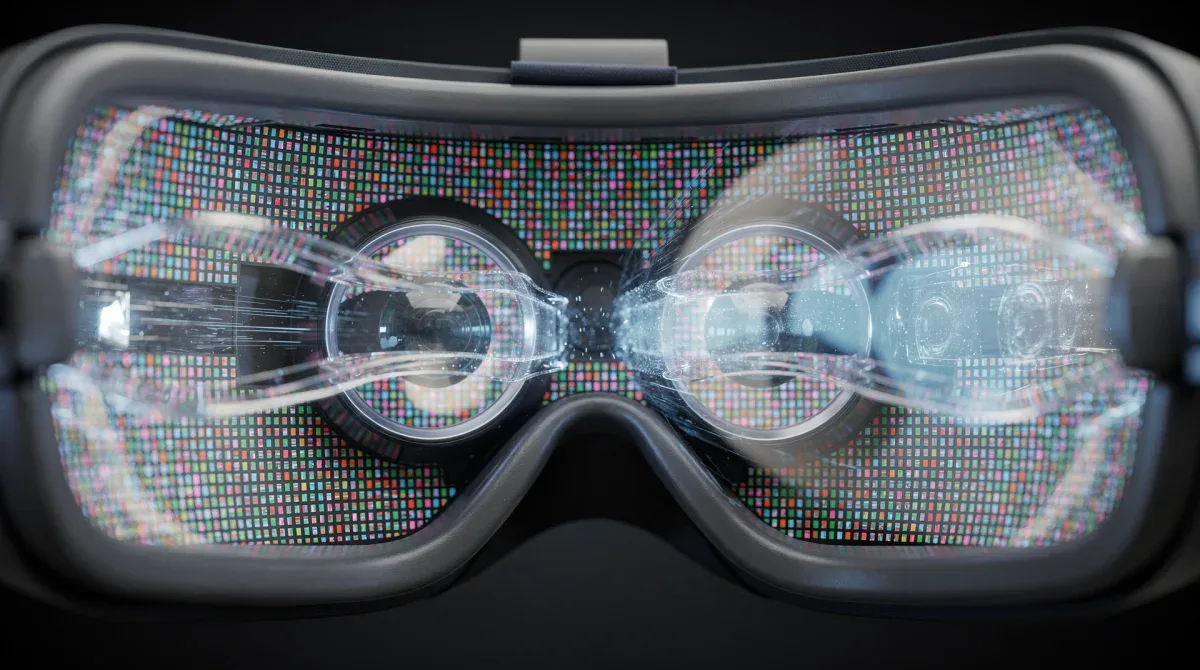
Traditional home theaters, no matter how sophisticated, are still bound by the physical limitations of your room. External light, ambient noise, and the presence of other people can all detract from the viewing experience. Spatial headsets, however, offer a unique form of sensory isolation that allows for complete immersion. By blocking out the real world, they enable you to fully surrender to the narrative unfolding on the virtual screen, enhancing emotional engagement and overall enjoyment.
Sensory isolation and focus
The ability of spatial headsets to provide sensory isolation is a game-changer for movie lovers. The headset effectively creates a private bubble, eliminating visual distractions from your surroundings. Many headsets also offer excellent passive or active noise cancellation, cutting out ambient sounds from your home or neighborhood. This allows for an unparalleled level of focus on the film, drawing you deeper into the story and characters.
- Elimination of distractions: Focus solely on the content without external interruptions.
- Heightened emotional response: Deeper connection with characters and story arcs.
- Personalized comfort: Adjust volume, virtual lighting, and seating without affecting others.
- Reduced eye strain: Optimized viewing distances and screen parameters can be less fatiguing than traditional screens.
Furthermore, the sense of presence in a virtual environment can heighten the emotional impact of a film. Jump scares feel more intense, grand vistas feel more expansive, and intimate moments feel more personal when you are enveloped by the experience. This level of immersion is something that even the largest physical screens struggle to achieve consistently in a home setting.
Social viewing and shared experiences in VR cinema
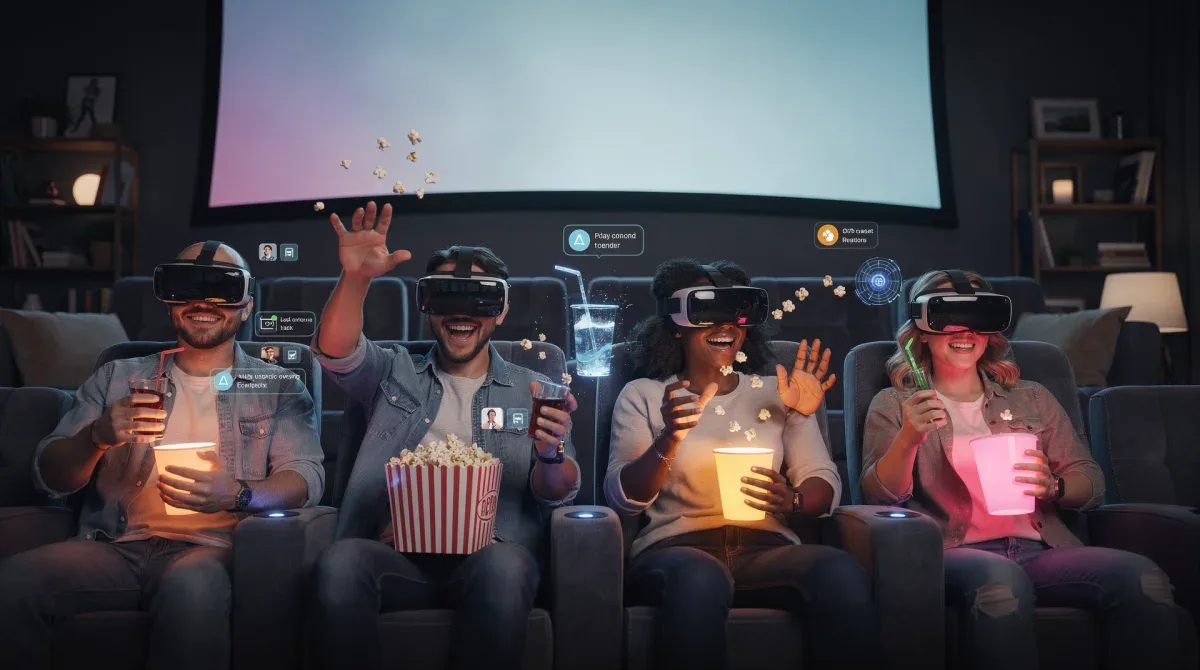
While the initial appeal of spatial headsets for home theater might seem solitary, the reality is far from it. Many VR cinema apps are designed with social interaction in mind, allowing users to watch movies together with friends and family, regardless of their physical location. This transforms the home theater experience into a shared, communal event, much like going to a real cinema with companions.
The concept of shared virtual spaces has been a cornerstone of virtual reality from its inception. In the context of cinema, this means you can invite friends to join you in a virtual screening room. Each person appears as an avatar, and you can communicate, react to the film, and even throw virtual popcorn at each other. This adds a layer of social engagement that traditional home viewing often lacks.
Connecting with others in virtual spaces
The ability to share a movie-watching experience with loved ones, even when separated by distance, is a significant advantage of VR cinema apps. This feature is particularly valuable for long-distance relationships or for friends who simply can't coordinate schedules to meet in person. It creates a sense of togetherness that a simple video call cannot replicate, as you are all "present" in the same virtual space, sharing the same visual and auditory experience.
- Multiplayer viewing rooms: Watch movies simultaneously with friends in a shared virtual space.
- Voice chat and interactions: Communicate and react to the film in real-time.
- Customizable avatars: Personalize your representation for a more engaging social presence.
- Global accessibility: Connect with friends from anywhere in the world for a movie night.
The social aspect extends beyond just private groups. Some platforms offer public viewing rooms, allowing users to join larger gatherings and experience films with a broader community, fostering discussions and shared reactions. This blends the intimacy of home viewing with the communal spirit of a public cinema, creating a unique hybrid entertainment model.
The future of spatial headsets as home theaters
The current state of spatial headsets home theater technology is already impressive, but it's merely the beginning. The trajectory of innovation suggests an even more integrated, sophisticated, and accessible future for virtual cinema. As hardware becomes more powerful and software more refined, the line between virtual and reality will continue to blur, making the virtual 100-foot display an increasingly commonplace and indispensable part of our entertainment landscape.
We can anticipate advancements in several key areas. Headset displays will achieve even higher resolutions and wider fields of view, making the virtual screens indistinguishable from reality. Eye-tracking technology will become more prevalent, allowing for foveated rendering, which significantly improves perceived image quality while reducing computational load. Haptic feedback could be integrated, allowing users to feel subtle vibrations or movements in response to on-screen actions, adding another layer of immersion.
Anticipated technological advancements
Future spatial headsets will likely integrate more seamlessly into our daily lives, becoming lighter, more comfortable, and offering longer battery life. The processing power will increase exponentially, enabling more complex and interactive virtual environments without sacrificing performance. Furthermore, the integration of artificial intelligence could personalize the viewing experience even further, suggesting content, optimizing settings, and even generating dynamic virtual environments based on user preferences or the film's genre.
- Higher resolution displays: Towards retina-level pixel density for ultimate realism.
- Wider field of view: Expanding peripheral vision for even greater immersion.
- Advanced eye tracking: Enhancing visual fidelity and user interaction.
- Integrated haptics: Adding tactile feedback for a multi-sensory experience.
- Lighter and more ergonomic designs: Increasing comfort for extended viewing sessions.
Moreover, the content ecosystem will continue to grow, with more studios and streaming services embracing spatial computing platforms. Exclusive VR cinematic experiences, interactive films, and live events in virtual theaters will become more common, offering new forms of entertainment that leverage the unique capabilities of spatial headsets. The future promises a truly boundless cinematic universe, accessible from anywhere.
| Key Aspect | Brief Description |
|---|---|
| Virtual Screen Size | VR cinema apps project screens up to 100 feet, overcoming physical space limitations. |
| Immersive Environments | Users can watch movies in diverse virtual settings like theaters or futuristic lounges. |
| Social Viewing | Multiplayer features allow friends to watch movies together in shared virtual spaces. |
| Future Potential | Anticipated advancements include higher resolutions, haptics, and AI integration. |
Frequently asked questions about VR cinema
How realistic are the virtual 100-foot displays?▼The realism of virtual displays is highly convincing. High-resolution screens and advanced optics within spatial headsets create an angular size that effectively simulates a massive screen, often with impressive clarity and depth, making it feel like you are in a real cinema.
Can I watch regular movies and TV shows with spatial headsets?▼Yes, most VR cinema apps support standard 2D and 3D video formats, allowing you to watch your existing library of movies and TV shows. Many also integrate with popular streaming services, making it easy to access a vast array of content.
Are spatial headsets comfortable for long movie sessions?▼Comfort varies by headset model, but newer designs prioritize ergonomics and weight distribution to ensure comfort during extended use. Many users find them comfortable for typical movie lengths, though breaks are always recommended for prolonged viewing sessions.
Can multiple people watch a movie together using spatial headsets?▼Absolutely. Many VR cinema apps feature social viewing modes, allowing multiple users to join the same virtual theater from different physical locations. You can interact via voice chat and see each other's avatars, creating a shared experience.
What kind of internet connection is needed for VR cinema apps?▼For streaming high-resolution content and participating in social viewing, a stable and relatively fast internet connection is recommended. While offline viewing of downloaded content is possible, a minimum of 25 Mbps is generally advised for optimal streaming quality.
Conclusion
The advent of spatial headsets and advanced VR cinema apps marks a significant milestone in the evolution of home entertainment. By enabling virtual 100-foot displays, these technologies not only shatter the physical limitations of traditional screens but also introduce an unparalleled level of immersion and social engagement. As the technology continues to mature, we can anticipate an even more seamless and captivating future for cinematic experiences, right from the comfort of our homes.
